AI estimate as of October 23, 2025 · verify with a professional before acting
AI-Generated · Verify before acting
Everything on this page is generated by AI for informational purposes only. AI can make mistakes — the AI may misidentify items or misattribute them (artist, maker, brand, designer, origin, era). This is not an official valuation and should not be used for insurance, sale, tax, estate, legal, or lending purposes — or any decision requiring a certified appraisal. It is not an authoritative claim about any person, brand, or rights holder — do not share or rely on it as a factual statement about a third party. Always consult qualified professionals before making financial decisions.
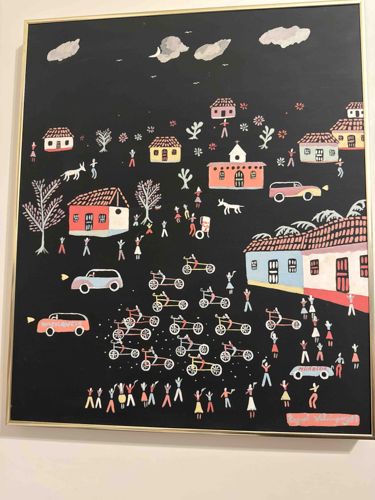
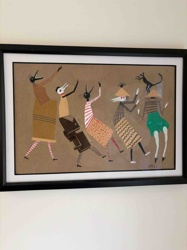
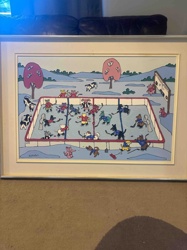
This item is a framed folk art painting, likely oil or acrylic on a dark canvas or board, depicting a vibrant and busy village scene. The composition is rendered in a naive or primitive style, characterized by simplified forms, bold colors, and a lack of traditional perspective. The predominant background color is a deep, matte black, which allows the colorful figures and structures to stand out prominently. The scene is populated with an array of elements including numerous small, brightly colored houses, many with red-tiled roofs, dispersed across the landscape. There are several stylized trees and bushes, rendered in white, pink, and green. Numerous simplified human figures, identified by their distinct clothing such as dresses or shirts and trousers, are scattered throughout, engaged in various activities like waving, walking, and gathering. A notable feature is a large procession of bicycles, possibly tandem bikes, appearing to move from left to right across the lower-center of the painting, followed and surrounded by many of the human figures. Several vintage-style cars, in pastel shades of pink, blue, and yellow, are also present. A dog-like animal motif appears in several places. In the upper part of the painting, fluffy grey and white clouds float in the dark sky, along with tiny bird-like specks. The color palette is cheerful, utilizing pastel and primary colors such as reds, yellows, blues, pinks, and greens against the dark background. The brushwork appears deliberate but informal, typical of folk art. The painting is housed in a simple, slender gold-toned metal frame, indicating it's ready for display. There are no obvious signs of significant damage like tears or cracks from the provided image, but closer inspection would be needed to assess the exact condition of the paint surface and frame. The overall impression is one of lively community and celebration.
AI Appraisal Report
I have examined the provided image of this framed folk art village scene painting. Visually, the condition appears good, with no obvious tears, cracks, or significant paint loss discernible from the image. The simple gold-toned metal frame also seems intact. Authenticity, based solely on an image, is limited; however, the naive style, bold color palette, and whimsical subject matter are highly consistent with known examples of 20th-century folk art. The lack of traditional perspective and simplified forms are hallmarks of the genre.
Market conditions for folk art are generally stable, with a strong niche collector base. This particular piece, with its vibrant narrative and detailed activity (bicycles, cars, figures, houses), makes it particularly engaging. Comparable sales of unsigned, unprovenanced folk art paintings of similar scale and complexity typically fall within the $300-$700 range, varying by artist recognition if known, and specific appeal. The cheerful subject matter and pleasing aesthetic contribute positively to its demand. Rarity is hard to assess without artist identification; however, unsigned folk art pieces are not inherently rare. Factors impacting value include the charming visual narrative and apparent good condition. Without an in-person examination, I cannot confirm the exact medium (oil or acrylic), the nature of the dark canvas/board, or the precise condition of the paint surface for issues like craquelure or discoloration. Furthermore, full authentication would require inspecting for an artist's signature, researching the artist's oeuvre (if signed), examining the reverse of the artwork for any inscriptions or labels, and reviewing any available provenance documentation. Scientific analysis of the paint pigments could also confirm age and authenticity.