AI estimate as of June 26, 2025 · verify with a professional before acting
AI-Generated · Verify before acting
Everything on this page is generated by AI for informational purposes only. AI can make mistakes — the AI may misidentify items or misattribute them (artist, maker, brand, designer, origin, era). This is not an official valuation and should not be used for insurance, sale, tax, estate, legal, or lending purposes — or any decision requiring a certified appraisal. It is not an authoritative claim about any person, brand, or rights holder — do not share or rely on it as a factual statement about a third party. Always consult qualified professionals before making financial decisions.
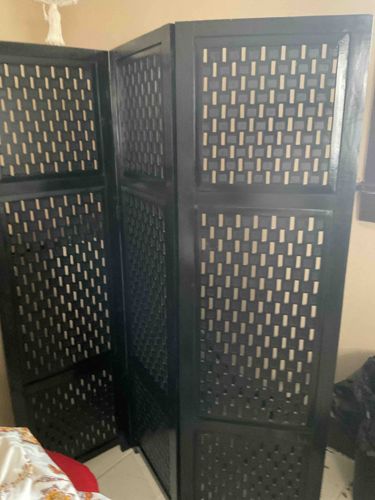
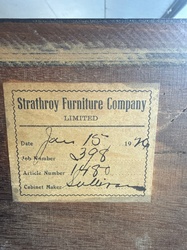
This is a contemporary-style black wooden folding room divider, designed with three apparent panels, though more could be present and folded out of view. Each panel is constructed from solid wood frames, painted in a dark, likely black or very dark charcoal finish with a slight sheen. The overall height appears to be standard for floor screens, likely between 5 to 6 feet, with a commensurate width when fully extended, offering significant visual separation. The distinguishing feature of this screen is its intricate, repeating latticework pattern. Each panel is divided into two large rectangular sections by horizontal wooden rails, and within these sections, small, oblong or rectangular perforations are uniformly arranged in a staggered, basket-weave-like grid. This pattern allows for light to filter through while obscuring direct view, providing both privacy and an airy aesthetic. The uniform precision of these perforations suggests machine-cut wood, indicative of modern manufacturing techniques. The panels are connected by hinges, allowing for easy folding and storage or configuration into various angles to suit a room's layout. The visible condition generally appears good, with the dark finish masking any minor scuffs or wear. There are no obvious signs of significant damage, cracks, or repairs. No manufacturer's marks, signatures, or specific hardware details are discernible from the available images, making precise dating challenging. However, its clean lines and geometric design suggest a style from the late 20th or early 21st century, fitting well within modern or transitional decor schemes. The craftsmanship appears functional and consistent, typical of mass-produced furniture pieces designed for durability and decorative utility.
AI Appraisal Report
Based on my examination of the provided description, this contemporary black wooden folding room divider appears to be in good overall condition. The dark finish effectively conceals minor wear, and no significant damage like cracks or repairs are noted. Its clean lines, three-panel construction, and geometric latticework align with modern or transitional design aesthetics, suggesting a late 20th or early 21st-century manufacturing period. Without direct physical inspection, however, I cannot account for subtle surface imperfections, structural integrity, or the exact quality of the wood and finish.
The market for functional decorative items like room dividers, particularly those of contemporary, mass-produced style, is steady but not characterized by high demand or rarity. Comparables for similar good-condition, unsigned pieces typically range modestly in secondary markets (online marketplaces, consignment shops). This item's value is primarily driven by its functional utility as a privacy screen or decorative accent and its current aesthetic appeal.
Factors influencing value include its good visual condition and versatile design. However, the absence of discernible manufacturer's marks or a known designer significantly limits its collectible or investment value, indicating it is likely a well-made, mass-produced piece. For a definitive authentication and more precise valuation, a physical examination is crucial. This would allow for a thorough assessment of joinery, material quality (e.g., solid hardwood vs. composite), and a search for any hidden manufacturer's marks or production labels. Provenance documentation, if available, could establish a historical context or association with a premium brand, which is currently unidentifiable from the information provided.