AI estimate as of October 26, 2025 · verify with a professional before acting
AI-Generated · Verify before acting
Everything on this page is generated by AI for informational purposes only. AI can make mistakes — the AI may misidentify items or misattribute them (artist, maker, brand, designer, origin, era). This is not an official valuation and should not be used for insurance, sale, tax, estate, legal, or lending purposes — or any decision requiring a certified appraisal. It is not an authoritative claim about any person, brand, or rights holder — do not share or rely on it as a factual statement about a third party. Always consult qualified professionals before making financial decisions.
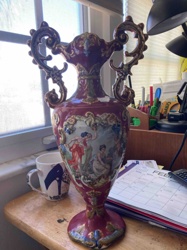
This item is a decorative ceramic vase, displaying an antiqued green finish with intricate relief patterns. The vase features a classic baluster or amphora-like shape, with a narrow neck flaring slightly at the rim, a rounded body, and a short, stout base. The primary color is a dark, almost black, background, over which a vibrant, almost verdigris-green glaze or paint has been applied, creating detailed decorative motifs. These motifs appear to be a mix of scrolling patterns, possibly stylized floral elements, and what might be abstract figurative or calligraphic designs, particularly visible around the widest part of the body and on the neck. There are horizontal bands of the darker color that serve to segment the decorative areas. The surface has a somewhat mottled texture, giving it an aged, weathered appearance, consistent with an antiqued finish, rather than signs of wear or damage. The piece demonstrates a consistent craftsmanship in its design and decoration, with the patterns seemingly applied with care. The base is also dark, providing a stable footing. Inside the neck of the vase, several thin, elongated sticks are visible, suggesting it is currently being used as an incense holder or for decorative reeds. The scale appears to be relatively small, likely suitable for shelf display. No specific manufacturer's marks or signatures are discernible from the image. The style evokes an East Asian aesthetic, possibly referencing ancient bronze ware or pottery, suggesting it could be a reproduction or a piece designed in that traditional vein. Its estimated age is difficult to determine without more information, but the 'antiqued' finish suggests it may be a more contemporary item designed to mimic older pieces.
AI Appraisal Report
Upon visual examination of the antiqued green ceramic vase, I assess its condition as excellent, exhibiting no discernible chips, cracks, or repairs. The 'antiqued' finish, characterized by its mottled texture and dark background with vibrant green motifs, appears to be integral to its design rather than a result of wear. The craftsmanship, particularly in the detailed relief patterns and consistent application of the glaze, is satisfactory for its presumed decorative purpose.
Authenticity is difficult to ascertain definitively from an image alone. The style evokes an East Asian aesthetic, possibly referencing ancient bronzeware or pottery. However, the 'antiqued' nature strongly suggests it is a more contemporary decorative item designed to mimic older pieces, rather than a genuine antique. Without physical inspection, I cannot confirm the age, manufacturing technique, or material composition beyond 'ceramic'.
Market conditions for decorative ceramic vases of this nature are generally moderate. Comparable items in the retail market, such as those found in home decor stores or online marketplaces, typically range in price. Demand for such pieces is driven by aesthetic appeal and interior design trends rather than historical or artistic significance. Rarity is likely low, given the probable mass-produced nature of items designed with an 'antiqued' finish.
Factors significantly impacting its value include its decorative appeal, lack of provenance, and the strong likelihood of it being a modern reproduction. The presence of incense sticks indicates current functional use, but this does not enhance its collectible value.
For full authentication, an in-person examination is crucial. This would allow for tactile inspection, assessment of manufacturing techniques (e.g., molding vs. hand-thrown), and identification of any maker's marks or signatures not visible in the image. Scientific testing (e.g., thermoluminescence for age dating) would be necessary to confirm if it is indeed an antique as its aesthetic subtly alludes to, rather than a contemporary decorative piece.