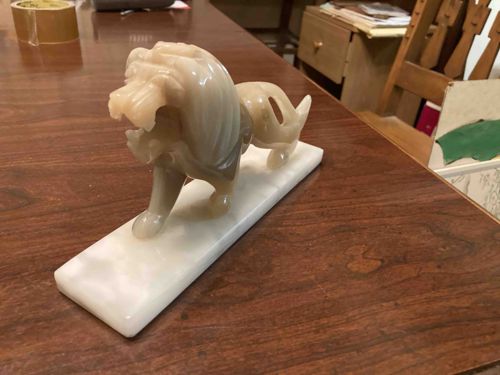
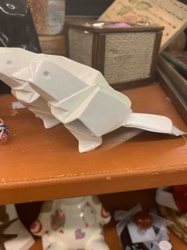
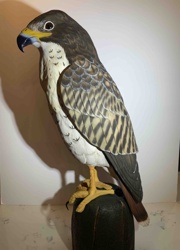
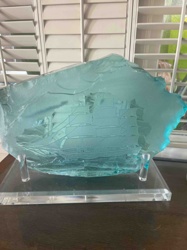
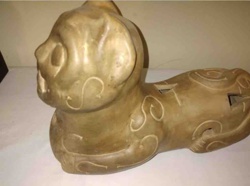
Carved stone lion; approximately 6 inches long by 3 1/2 inches high
These notes were written by the person who submitted this item. Appraiser.AI has not verified them, and the AI's identification and estimate may rely on them.
AI Estimated Value
Not an official valuation
$150-250
AI estimate as of November 27, 2025 · verify with a professional before acting
AI-Generated · Verify before acting
Everything on this page is generated by AI for informational purposes only. AI can make mistakes — the AI may misidentify items or misattribute them (artist, maker, brand, designer, origin, era). This is not an official valuation and should not be used for insurance, sale, tax, estate, legal, or lending purposes — or any decision requiring a certified appraisal. It is not an authoritative claim about any person, brand, or rights holder — do not share or rely on it as a factual statement about a third party. Always consult qualified professionals before making financial decisions.
This analysis also relies on unverified notes provided by the user, which may be incomplete or inaccurate and could affect the result.
This item is a decorative carved stone lion figurine, depicted in a walking or stalking pose, mounted on a rectangular base. The carving is crafted from a type of translucent stone, likely onyx or a similar banded calcite, exhibiting a natural coloration that ranges from creamy white to pale beige/brown, with visible striations and clouds of color variation throughout the material. The lion itself is approximately 6 inches long and 3.5 inches high as provided, featuring a detailed mane, a partially open mouth suggesting a roar or snarl, and visible musculature. The tail is curled over its back and features a carved-through section, indicating a more intricate carving technique. The facial features, including the eyes and snout, are somewhat stylized but discernible. The base is also made of the same translucent stone, a lighter, more uniform white or off-white hue, creating a subtle contrast with the lion figure. The overall finish appears polished, giving the stone a smooth, somewhat glossy surface. There are no immediately apparent significant condition issues such as major chips, cracks, or repairs, though minor surface wear consistent with age and handling might be present upon closer inspection. No visible maker's marks, signatures, or stamps are discernible from the provided image. The style suggests a decorative art piece, possibly Asian in origin, and could date from the mid-20th century to contemporary times, given the material commonly used for such carvings during these periods. The craftsmanship indicates a hand-carved piece, showcasing attention to detail in the animal's form and posture. The translucency of the stone is a unique and appealing characteristic, allowing light to subtly pass through, enhancing its visual texture and depth.
AI Appraisal Report
Based on my visual examination of the provided image and the owner's description, I assess this carved stone lion figurine to be in good overall condition. The polished surface appears smooth, and there are no immediately discernible chips, cracks, or repairs. The translucency of the stone, likely onyx or banded calcite, is a desirable characteristic. Authenticity as a hand-carved piece seems high given the intricate details of the mane, musculature, and the carved-through tail section. However, without a physical inspection, I cannot rule out minor surface wear, small nicks, or professional repairs that might not be visible in photographs.
Market conditions for decorative carved stone animals of this size and material are generally stable. Comparable pieces, often referred to as 'onyx animal carvings,' typically range in price depending on the intricacy of the carving, the quality and coloration of the stone, and the overall condition. The detailed craftsmanship here positions it at the higher end of common decorative pieces. Demand is moderate, appealing to collectors of natural stone art, decorative animal sculptures, or Asian-inspired artifacts. Rarity is low to moderate; while well-carved, similar items from various regions are not uncommon.
Factors significantly impacting value include the material's attractive banding and translucency, the detailed carving, and its apparently good condition. The absence of maker's marks or provenance limits its potential as a historical or artist-attributed piece, placing it more firmly in the decorative arts category.
For a full authentication, in-person examination is crucial to meticulously check for hidden damage, assess the exact stone type (e.g., distinguishing onyx from other calcites), and determine the age of the carving through patination or tool marks. Provenance documentation, if available, would provide invaluable context regarding its origin and history.