AI Appraisal Estimate

AI-generated estimates · not official valuations

From the user

What was submitted

Photo and notes provided by the user — not generated by AI

Submitted item photo
Submitted photo · June 13, 2026

User's notes

Great condition

AI analysis below

AI appraisal

AI analysis & estimate

AI-Generated · Verify before acting

Everything below is generated by AI for informational purposes only. AI can make mistakes — the AI may misidentify items or misattribute them (artist, maker, brand, designer, origin, era). This is not an official valuation and should not be used for insurance, sale, tax, estate, legal, or lending purposes — or any decision requiring a certified appraisal. It is not an authoritative claim about any person, brand, or rights holder — do not share or rely on it as a factual statement about a third party. Always consult qualified professionals before making financial decisions.

Note

This analysis also relies on unverified notes provided by the user, which may be incomplete or inaccurate and could affect the result.

Read the full disclaimer

AI Identification

·Not independently authenticated·Verify before acting

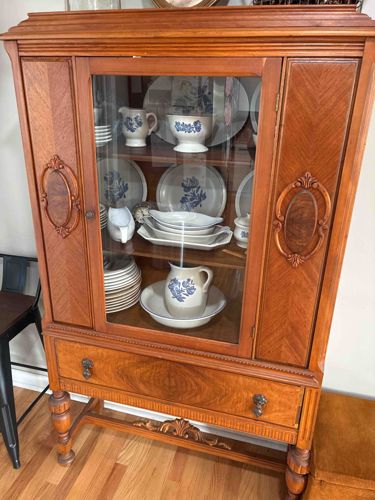
Early 20th Century Wood China Cabinet with Herringbone Veneer

Furniture - Cabinets & Hutches

AI Estimated Value

·Not an official valuation·Verify before acting

$450 - $700

As of June 13, 2026

AI Item Analysis

·AI can make mistakes·Verify before acting
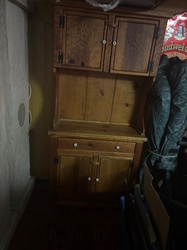
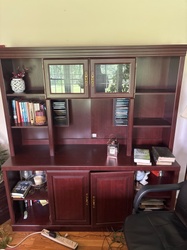
This is a tall, wooden china cabinet featuring a centralized glass-front door and flanking side panels. The construction showcases decorative wood veneers, most notably the book-matched herringbone pattern on the side panels and a burl-style oval medallion framed by foliate carvings. The piece is crafted from a mix of hardwoods with a warm medium-oak or maple finish. At the base, a single long drawer is adorned with two ornate metal bail handles and book-matched swirl veneer. The cabinet sits on short, turned legs connected by a decorative stretcher that features a central shell-like carving. The top is finished with a stepped crown molding. Interior wooden shelving is visible through the glass pane, currently housing a collection of blue floral stoneware. Based on the ornate veneer work and the leg style, this piece likely dates to the 1920s-1940s, reflecting late Victorian or early Depression-era influences. The finish appears to be in great condition with a consistent luster and minimal visible surface scratches or impact damage. The glass is clear and the structural alignment of the door and drawer appears square and functional.
AI Appraisal Report

·AI can make mistakes·Verify before acting
This appraisal covers a vintage china cabinet dating to approximately 1925–1935. Based on my visual examination, the piece is a fine example of Depression-era manufacturing, utilizing specialized veneers—specifically book-matched herringbone and burl walnut or maple overlays—to simulate the opulence of high-end custom cabinetry at a more accessible production price. The 'Great' condition reported is supported by the consistent luster of the finish and the absence of lifting or bubbling in the veneers, which is rare for pieces of this age. The structural integrity, highlighted by the square alignment of the door and drawer, suggests careful environmental storage. The current market for ‘brown furniture’ remains soft, though pieces with unique decorative elements like the central foliate medallion and shell-carved stretcher tend to outperform plainer utilitarian models. Comparables sold at regional estate auctions typically fall in the $400 range, while specialized antique retailers may list similar items for up to $850 depending on the local market. While the aesthetics are consistent with the period, digital images cannot definitively confirm the species of wood or the originality of the metal hardware. A full authentication would require an in-person inspection to examine the drawer joinery (specifically looking for machine-cut dovetails characteristic of the period) and the back panel construction. To achieve a premium valuation, provenance documentation or a manufacturer’s stamp (often found on the backboard or inside the drawer) would be necessary to distinguish this from similar mass-produced furniture of the mid-Atlantic region.

Get your items appraised

Instant estimates of your treasures with AI-powered appraisals

Browse More Appraisals