AI estimate as of October 22, 2025 · verify with a professional before acting
AI-Generated · Verify before acting
Everything on this page is generated by AI for informational purposes only. AI can make mistakes — the AI may misidentify items or misattribute them (artist, maker, brand, designer, origin, era). This is not an official valuation and should not be used for insurance, sale, tax, estate, legal, or lending purposes — or any decision requiring a certified appraisal. It is not an authoritative claim about any person, brand, or rights holder — do not share or rely on it as a factual statement about a third party. Always consult qualified professionals before making financial decisions.
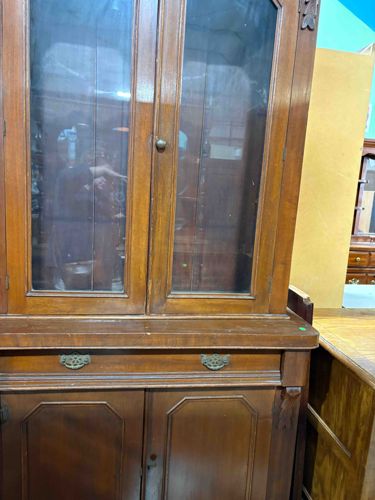
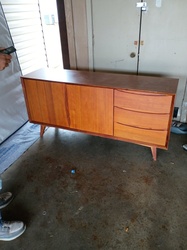
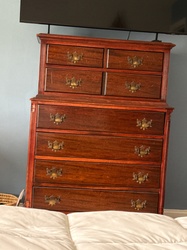
This appears to be an antique wooden display cabinet or hutch, constructed from a rich, reddish-brown hardwood, possibly mahogany or a similarly stained wood. The piece is divided into two primary sections. The upper section features two glass-paned doors with vertical mullions, allowing for display of items within. The glass exhibits some reflections and general age-related cloudiness or dust, but no obvious cracks are visible. The wooden frame around the glass shows signs of wear and minor scratching, consistent with age and use. A small, round wooden knob serves as the pull for the right upper door.
Below the upper cabinet is a transitional section with a horizontal surface, potentially for additional display or as a work surface. Beneath this, there are two small drawers, each adorned with an ornate, possibly brass or bronze, bail pull featuring a decorative escutcheon plate. These pulls exhibit some tarnishing or patina. The lower section consists of two solid wooden cabinet doors, each featuring a raised panel design with an octagonal or rectangular outline within a larger frame. The wood on the lower doors also displays wear, scuffs, and possibly some lighter areas where the finish has degraded. The overall construction suggests a solid and durable piece of furniture, likely from the late 19th or early 20th century. One unique detail is some carved ornamentation visible on the upper right corner of the upper cabinet's frame, suggesting a degree of craftsmanship beyond mere functionality. The finish is worn in places, indicating age and consistent use rather than severe damage. The cabinet generally exhibits a good patina that comes with age, despite visible scuffs and minor blemishes.
AI Appraisal Report
Based on my visual examination of the provided image, this Antique Wooden Display Cabinet/Hutch appears to be a well-constructed piece of furniture, likely crafted from a reddish-brown hardwood such as mahogany. The two-part design, with glass-paned upper doors and solid lower cabinet doors, is characteristic of late 19th to early 20th-century craftsmanship. The wear on the wooden frame, glass, and lower doors is consistent with age and regular use, contributing to a desirable patina rather than severe damage. The ornate bail pulls on the drawers and the carved ornamentation on the upper right corner suggest a certain level of detail and craftsmanship.
From the image alone, I assess the condition as 'good antique condition.' There are no obvious signs of major structural damage, repairs, or missing components, apart from general wear and tear, scuffs, and some finish degradation. The glass appears intact, though its clarity cannot be fully assessed without a direct view. Authenticity as an antique from the specified period seems highly probable given the style, construction details, and visible wear.
In terms of market conditions, similar antique display cabinets or hutches are in moderate demand. Pieces with good original condition and appealing design fetch fair prices, though the market for larger antique furniture can fluctuate. Comparables found in regional antique shops or online marketplaces for un-restored but functional pieces of this type typically range from $500 to $1,200. The detailed drawer pulls and subtle carving enhance its appeal, pushing it towards the higher end of the moderate value spectrum for its condition category. Rarity is not exceptional, as this style was relatively common.
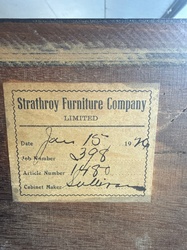
Factors significantly impacting value include its solid construction, complete original hardware (even if tarnished), and the overall consistent patina. The primary limitations in authenticity verification from images alone are the inability to confirm the wood type definitively (e.g., solid mahogany versus stained secondary wood), detect any hidden repairs or restorations, or assess the structural integrity of joints. A physical inspection would be necessary to confirm wood species, check for woodworm, assess cabinet interior condition, and verify all hardware as original. Provenance documentation, such as original purchase receipts or family history, would significantly enhance its value by providing a verifiable history.