AI Appraisal Estimate

AI-generated estimates · not official valuations

From the user

What was submitted

Photo and notes provided by the user — not generated by AI

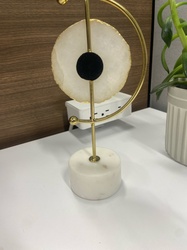
Submitted item photo
Submitted photo · July 8, 2026

User's notes

No additional notes provided.

AI analysis below

AI appraisal

AI analysis & estimate

AI-Generated · Verify before acting

Everything below is generated by AI for informational purposes only. AI can make mistakes — the AI may misidentify items or misattribute them (artist, maker, brand, designer, origin, era). This is not an official valuation and should not be used for insurance, sale, tax, estate, legal, or lending purposes — or any decision requiring a certified appraisal. It is not an authoritative claim about any person, brand, or rights holder — do not share or rely on it as a factual statement about a third party. Always consult qualified professionals before making financial decisions.

Read the full disclaimer

AI Identification

·Not independently authenticated·Verify before acting

Polychrome Cold-Painted Figure or Torchère in the Orientalist Style

Home Decor and Sculptures

AI Estimated Value

·Not an official valuation·Verify before acting

$1,500 - $3,500

As of July 8, 2026

AI Item Analysis

·AI can make mistakes·Verify before acting
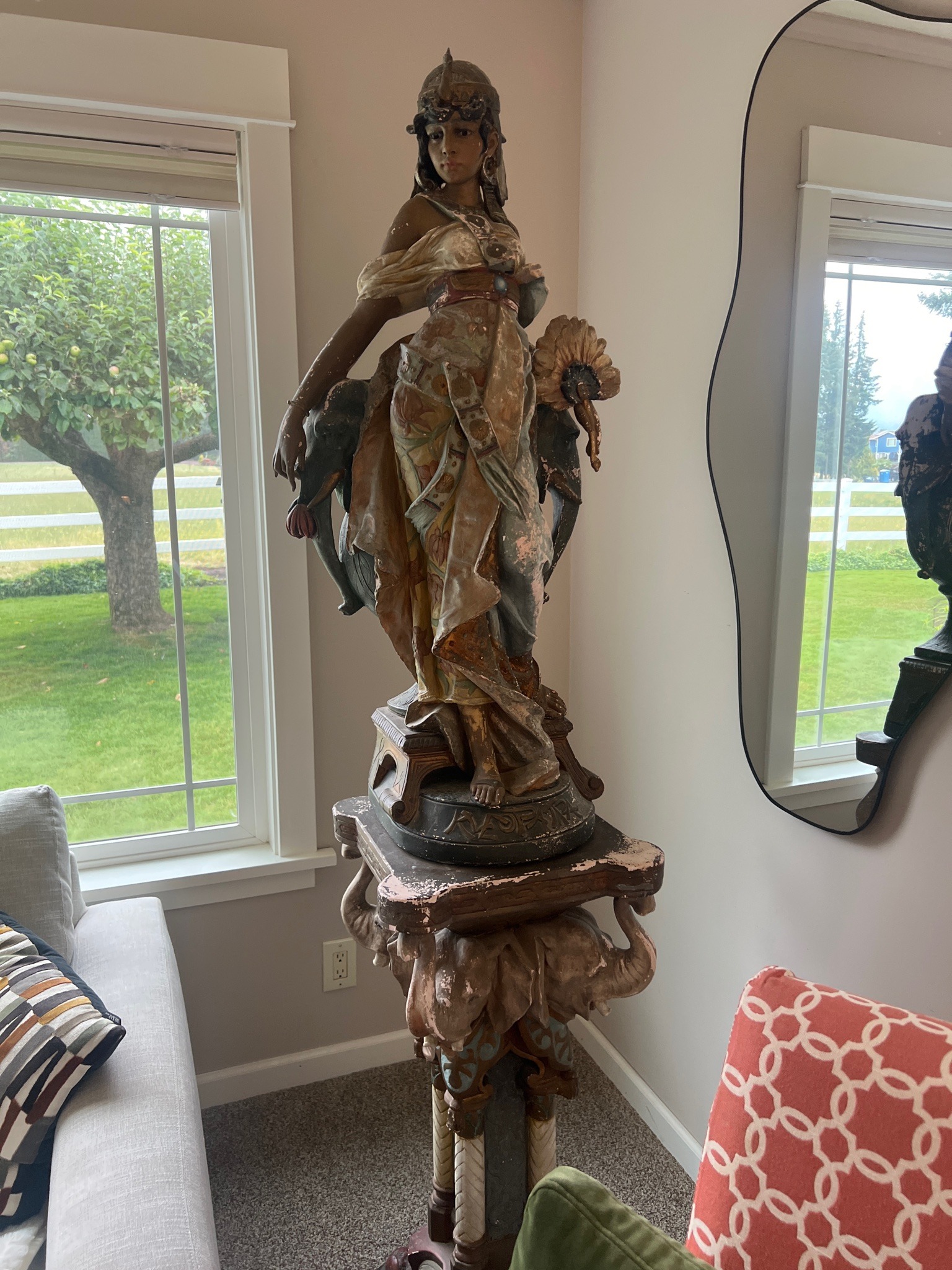
This large standing figure appears to be a polychrome-painted sculpture or torchère, stylistically consistent with late 19th or early 20th-century Orientalist design. The figure depicts a woman in ornate, draped attire with a tiered headdress, standing before two elephant heads. She stands atop a multi-tiered circular base that bears a raised inscription appearing to read 'KAOPI' or similar text, which remains unverified without physical inspection. The sculpture is mounted on a separate, distressed square pedestal featuring carved elephant motifs at the corners. The materials are visually consistent with cold-painted terracotta, plaster, or a composite resin, though the weight and density cannot be determined from the image. The surface shows significant signs of age and wear, including extensive paint loss, flaking, and chipping across both the figure and the pedestal, revealing lighter under-layers. The craftsmanship demonstrates a high level of detail in the drapery and facial features, consistent with decorative arts from the Belle Époque era. While the style and markings are reminiscent of works by makers like Friedrich Goldscheider, no definitive maker's mark is legible; therefore, this is identified as being in the style of such European Orientalist manufacturers.
AI Appraisal Report

·AI can make mistakes·Verify before acting
Based on my visual examination of the provided image, this large polychrome sculpture or torchere represents a stylistic interpretation of the late 19th-century Orientalist movement. The figure features intricate drapery and a tiered headdress atop an elephant-themed base, bearing an inscription that appears consistent with 'KAOPI'. From the photograph, I can observe significant surface wear, including flaking and paint loss, which suggests the materials may be cold-painted terracotta or a similar composite; however, I cannot verify the specific density or material composition without a physical inspection. This estimate reflects the market value for a period piece in the style of prestigious manufacturers like Friedrich Goldscheider. The value assumes the piece dates to the late 19th or early 20th century. If this item were to be attributed to a specific renowned maker through provenance or legible markings, the value could increase significantly. Conversely, if a physical examination reveals it is a modern resin reproduction or a later 20th-century 'in the style of' copy, the value would likely drop below $500. The current market for Orientalist decorative arts remains stable for high-quality, large-scale figures, though the distressed condition noted here does impact the appraisal. To establish a more precise valuation, an in-person inspection is required to determine the substrate material, check for hidden maker marks, and assess the structural integrity of the base. Verification would also require researching its provenance and possibly comparing the 'KAOPI' mark against known period catalogs or workshop records.

Get your items appraised

Instant estimates of your treasures with AI-powered appraisals

Browse More Appraisals