AI Appraisal Estimate

AI-generated estimates · not official valuations

From the user

What was submitted

Photo and notes provided by the user — not generated by AI

Submitted item photo
Submitted photo · June 19, 2026

User's notes

No additional notes provided.

AI analysis below

AI appraisal

AI analysis & estimate

AI-Generated · Verify before acting

Everything below is generated by AI for informational purposes only. AI can make mistakes — the AI may misidentify items or misattribute them (artist, maker, brand, designer, origin, era). This is not an official valuation and should not be used for insurance, sale, tax, estate, legal, or lending purposes — or any decision requiring a certified appraisal. It is not an authoritative claim about any person, brand, or rights holder — do not share or rely on it as a factual statement about a third party. Always consult qualified professionals before making financial decisions.

Read the full disclaimer

AI Identification

·Not independently authenticated·Verify before acting

Pressed Glass Goblet or Wine Glass

Collectible Glassware / Tableware

AI Estimated Value

·Not an official valuation·Verify before acting

$15.00 - $25.00

As of June 19, 2026

AI Item Analysis

·AI can make mistakes·Verify before acting
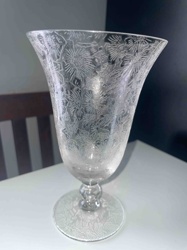
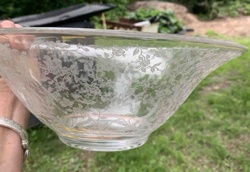
This item is a clear pressed glass goblet, standing on a multifaceted stem. The bowl of the glass features a detailed, raised relief pattern that appears to depict traditional motifs, possibly neoclassical or floral in nature, which is characteristic of Early American Pattern Glass (EAPG) or mid-20th-century reproductions. The glass piece is constructed from a non-leaded soda-lime glass, indicated by its slight grayish tint in the shadows. The stem is notable for its 'waisted' or baluster-like configuration with several geometric knops or rings, transitioning into what likely is a circular base. Regarding its condition, the piece shows surface dirt and fingerprints, suggesting it has been handled or stored without protection recently. There are no large chips or cracks visible in this resolution, though the clarity of the material appears somewhat aged. Based on the moulding seams likely present but obscured by the heavy pattern, and the style of the stem, this piece likely dates from the late 19th century to the mid-20th century. The intricate molding indicates a high-production quality intended for middle-market households. The pattern provides a tactile experience, and the overall heft of the glass suggests durability. No specific maker’s mark is visible through the patterns, which is common for this type of glassware.
AI Appraisal Report

·AI can make mistakes·Verify before acting
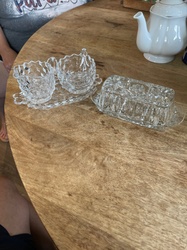
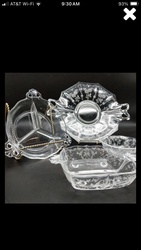
Based on my visual examination of this pressed glass goblet, the item is a standard example of Early American Pattern Glass (EAPG) or a subsequent mid-20th-century revival piece. The soda-lime composition, evidenced by the characteristic grayish tint and lack of lead-crystal brilliance, indicates a utilitarian production method consistent with mass-market tableware from the late Victorian era through the 1940s. The molding shows decent relief, though surface contaminants suggest a period of improper storage. No structural failures like chips or 'bruises' are immediately evident, but fine surface scratching is expected upon physical inspection. The market for non-lead pressed glassware is currently saturated, with significant downward pressure on prices due to a declining collector base for traditional patterns. Comparables for single goblets of unidentified patterns typically sell within the $15 to $25 range at regional auctions or antique malls. If the pattern were identified as a highly sought-after rarity like 'Bellflower' or 'Horn of Plenty,' the value could increase slightly; however, this specific motif appears to be a more common decorative variety. Limitations: This appraisal is based solely on digital imagery. A definitive valuation and authentication require a physical inspection to check for 'shear marks' on the base, mold seam sharpness, and UV-light reaction (to detect manganese or selenium, helping to pinpoint the manufacturing date). Provenance documentation regarding the original set or manufacturer's catalogs would be necessary to elevate this above a 'decorative' classification. I cannot confirm the absence of 'sick glass' (permanent clouding) without seeing the item cleaned in person.

Get your items appraised

Instant estimates of your treasures with AI-powered appraisals

Browse More Appraisals