AI Appraisal Estimate

AI-generated estimates · not official valuations

From the user

What was submitted

Photo and notes provided by the user — not generated by AI

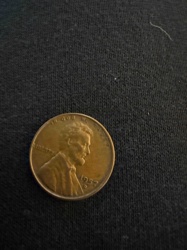
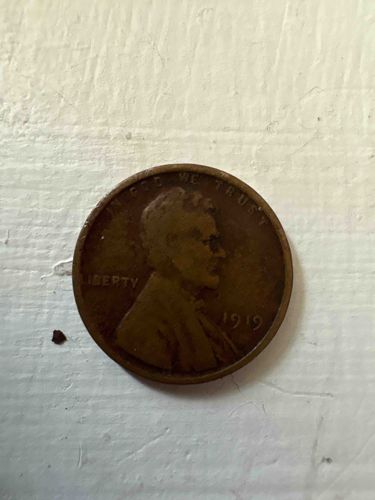
Submitted item photo
Submitted photo · June 28, 2026

User's notes

1919 one cent

AI analysis below

AI appraisal

AI analysis & estimate

AI-Generated · Verify before acting

Everything below is generated by AI for informational purposes only. AI can make mistakes — the AI may misidentify items or misattribute them (artist, maker, brand, designer, origin, era). This is not an official valuation and should not be used for insurance, sale, tax, estate, legal, or lending purposes — or any decision requiring a certified appraisal. It is not an authoritative claim about any person, brand, or rights holder — do not share or rely on it as a factual statement about a third party. Always consult qualified professionals before making financial decisions.

Note

This analysis also relies on unverified notes provided by the user, which may be incomplete or inaccurate and could affect the result.

Read the full disclaimer

AI Identification

·Not independently authenticated·Verify before acting

1919 Lincoln Wheat Cent

Numismatics / Collectible Coins

AI Estimated Value

·Not an official valuation·Verify before acting

$0.10 - $0.30

As of June 28, 2026

AI Item Analysis

·AI can make mistakes·Verify before acting
This is a United States one-cent coin, commonly known as a Wheat Penny, dated 1919. The coin features the bust of Abraham Lincoln on the obverse designed by Victor David Brenner. It is composed of 95% copper and 5% tin and zinc, measuring 19.05mm in diameter with a plain edge. The coin exhibits a deep chocolate brown patina consistent with a 'Brown' designation in numismatics. Regarding condition, the piece shows significant signs of honest circulation and environmental exposure; the high points of Lincoln's hair and cheek are heavily smoothed, and the legends 'IN GOD WE TRUST' and 'LIBERTY' appear soft but remain legible. The date '1919' is clearly visible in the lower right field. There is a lack of a mint mark below the date, indicating it was struck at the Philadelphia Mint. Notable condition issues include numerous small surface contact marks, a darkening of the fields due to oxidation, and some minor rim bruising. Despite the heavy wear, the iconic silhouette and essential motifs of early 20th-century American coinage are preserved. This specimen represents a common date in the series, produced shortly after World War I, and carries the historic 'Wheat Ears' reverse design (implied by the series type).
AI Appraisal Report

·AI can make mistakes·Verify before acting
Based on my visual examination of this 1919 Lincoln Wheat Cent, I have determined it to be an authentic Philadelphia Mint issue. The coin exhibits what numismatists designate as a 'Brown' (BN) patina, characterized by a deep, dark oxidation typical of nearly a century of circulation. The condition appears to be in the Good (G-4) to Very Good (VG-8) range; while the date is bold and the silhouette of Lincoln is distinct, there is significant flattening of the high points on the hair and beard, and the rim shows notable bruising consistent with heavy commercial use. From a market perspective, the 1919 Philadelphia cent is one of the most prolific issues of the series, with a mintage of over 392 million. Because of this extremely high mintage, demand for circulated specimens is low, as they are readily available to collectors in bulk. Serious numismatic value for this year is typically reserved for uncirculated specimens (Mint State 63 or higher) retaining original red luster. As this is a common date with heavy wear and environmental exposure, its value is largely sentimental or purely as a historical curiosity rather than an investment-grade asset. The appraisal value provided reflects the retail price one might pay at a coin shop bin or the 'wholesale' bulk wheat penny rate. While visual inspection strongly suggests authenticity, I must note the limitations of appraising via image. Total verification would require physical weighing (to confirm the 3.11g specification) and high-magnification inspection to rule out tooling or cleaning, though such efforts are generally unnecessary for low-value common dates.

Get your items appraised

Instant estimates of your treasures with AI-powered appraisals

Browse More Appraisals