AI Appraisal Estimate

AI-generated estimates · not official valuations

From the user

What was submitted

Photo and notes provided by the user — not generated by AI

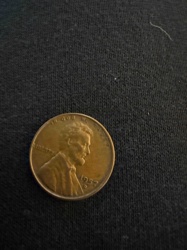
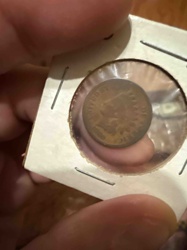
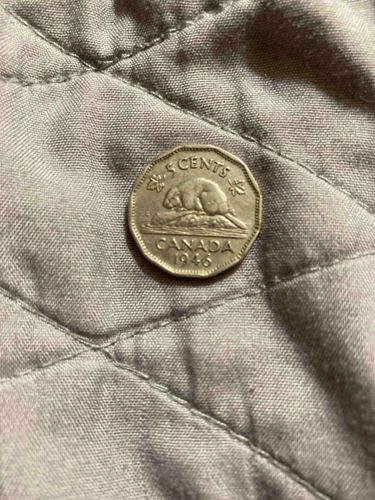
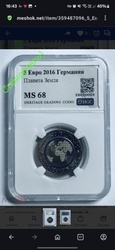
Submitted item photo
Submitted photo · June 17, 2026

User's notes

No additional notes provided.

AI analysis below

AI appraisal

AI analysis & estimate

AI-Generated · Verify before acting

Everything below is generated by AI for informational purposes only. AI can make mistakes — the AI may misidentify items or misattribute them (artist, maker, brand, designer, origin, era). This is not an official valuation and should not be used for insurance, sale, tax, estate, legal, or lending purposes — or any decision requiring a certified appraisal. It is not an authoritative claim about any person, brand, or rights holder — do not share or rely on it as a factual statement about a third party. Always consult qualified professionals before making financial decisions.

Read the full disclaimer

AI Identification

·Not independently authenticated·Verify before acting

1946 Canadian Beaver Nickel (5-Cent Coin)

Numismatics / Collectible Coins

AI Estimated Value

·Not an official valuation·Verify before acting

$2.00 - $8.00

As of June 17, 2026

AI Item Analysis

·AI can make mistakes·Verify before acting
This is a 1946 Canadian 5-cent coin, commonly known as a nickel, featuring the iconic beaver design on the reverse. The coin is circular but notably features a 12-sided (dodecagonal) shape, which was a design choice by the Royal Canadian Mint during this era. It is composed of 100% nickel, possessing a bright silvery-grey metallic appearance. The reverse side depicts a beaver sitting on a log, flanked by two maple leaves, with '5 CENTS' inscribed above and 'CANADA 1946' below. The obverse (not fully visible but implied by the date) would feature the portrait of King George VI. In terms of condition, the coin shows signs of circulation including moderate wear on the high points of the beaver's fur and the log's texture. There are visible surface scratches and minor contact marks consistent with age and use. The patina is somewhat dull, suggesting the coin has not been cleaned recently, which is preferable for numismatic value. This specific year is notable as it follows the WWII era when base metal compositions for coinage were often altered due to war shortages (such as the chrome-plated steel or tombac varieties), but by 1946, the mint had returned to using pure nickel. The craftsmanship reflects the classic mid-century style of the Royal Canadian Mint, characterized by clean lines and balanced typography.
AI Appraisal Report

·AI can make mistakes·Verify before acting
I have examined the 1946 Canadian 12-sided nickel. This year marks a significant return to 100% nickel composition following the wartime use of Tombac and chrome-plated steel. The specimen exhibits signs of moderate circulation, consistent with a grade of Very Fine (VF-20) to Extremely Fine (EF-40). I observed wear on the beaver’s fur and the crown/hair of King George VI on the obverse, as well as minor contact marks and a naturally dull patina. These features suggest the coin remains in its original state and has not been subjected to harmful cleaning, which preserves its numismatic integrity. From a market perspective, the 1946 mintage was relatively high at over 6.9 million pieces. Consequently, it is not considered a rare date. High-grade 'Mint State' examples fetch premiums, but circulated examples like this one are readily available in the collector market. Current demand is stable among Canadian decimal series collectors but lacks the 'key date' pressure seen in 1925 or 1926 issues. While the visual characteristics—including the weight-indicative thickness and specific 12-sided geometry—align with a genuine Royal Canadian Mint strike, this appraisal is based solely on digital images. Limitations of this format include the inability to verify the exact weight (3.89 grams) or conduct a magnetic test to confirm nickel content. A full authentication would require in-person microscopic inspection to rule out sophisticated cast replicas and a physical measurement using digital calipers. For institutional or high-value insurance purposes, I would recommend submission to a third-party grading service such as ICCS or PCGS.

Get your items appraised

Instant estimates of your treasures with AI-powered appraisals

Browse More Appraisals