AI Appraisal Estimate

AI-generated estimates · not official valuations

From the user

What was submitted

Photo and notes provided by the user — not generated by AI

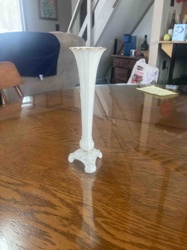
Submitted item photo
Submitted photo · June 19, 2026

User's notes

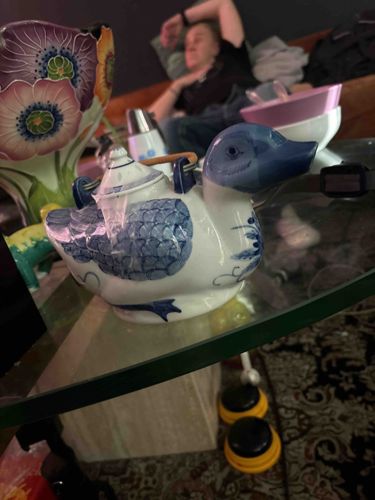
Porcelain duck

AI analysis below

AI appraisal

AI analysis & estimate

AI-Generated · Verify before acting

Everything below is generated by AI for informational purposes only. AI can make mistakes — the AI may misidentify items or misattribute them (artist, maker, brand, designer, origin, era). This is not an official valuation and should not be used for insurance, sale, tax, estate, legal, or lending purposes — or any decision requiring a certified appraisal. It is not an authoritative claim about any person, brand, or rights holder — do not share or rely on it as a factual statement about a third party. Always consult qualified professionals before making financial decisions.

Note

This analysis also relies on unverified notes provided by the user, which may be incomplete or inaccurate and could affect the result.

Read the full disclaimer

AI Identification

·Not independently authenticated·Verify before acting

Blue and White Porcelain Duck Teapot

Decorative Arts - Ceramics

AI Estimated Value

·Not an official valuation·Verify before acting

$45.00 - $75.00

As of June 19, 2026

AI Item Analysis

·AI can make mistakes·Verify before acting
This item is a decorative figural teapot crafted in the shape of a swimming duck, following the tradition of blue and white ceramic wares. The piece is constructed from glazed porcelain or high-fired earthenware, featuring a white ground decorated with cobalt blue underglaze. The duck's head, which functions as the spout, is finished in a solid blue wash, while the body displays stylized scale-like patterns representing feathers. Intricate floral or scroll-like flourishes are visible on the neck and tail sections. A conical lid with a pointed finial sits atop the duck's back, secured by a bamboo or wicker overhead handle attached to integrated ceramic loops. The base reveals a visible blue foot web detail. In terms of condition, the glaze appears vibrant with a healthy sheen, though a plastic security or price tag remains attached to the lid. There are no immediate signs of large cracks or chips visible in the photograph, suggesting a well-maintained state. The style is reminiscent of Chinese export porcelain or 20th-century Chinoiserie reproductions, likely dating from the mid-to-late 20th century. The craftsmanship shows a mass-market quality with hand-painted accents over a molded form.
AI Appraisal Report

·AI can make mistakes·Verify before acting
I have completed a visual examination of the porcelain figural duck teapot. The item presents as a mid-to-late 20th-century Chinoiserie creation, likely manufactured for the export or decorative household market. The cobalt blue underglaze application shows typical production-line characteristics: standardized feather patterns and a uniform glaze sheen consistent with modern kiln firing techniques. From an appraisal standpoint, the condition appears excellent with no visible crazing, chips, or restoration. However, the presence of a contemporary plastic tag suggests it was recently sourced from a retail or secondary market environment rather than a curated collection. The craftsmanship, while charming, indicates a molded form with repetitive hand-painted accents rather than a unique artisan piece. The inclusion of a wicker handle is a common feature for mid-century reproductions of earlier Qing dynasty zoomorphic vessels. The market for 20th-century blue and white decorative wares is currently saturated. While duck motifs remain popular among collectors of 'country' or 'orientaliste' decor, these mass-marketed items lack the rarity required to command high antique premiums. Comparables found in online auctions and estate sales typically realize prices between $30 and $90 depending on size and regional demand. Limitations: This valuation is based solely on digital images. A physical inspection is required to check for hidden hairlines, underside signatures, or 'pitting' in the glaze that might indicate an earlier origin. To elevate this from a decorative item to a fine antique, provenance documentation or a professional ceramic 'rub' test to verify age-appropriate wear on the foot ring would be necessary. Without a discernible maker’s mark, it remains classified as a decorative reproduction.

Get your items appraised

Instant estimates of your treasures with AI-powered appraisals

Browse More Appraisals