AI estimate as of August 18, 2025 · verify with a professional before acting
AI-Generated · Verify before acting
Everything on this page is generated by AI for informational purposes only. AI can make mistakes — the AI may misidentify items or misattribute them (artist, maker, brand, designer, origin, era). This is not an official valuation and should not be used for insurance, sale, tax, estate, legal, or lending purposes — or any decision requiring a certified appraisal. It is not an authoritative claim about any person, brand, or rights holder — do not share or rely on it as a factual statement about a third party. Always consult qualified professionals before making financial decisions.
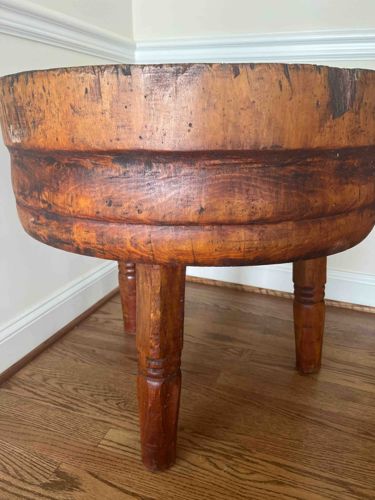
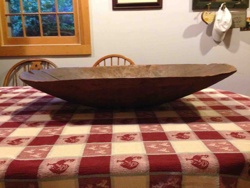
This item is an antique or vintage wooden dough bowl, likely handcrafted, designed for kneading and proofing bread dough. It is a substantial piece, characterized by its thick, rounded form, appearing to be carved from a single large block of wood, or possibly constructed from staves, though the former seems more probable due to the seamless curves. The wood itself has a rich, deep reddish-brown patina, indicative of age and extensive use, with visible grain patterns and areas of darker discoloration, especially in the recessed horizontal bands. The bowl sits on four sturdy, turned wooden legs, which are integrated into the base, elevating the bowl to a functional working height, suggesting it could also serve as a small table or stand. Each leg exhibits simple but elegant turning, with a few visible concentric rings or bands near the top, adding a touch of decorative detail. The overall condition shows significant wear consistent with its age and intended purpose: the interior and exterior surfaces are worn smooth in places, with visible knife marks, scrapes, and indentations from years of use. There are no obvious repairs, but the natural aging process has resulted in cracks and splits in the wood, particularly along the rim and outer body, which add to its rustic charm rather than detracting from its structural integrity. The edges of the bowl are somewhat irregular and worn, reflecting a hand-carved or hand-finished process. The craftsmanship is robust and functional, characteristic of utilitarian objects from a bygone era, emphasizing durability over intricate ornamentation. Its quality is evident in its enduring form and well-preserved, albeit heavily used, material.
AI Appraisal Report
Upon visual examination of the provided images, I assess this antique wooden dough bowl on legs to be a compelling piece of early American or European folk art and utilitarian furniture. Its condition, while showing significant wear, is consistent with its age and intended heavy use. The deep reddish-brown patina, apparent hand-carved or hand-finished nature, and integrated turned legs strongly suggest authenticity as a genuinely old and functional object, rather than a modern reproduction. The visible knife marks, scrapes, indentations, and natural wood splits along the rim and body are hallmark signs of legitimate age and use, adding to its character and historical narrative, and do not appear to compromise its structural integrity as a display piece.
Market conditions for such "Kitchenalia" or primitive furniture pieces are generally strong, particularly for items with unique forms, good scale, and evident age like this one. Comparables typically include similarly aged dough bowls, trenchers, or small work tables from the 18th to early 20th centuries. The inclusion of integral legs elevates this piece beyond a simple bowl, enhancing its versatility as a decorative or functional accent table, which positively impacts demand and value. Rarity is moderate; while dough bowls are not uncommon, those with this specific form and integrated turned legs are less frequently encountered, making it a desirable find for collectors of primitive antiques and rustic decor.
Factors significantly impacting its value include its robust construction, the beautiful aged patina, and the charming imperfections that speak to its history. Its potential use as a unique side table, plant stand, or purely decorative object in a farmhouse or rustic setting also broadens its appeal. The visual appeal and the narrative of its past life as a central part of a household are significant value drivers.
It is crucial to note the limitations of authenticity verification from images alone. While the visual cues are highly indicative of age and authenticity, a definitive appraisal would benefit from in-person examination. This would allow for a tactile assessment of the wood's density, grain, and finish, a closer inspection for any hidden repairs not visible in the images, and the use of a blacklight to detect any modern glues, finishes, or repairs. Furthermore, provenance documentation, if available, could provide irrefutable proof of its history and origin. Scientific testing, such as dendrochronology (tree-ring dating), could offer a precise age, but this is rarely performed on utilitarian pieces unless there is significant debate about authenticity or a very high value is at stake.