AI Appraisal Estimate

AI-generated estimates · not official valuations

From the user

What was submitted

Photo and notes provided by the user — not generated by AI

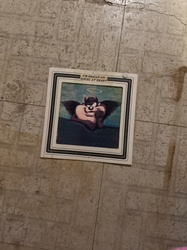
Submitted item photo
Submitted photo · June 17, 2026

User's notes

No additional notes provided.

AI analysis below

AI appraisal

AI analysis & estimate

AI-Generated · Verify before acting

Everything below is generated by AI for informational purposes only. AI can make mistakes — the AI may misidentify items or misattribute them (artist, maker, brand, designer, origin, era). This is not an official valuation and should not be used for insurance, sale, tax, estate, legal, or lending purposes — or any decision requiring a certified appraisal. It is not an authoritative claim about any person, brand, or rights holder — do not share or rely on it as a factual statement about a third party. Always consult qualified professionals before making financial decisions.

Read the full disclaimer

AI Identification

·Not independently authenticated·Verify before acting

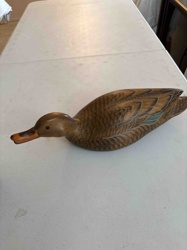
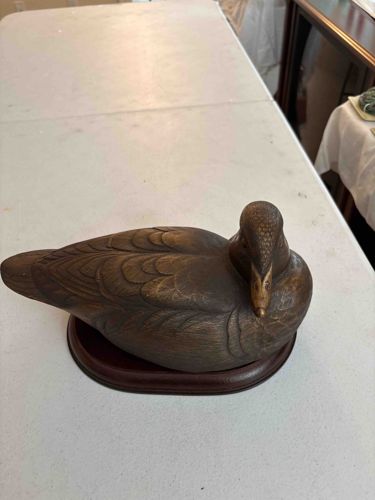
Articulated Wood-Grain Decorative Duck Decoy on Plinth

Collectible Wildlife Art / Decorative Folk Art

AI Estimated Value

·Not an official valuation·Verify before acting

$125.00 - $185.00

As of June 17, 2026

AI Item Analysis

·AI can make mistakes·Verify before acting
This item is a decorative waterfowl figurine, specifically a duck decoy, crafted in a resting position with the head turned sharply to the right. The piece is mounted on an oval, dark-toned wooden plinth base with a beveled edge, suggesting it is intended for display rather than field use. The body of the duck features intricate, hand-carved or molded textural patterns representing feathers, with a repeating scalloped motif across the back and wings. The coloration is a monochromatic deep bronze or dark umber tone, likely achieved through a stained wood finish or a cast resin material designed to simulate aged walnut. A subtle 'wash' or patina effect is visible in the recessed areas of the carving, providing high contrast and highlighting the plumage details. The head exhibits finer, cross-hatched feathering patterns, and the bill is rendered in a slightly lighter, antique gold or ochre shade, which appears to be applied paint or gilt. The condition appears excellent with minimal signs of handling; no major chips, cracks, or structural losses are evident from this angle. The craftsmanship suggests a mid-to-late 20th-century decorative piece, possibly a high-end giftware item from a manufacturer such as Duck's Unlimited or a similar wildlife artisan studio. The realistic anatomy paired with the stylized monochromatic finish indicates a piece designed for traditional library or study decor.
AI Appraisal Report

·AI can make mistakes·Verify before acting
I have examined the digital representation of this Articulated Wood-Grain Decorative Duck Decoy. The piece serves as a classic example of late 20th-century 'library-style' wildlife art. Based on its uniform texture and the specific repetition of the scalloped feather patterns, the item appears to be a cold-cast resin or high-quality composite material rather than a hand-carved piece of timber. The 'wood-grain' effect is a masterfully applied patina designed to simulate aged walnut or stained hardwoods. The condition is excellent, showing no significant abrasions or structural fatigue at the neck joint or base. In the current secondary market, decorative decoys of this caliber are regularly traded as high-end giftware. While not a functional hunting tool, its aesthetic appeal aligns with traditional motifs. Comparables from organizations like Ducks Unlimited or boutique outdoor retailers suggest a stable value for collectors of wildlife memorabilia. The value is driven by the aesthetic execution rather than provenance or artisan rarity. Limitations of this appraisal include the inability to verify the weight or base-material density through an image; a physical inspection is required to confirm if the material is solid wood or molded resin. Furthermore, a search for a manufacturer's mark or signature on the underside of the plinth—hidden in these views—would be necessary to determine if this is a signed limited edition or a mass-produced piece, the latter of which would place the value at the lower end of the provided range. No scientific testing is required beyond a tactile inspection for casting seams.

Get your items appraised

Instant estimates of your treasures with AI-powered appraisals

Browse More Appraisals