AI Appraisal Estimate

AI-generated estimates · not official valuations

From the user

What was submitted

Photo and notes provided by the user — not generated by AI

Submitted item photo
Submitted photo · June 9, 2026

User's notes

Salt and pepper

AI analysis below

AI appraisal

AI analysis & estimate

AI-Generated · Verify before acting

Everything below is generated by AI for informational purposes only. AI can make mistakes — the AI may misidentify items or misattribute them (artist, maker, brand, designer, origin, era). This is not an official valuation and should not be used for insurance, sale, tax, estate, legal, or lending purposes — or any decision requiring a certified appraisal. It is not an authoritative claim about any person, brand, or rights holder — do not share or rely on it as a factual statement about a third party. Always consult qualified professionals before making financial decisions.

Note

This analysis also relies on unverified notes provided by the user, which may be incomplete or inaccurate and could affect the result.

Read the full disclaimer

AI Identification

·Not independently authenticated·Verify before acting

Vintage Weighted Sterling Silver Salt and Pepper Shakers

Antique and Vintage Kitchenware / Silverware

AI Estimated Value

·Not an official valuation·Verify before acting

$15 - $30

As of June 9, 2026

AI Item Analysis

·AI can make mistakes·Verify before acting
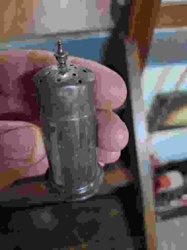
This pair of vintage salt and pepper shakers features a classic weighted design, likely dating from the mid-20th century. Constructed from sterling silver, or potentially silver plate given the visible wear, each shaker stands approximately 3 to 4 inches tall. The silhouette is characterized by a baluster-style body that tapers toward the top, resting on a pedestal base adorned with decorative gadrooned or rope-twist edging. The mid-section of the body features horizontal chased ring details that provide texture and grip. The domed caps are removable and terminate in a small finial point, with fine perforations for dispensing seasonings. In terms of condition, these pieces exhibit significant oxidation and heavy tarnish throughout, particularly visible in the recesses of the decorative bands. There are apparent areas of silver loss or pitting on the main barrels, suggesting prolonged exposure to salt which is corrosive to silver. No maker's marks are visible from this angle, but such items from this period were commonly produced by manufacturers like Gorham, Empire, or Towle. The weighted base, usually filled with plaster or cement to provide stability, indicates a mid-market craftsmanship aimed at household functionality and traditional table settings.
AI Appraisal Report

·AI can make mistakes·Verify before acting
Based on my visual examination of these salt and pepper shakers, they appear to be mid-20th-century American weighted pieces, likely sterling silver over a plaster or resin core. The lack of visible maker's marks in the provided images hinders specific attribution, though the gadrooned bands and baluster form are consistent with designs by manufacturers like Empire, Duchin, or Gorham. The primary factor driving this valuation is the significant condition issue. Salt is highly corrosive to silver, bordering on destructive if left uncleaned for decades. I observe heavy tarnish and, more critically, what appears to be severe pitting and potential burn-through on the main barrels. If the silver has been compromised to the point where the underlying reinforcement or base metal is visible, their value is reduced strictly to scrap or curiosity pricing. Even as scrap, 'weighted' silver contains very little actual precious metal—often only 5-10% of the total weight. In the current market, pristine examples of similar weighted sets sell between $45 and $65 for their decorative appeal. However, given the heavy oxidation and structural corrosion, these are unlikely to be viable for restoration. A physical inspection would be necessary to determine if the pitting has fully penetrated the silver wall and to locate any faint hallmarks usually found on the underside of the base. Without confirmation of solid sterling manufacture, and given the damage, I must appraise these conservatively.

Get your items appraised

Instant estimates of your treasures with AI-powered appraisals

Browse More Appraisals