AI Appraisal Estimate

AI-generated estimates · not official valuations

From the user

What was submitted

Photo and notes provided by the user — not generated by AI

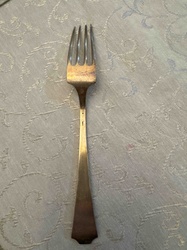
Submitted item photo
Submitted photo · June 30, 2026

User's notes

No additional notes provided.

AI analysis below

AI appraisal

AI analysis & estimate

AI-Generated · Verify before acting

Everything below is generated by AI for informational purposes only. AI can make mistakes — the AI may misidentify items or misattribute them (artist, maker, brand, designer, origin, era). This is not an official valuation and should not be used for insurance, sale, tax, estate, legal, or lending purposes — or any decision requiring a certified appraisal. It is not an authoritative claim about any person, brand, or rights holder — do not share or rely on it as a factual statement about a third party. Always consult qualified professionals before making financial decisions.

Read the full disclaimer

AI Identification

·Not independently authenticated·Verify before acting

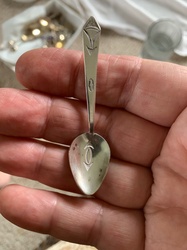
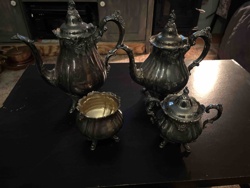
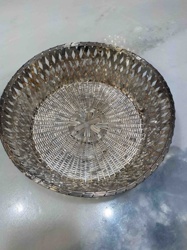
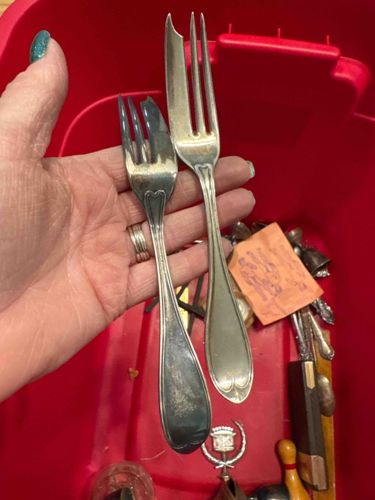
Silver-plated Asparagus Serving Fork and Pastry Fork

Antique and Vintage Silverware

AI Estimated Value

·Not an official valuation·Verify before acting

$25 - $45

As of June 30, 2026

AI Item Analysis

·AI can make mistakes·Verify before acting
This set consists of two distinct silver-plated serving utensils featuring a classic fiddle-style handle with a rounded, flared terminal decorated with a subtle heart-shaped or spade scroll motif at the base of the neck. The larger item is an asparagus serving fork, characterized by its wide, flat tines and a specific notched outer tine designed to cradle delicate stalks. The smaller item is a pastry or dessert fork, featuring three broad tines with a similar notched edge on the leftmost tine, intended for cutting through crusts. Both pieces appear to be mid-20th-century silver plate, showing significant signs of age and use. There is heavy surface tarnish (patina) across the metal, particularly concentrated around the tines and the lower portions of the handles. Fine surface scratches (polishing marks) are visible throughout. The craftsmanship suggests a commercial-grade manufacturer, likely from a mid-century American or European silver company, though specific maker's marks are not visible on the handles' upper surfaces. The construction is solid and heavy-gauge, indicating durable everyday luxury items of their period. No major structural bending is present, but the silver plating may be thinning in high-contact areas beneath the tarnish.
AI Appraisal Report

·AI can make mistakes·Verify before acting
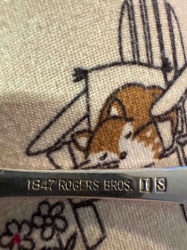
Based on my visual examination of these two serving utensils, I identify them as a mid-20th-century silver-plated asparagus serving fork and a matching pastry/dessert fork. The design features a classic 'Fiddle' pattern variant with a subtle spade or scroll motif at the neck, typical of commercial manufacturing from the 1930s-1950s. The distinct notched tines on both pieces serve specific functions—cradling asparagus stalks and cutting pastry crusts—which adds a nice utilitarian charm to the set. Condition is the primary limiting factor here. Both pieces exhibit heavy oxidation and tarnish that obscures the surface quality. While the underlying metal appears structurally sound without major bends, there are widespread fine surface scratches consistent with decades of use and drawer storage. Without physical handling, I cannot determine if the silver plating has worn through to the base metal (brass or nickel silver) at the high points, a common issue known as 'bleeding.' Despite the specific functionality, the market for silver-plated serving pieces is currently soft. Unlike sterling silver, which has melt value, silver plate relies entirely on aesthetic appeal and pattern collectibility. These appear to be mass-produced, likely by a maker such as Wm. Rogers or 1847 Rogers Bros, though the lack of visible hallmarks limits attribution. To verify a higher value, I would need to physically inspect the reverse side for maker's marks and test for plate thickness. In their current unpolished state, they are valued primarily as vintage curiosities or useful dining accessories rather than investment-grade collectibles.

Get your items appraised

Instant estimates of your treasures with AI-powered appraisals

Browse More Appraisals