AI estimate as of September 1, 2025 · verify with a professional before acting
AI-Generated · Verify before acting
Everything on this page is generated by AI for informational purposes only. AI can make mistakes — the AI may misidentify items or misattribute them (artist, maker, brand, designer, origin, era). This is not an official valuation and should not be used for insurance, sale, tax, estate, legal, or lending purposes — or any decision requiring a certified appraisal. It is not an authoritative claim about any person, brand, or rights holder — do not share or rely on it as a factual statement about a third party. Always consult qualified professionals before making financial decisions.
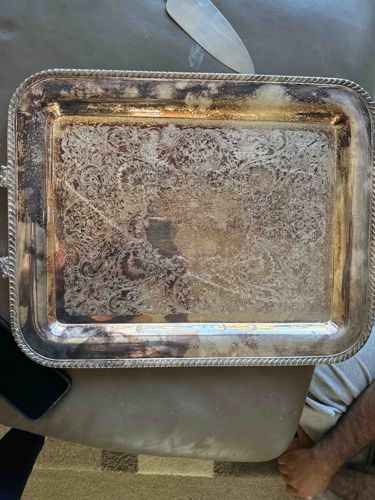
This is a rectangular silver-plated serving tray, characterized by its ornate design and traditional styling. The tray features a highly decorative border with a rope-twist motif that runs along the entirety of the rim. This rope-twist detail is also visible on the handles, which appear to be integrated into the short sides of the tray, although they are not fully visible in the image. The surface of the tray is intricately engraved or chased with an elaborate scrolling floral or foliate pattern, covering the main serving area. The overall color is a dull silver, indicating either silverplate or tarnished sterling silver. There are significant signs of tarnish throughout the entire piece, particularly noticeable with dark, oxidized areas along the edges and within the crevices of the engraved patterns. Some areas of the silver finish appear to be worn, revealing a brassy or yellowish base metal underneath, especially in the center of the tray where usage or polishing may have been more frequent. The construction appears to be machine-made given the uniformity of the decorative patterns, though the detailing suggests a period where such items were popular for formal dining. No discernible maker's marks or signatures are visible in the provided image. Based on the style and apparent wear, it likely dates from the late 19th to mid-20th century, consistent with Victorian, Edwardian, or Art Deco era aesthetics, though a more precise age would require examining any hallmarks. The craftsmanship, despite the tarnish and wear, appears to be of decent quality, typical for household silverplate items intended for a middle to upper-class market. It functions as a decorative and practical item for serving drinks, appetizers, or as a display piece.
AI Appraisal Report
Upon visual examination of the Ornate Silver-Plated Rectangular Serving Tray, I assess its condition as fair to poor, primarily due to significant tarnish and evident wear to the silver plating, revealing the base metal. The ornate rope-twist motif and scrolling floral engraving suggest an aesthetic typical of the late 19th to mid-20th century. Authenticity as silverplate is strongly suggested by the visible wear and underlying brassy tones, though full confirmation would require a physical inspection for hallmarks and a touchstone test. Based on the uniform, intricate detailing, it appears to be a machine-made piece, common for its period.
Market conditions for silver-plated serving trays are currently moderate to low. The demand for such items has decreased, with many pieces readily available at antique malls, online marketplaces, and estate sales. Comparables typically range from $20 to $100 depending on condition, size, and specific ornamentation. This particular piece, owing to its wear and tarnish, falls into the lower end of that range. Rarity is not a factor here; similar ornate silver-plated trays were mass-produced. The tarnish is largely reversible with proper cleaning, which could slightly increase its appeal, but the plating loss is a permanent condition.
Factors significantly impacting its value include the extensive plating wear, which detracts from its aesthetic appeal and long-term durability. While decorative, its practical use might be limited for formal occasions due to this wear. To fully authenticate its age, confirm its metal composition, and identify a potential maker, I would require an in-person examination to locate and interpret any hallmarks. Provenance documentation, if available, could also provide valuable context, but is unlikely to significantly alter the value for a silver-plated item of this nature.