AI identification & appraisal estimate

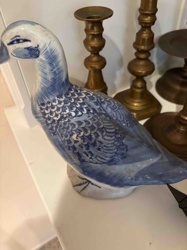
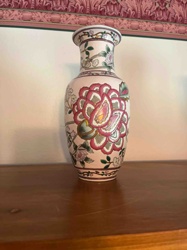
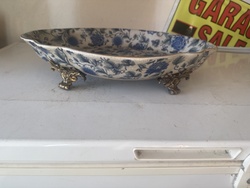
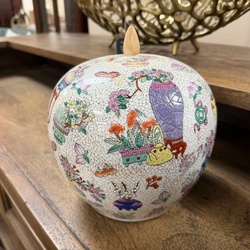
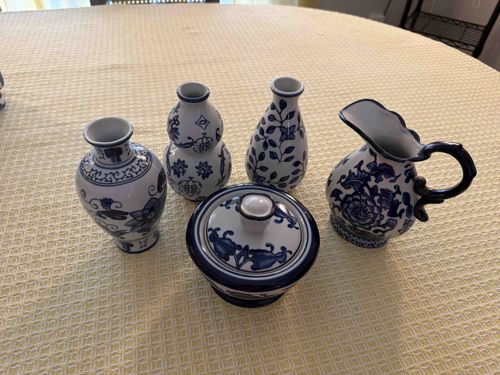
The Bombay Company Blue and White Chinoiserie Porcelain Bud Vase and Tea Set Grouping

Submitted photo of The Bombay Company Blue and White Chinoiserie Porcelain Bud Vase and Tea Set Grouping
Photo submitted by the user — not generated by AI

User's notes

The Bombay Company, made in China

These notes were written by the person who submitted this item. Appraiser.AI has not verified them, and the AI's identification and estimate may rely on them.

AI Estimated Value

Not an official valuation

$45.00 - $65.00

AI estimate as of January 30, 2026 · verify with a professional before acting

AI-Generated · Verify before acting

Everything on this page is generated by AI for informational purposes only. AI can make mistakes — the AI may misidentify items or misattribute them (artist, maker, brand, designer, origin, era). This is not an official valuation and should not be used for insurance, sale, tax, estate, legal, or lending purposes — or any decision requiring a certified appraisal. It is not an authoritative claim about any person, brand, or rights holder — do not share or rely on it as a factual statement about a third party. Always consult qualified professionals before making financial decisions.

This analysis also relies on unverified notes provided by the user, which may be incomplete or inaccurate and could affect the result.

Read the full disclaimer

AI Item Analysis

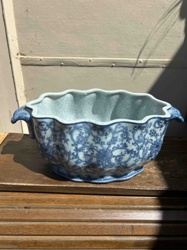
A five-piece collection of blue and white ceramic decorative items, specifically identified as products of The Bombay Company, manufactured in China. This set includes three distinct bud vases, a miniature pitcher, and a small lidded sugar or ginger jar. The items are crafted from porcelain with a bright white base glaze and classic cobalt blue underglaze transfers. The vase shapes include a traditional baluster form with floral panels, a double-gourd or hulu vessel featuring pomegranate and blossom motifs, and an ovoid vase decorated with climbing leaf patterns. The pitcher features a ruffled rim and an ornate, dark cobalt handle with traditional floral scrolling on the body. The lidded jar is round with a matching finial and horizontal banding. All pieces exhibit a high-gloss finish typical of late 20th-century mass-market Chinoiserie. The construction is uniform with smooth, machine-finished bases. Condition appears excellent with no visible chips, cracks, or heavy crazing, though light surface wear consistent with display use may be present on the foot rings. As contemporary reproductions of Ming or Qing dynasty aesthetics, these pieces represent the revival of traditional Chinese export styles marketed for Western home décor between the 1980s and early 2000s.
AI Appraisal Report

I have conducted a visual examination of this five-piece Chinoiserie collection from The Bombay Company. The set, comprising three bud vases, a pitcher, and a lidded jar, represents a classic example of late 20th-century mass-market decorative arts. The condition appears to be 'Excellent' for the secondary market, showing no signs of chips, cracks, or significant crazing. The cobalt blue transfer-ware patterns remain crisp against the white porcelain ground, and the high-gloss glaze is consistent across all pieces. From a market perspective, these items were mass-produced in China for retail through The Bombay Company during its peak in the 1990s. They are not antique; rather, they are contemporary reproductions designed to mimic Qing dynasty export porcelain. Because they were produced in high volume, they lack the rarity or 'maker's mark' prestige of historical Kangxi or Qianlong originals. Similar 'Bombay Co.' ceramic groupings frequently sell in the $10 to $15 per-piece range at estate sales and online auctions. Factors impacting value include the 'set' appeal—keeping these five pieces together increases their decorative utility for staging or interior design. However, the machine-finished bases and the transfer-printed nature (as opposed to hand-painted) limit the ceiling for collectors. Limitations: This appraisal is based solely on digital images. Without physical handling, I cannot confirm the exact weight or the presence of minute hairlines that might be invisible to the camera. Full authentication of age and material quality would require physical inspection of the foot rings for paste composition and translucency tests under a high-intensity light source to verify 'fine' vs. 'commercial' grade porcelain.

Keep exploring

More decorative arts / chinoiserie ceramics appraisals

Get your items appraised

Instant AI-powered appraisal estimates from a photo

Browse More Appraisals