AI Appraisal Estimate

AI-generated estimates · not official valuations

From the user

What was submitted

Photo and notes provided by the user — not generated by AI

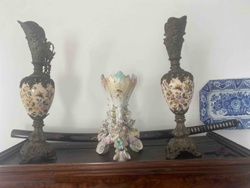
Submitted item photo
Submitted photo · June 10, 2026

User's notes

No additional notes provided.

AI analysis below

AI appraisal

AI analysis & estimate

AI-Generated · Verify before acting

Everything below is generated by AI for informational purposes only. AI can make mistakes — the AI may misidentify items or misattribute them (artist, maker, brand, designer, origin, era). This is not an official valuation and should not be used for insurance, sale, tax, estate, legal, or lending purposes — or any decision requiring a certified appraisal. It is not an authoritative claim about any person, brand, or rights holder — do not share or rely on it as a factual statement about a third party. Always consult qualified professionals before making financial decisions.

Read the full disclaimer

AI Identification

·Not independently authenticated·Verify before acting

Footed Blue and White Transferware Bowl in Chinoiserie Style

Antique Decorative Arts / Ceramics

AI Estimated Value

·Not an official valuation·Verify before acting

$150 - $275

As of June 10, 2026

AI Item Analysis

·AI can make mistakes·Verify before acting
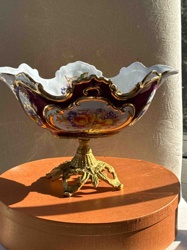
This is a low, oval-shaped decorative ceramic bowl featuring a blue and white transferware floral pattern, commonly referred to as Chinoiserie. The bowl is constructed from earthenware or porcelain with a distinctive crazed glaze extending across both the interior and exterior surfaces. The floral motif consists of dense peony-like blooms and foliage in varying shades of cobalt blue against a creamy white background. A notable feature of this piece is its mounting on four ornate, cast-metal feet, likely brass or bronze-plated, designed in an asymmetrical Rococo or scroll-work style. The rim of the bowl is slightly scalloped and bears a thin gold-toned or brass-effect metallic band around the edge. In terms of condition, the piece shows significant intentional or age-related crazing (fine cracking of the glaze), which is often seen in vintage-style reproductions or antique earthenware. There appears to be a heavy patina and some green oxidation (verdigris) on the metal feet, suggesting age or exposure to moisture. While the exact maker's mark is not visible, the style of the transferware and the ornate metal mounts suggest a late 19th-century aesthetic, though it may be a high-quality mid-20th-century decorative reproduction. The craftsmanship is evident in the alignment of the transfer pattern and the intricate casting of the support feet.
AI Appraisal Report

·AI can make mistakes·Verify before acting
I have conducted a visual examination of the footed blue and white transferware bowl. The piece exhibits a dense floral motif characteristic of the Chinoiserie aesthetic, mounted on four rococo-style cast metal feet. My assessment indicates this is likely a high-quality decorative reproduction from the mid-20th century rather than a true 19th-century antique. The 'crazing' appears highly uniform, suggesting it may be an intentional 'crackle' glaze effect to simulate age. The verdigris on the metal mounts indicates exposure to moisture or an aged patina, adding to its decorative appeal. Market demand for Chinoiserie remains steady among interior designers; however, as an unsigned piece likely produced for the giftware market (such as those by makers like Mottahedeh or similar European/Asian importers), its value is decorative rather than investment-grade. Comparable transferware bowls without provenance typically sell in the $100 to $300 range at regional auctions. Factors impacting value include the integrity of the metallic rim and the stability of the metal-to-ceramic mounts. A significant limitation of this digital appraisal is the inability to inspect the underside for maker’s marks—often hidden by the metal assembly—or to test the ceramic body for porosity. To fully authenticate this as an antique, I would require an in-person inspection to determine if the body is true earthenware or modern porcelain, a chemical test of the metal alloy (brass vs. ormolu), and provenance documentation. Without a mark, the value remains tied to its aesthetic utility as a 'statement piece'.

Get your items appraised

Instant estimates of your treasures with AI-powered appraisals

Browse More Appraisals