AI estimate as of September 8, 2025 · verify with a professional before acting
AI-Generated · Verify before acting
Everything on this page is generated by AI for informational purposes only. AI can make mistakes — the AI may misidentify items or misattribute them (artist, maker, brand, designer, origin, era). This is not an official valuation and should not be used for insurance, sale, tax, estate, legal, or lending purposes — or any decision requiring a certified appraisal. It is not an authoritative claim about any person, brand, or rights holder — do not share or rely on it as a factual statement about a third party. Always consult qualified professionals before making financial decisions.
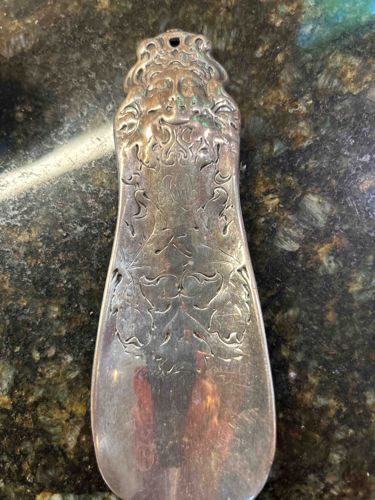
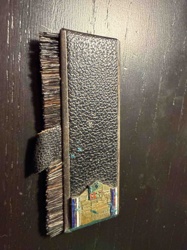
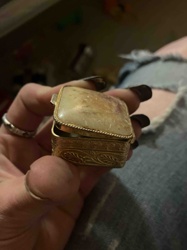
This is an antique ornate shoehorn, likely constructed from a silver-plated base metal, exhibiting a tarnished and patinated surface. The physical characteristics indicate a sturdy, single-piece construction approximately 6-8 inches in length, given it's a typical shoehorn size, although precise dimensions are not ascertainable from the image. The predominant color is a dull, aged silver with visible areas of dark oxidation and greenish verdigris, particularly within the deeper recesses of the ornamentation, suggesting a significant age and exposure to elements. The upper portion of the handle is the most striking feature, cast or embossed with a highly detailed depiction of a human or mythological face, possibly a lion or gargoyle given the flowing mane-like hair and stylized facial features. This face is surrounded by elaborate baroque or rococo-style scrolling acanthus leaf motifs, which continue down the shaft of the shoehorn as engraved or etched patterns. A small, circular hole is present at the very top of the handle, likely for hanging or attachment. The craftsmanship appears to be of good quality, with clear detailing in the relief work and etchings, though some areas of wear and surface scratching are visible, particularly on the broader, flatter part of the shoehorn. The overall style suggests an origin from the late 19th to early 20th century. There are no clear maker's marks or signatures visible in the provided image.
AI Appraisal Report
Based on my visual examination of the Antique Ornate Silver-Plated Shoehorn, I assess its condition as fair to good, consistent with its likely age from the late 19th to early 20th century. The visible tarnish, oxidation, and verdigris are expected for silver-plated items of this period and contribute to its antique appeal, rather than detracting significantly from its value. The detailing of the face and acanthus leaf motifs remains clear, indicating good original craftsmanship, although surface wear and scratches are present.
From a market perspective, ornate silver-plated shoehorns are not exceptionally rare, but pieces with such detailed figural and baroque designs do hold appeal for collectors of decorative arts, vanity items, or personal accessories from the Victorian/Edwardian era. Comparables on online auction sites and antique dealer platforms suggest a range for similar items. Demand for these specific utilitarian antiques is moderate, driven by niche collectors rather than broad appeal.
Key factors impacting value include the intricate handle design, which is more elaborate than many contemporary shoehorns, and its apparent solidity. However, its silver-plated nature, rather than solid silver, limits its intrinsic material value. The absence of maker's marks or a known provenance also prevents a higher valuation, as authenticated pieces often command a premium.
It is crucial to note that my assessment of authenticity is based solely on visual cues from the image. Without a physical in-hand examination, detailed inspection for tell-tale signs of modern reproduction, definitive material testing (to confirm silver-plating over base metal), or a clear provenance, full authentication is not possible. A close examination for specific manufacturing techniques, weight, and subtle hallmarks would be necessary for a conclusive appraisal.