AI estimate as of August 9, 2025 · verify with a professional before acting
AI-Generated · Verify before acting
Everything on this page is generated by AI for informational purposes only. AI can make mistakes — the AI may misidentify items or misattribute them (artist, maker, brand, designer, origin, era). This is not an official valuation and should not be used for insurance, sale, tax, estate, legal, or lending purposes — or any decision requiring a certified appraisal. It is not an authoritative claim about any person, brand, or rights holder — do not share or rely on it as a factual statement about a third party. Always consult qualified professionals before making financial decisions.
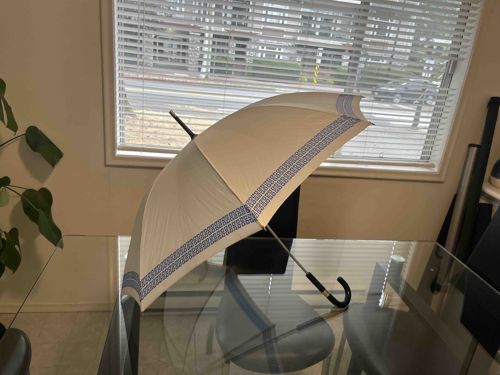
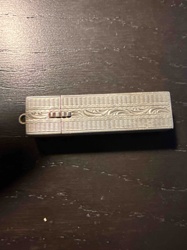
This is a single stick umbrella, likely a men's type given its sturdy appearance and dark handle. The canopy is a light, perhaps off-white or cream color, constructed from a textile material that appears to be nylon or polyester, chosen for its water-repellent properties. It features a distinctive decorative band running along the edge of each panel, approximately 2-3 inches wide, displaying a recurring geometric pattern in a dark color, possibly navy blue or black. This pattern resembles a Greek key or meander design, adding a classical or traditional aesthetic. The umbrella's frame appears to be made of metal, with visible ribs supporting the canopy. The handle is a 'J'-shaped or curved handle, common for stick umbrellas, and appears to be made of a dark, possibly plastic or lacquered wood material, with a lighter band near its base, possibly to enhance grip or as a decorative accent. The overall condition appears good, with no obvious tears, significant stains, or major structural damage visible from the provided image. The canopy seems taut, suggesting the ribs are intact. The handle also looks to be in good shape, without visible cracks or significant wear. There are no discernible maker's marks, signatures, or stamps visible in the image. Given the classic design elements and the functional nature, this umbrella likely dates from the late 20th century to the present day, with the geometric pattern offering a timeless appeal. Its craftsmanship appears solid, indicating a functional and durable item.
AI Appraisal Report
I have examined the provided image of this single stick umbrella with a Greek key pattern. Based on my visual assessment, the umbrella appears to be in good overall condition, showing no significant tears, stains, or structural damage. The canopy is taut, suggesting the ribs are intact, and the 'J'-shaped handle also appears to be in good shape without visible cracks or significant wear. Authenticity, based solely on this image, refers to the visual consistency of its described features. The design, featuring a classic Greek key pattern on a light canopy, coupled with a dark, sturdy handle, aligns with typical men's stick umbrella designs, likely dating from the late 20th century to the present day due to its timeless appeal and common materials like nylon/polyester.
From a market perspective, umbrellas of this nature, while functional and aesthetically pleasing, are generally mass-produced items. Comparables would include standard-quality stick umbrellas from general retailers or department stores, often ranging from utilitarian to moderately fashionable. Demand for such items is consistent but not high-end, as they serve a practical purpose rather than a collectible one. Rarity is not a factor here; the design elements, while classic, are not unique to a specific designer or limited production run. The lack of discernible maker’s marks significantly limits the potential for higher value, as provenance or brand prestige cannot be established.
Factors impacting value are primarily its good condition and classic design, which make it readily usable and acceptable. However, the absence of luxury materials, branded association, or unique craftsmanship keeps its value within the practical range. Limitations in authenticity verification from images alone are significant. I cannot ascertain the quality of the internal frame, the precise material composition of the handle beyond visual appearance (e.g., specific wood type vs. plastic), or the durability of the canopy fabric. Full authentication, especially concerning material quality and true craftsmanship, would require an in-person physical examination to assess tactile qualities, internal structure, and detailed material analysis. Provenance documentation or scientific testing would be necessary if there were claims of it being a rare or designer piece, which is not indicated here.