Three-Light Pewter Candelabrum (Pewter/Zinn)
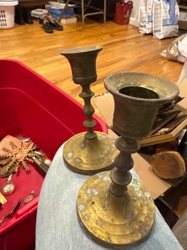
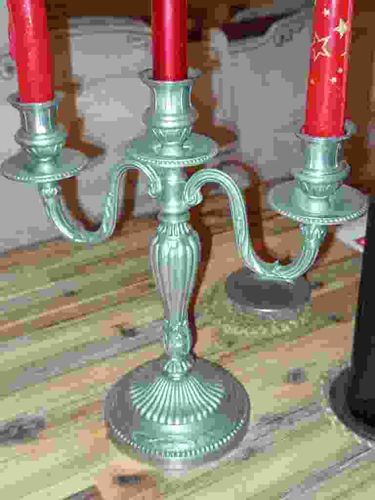
This is a three-light candelabrum crafted from pewter (German: Zinn), exhibiting a dull, silvery-grey metallic finish. The item stands on a wide, circular base featuring radiant fluting or gadrooning, leading to a central baluster-style stem with matching vertical ribbing. Two scrolled, S-curved arms branch out from the central pillar, each supporting a candle cup with beaded drip pans. The central light sits higher than the two flanking arms, creating a classical pyramidal silhouette. The style is heavily influenced by Neoclassical or Baroque revivals common in the mid-to-late 20th century. The construction appears to be cast, likely in several sections and assembled. Notable features include the detailed beaded decorative borders on the drip pans and base rim. In terms of condition, there is a visible aged patina across the surface, with some inconsistencies in the sheen suggesting light oxidation or old wax residue typical for used pewter. One arm appears slightly misaligned compared to the other, which is common in softer metal alloys like pewter. There are no overt maker’s marks visible from this angle, though such items were frequently produced by European foundries like WMF or Frieling. The piece maintains a sturdy, functional appearance with balanced proportions and traditional craftsmanship.
AI-Generated Appraisal Disclaimer
Estimated Value
$45.00 - $75.00
Basic Information
Category
Antique & Vintage Decor / Metalware
Appraised On
March 20, 2026
Estimated Value
$45.00 - $75.00
Additional Details Provided By Owner
User Provided Information
Zinn
Item Description
This is a three-light candelabrum crafted from pewter (German: Zinn), exhibiting a dull, silvery-grey metallic finish. The item stands on a wide, circular base featuring radiant fluting or gadrooning, leading to a central baluster-style stem with matching vertical ribbing. Two scrolled, S-curved arms branch out from the central pillar, each supporting a candle cup with beaded drip pans. The central light sits higher than the two flanking arms, creating a classical pyramidal silhouette. The style is heavily influenced by Neoclassical or Baroque revivals common in the mid-to-late 20th century. The construction appears to be cast, likely in several sections and assembled. Notable features include the detailed beaded decorative borders on the drip pans and base rim. In terms of condition, there is a visible aged patina across the surface, with some inconsistencies in the sheen suggesting light oxidation or old wax residue typical for used pewter. One arm appears slightly misaligned compared to the other, which is common in softer metal alloys like pewter. There are no overt maker’s marks visible from this angle, though such items were frequently produced by European foundries like WMF or Frieling. The piece maintains a sturdy, functional appearance with balanced proportions and traditional craftsmanship.

Get Your Items Appraised
Instant estimates of your treasures with AI-powered instant appraisals