AI Appraisal Estimate

AI-generated estimates · not official valuations

From the user

What was submitted

Photo and notes provided by the user — not generated by AI

Submitted item photo
Submitted photo · June 19, 2026

User's notes

No additional notes provided.

AI analysis below

AI appraisal

AI analysis & estimate

AI-Generated · Verify before acting

Everything below is generated by AI for informational purposes only. AI can make mistakes — the AI may misidentify items or misattribute them (artist, maker, brand, designer, origin, era). This is not an official valuation and should not be used for insurance, sale, tax, estate, legal, or lending purposes — or any decision requiring a certified appraisal. It is not an authoritative claim about any person, brand, or rights holder — do not share or rely on it as a factual statement about a third party. Always consult qualified professionals before making financial decisions.

Read the full disclaimer

AI Identification

·Not independently authenticated·Verify before acting

Pair of Classical Neoclassical-Style Silvered Candlesticks

Antique Metalware / Home Decor

AI Estimated Value

·Not an official valuation·Verify before acting

$450 - $650

As of June 19, 2026

AI Item Analysis

·AI can make mistakes·Verify before acting
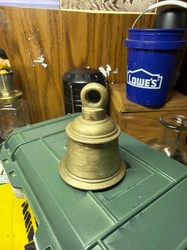
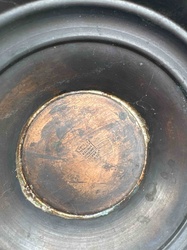
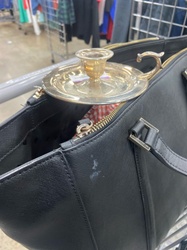
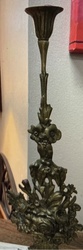
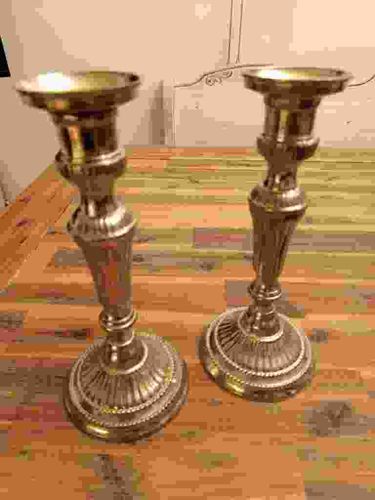
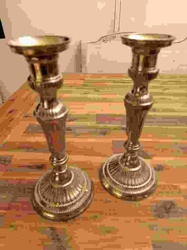
A matching pair of tall, columnar candlesticks, likely crafted from silver-plated brass or a similar alloy. These pieces feature a traditional Neoclassical design characterized by a tiered, circular pedestal base adorned with gadrooning or beaded molding. The central shafts are elegantly tapered and fluted, transitioning through several knops and baluster turns toward the drip pan and candle nozzle. The finish displays a reflective, polished metallic sheen with visible areas of tarnish and oxidation, particularly in the recessed ornamental grooves, which suggests a significant age or a silver-plated medium. This natural patina adds depth to the intricate molding. The construction appears to be high-quality, likely following late 19th or early 20th-century aesthetic conventions (Victorian or Edwardian era). Notable signs of wear include minor surface abrasions, small indentations, and potential loss of plating near the edges, which is typical for frequently handled functional decor. The drip pans are wide with flared rims, designed to catch wax, though no maker's marks or hallmarks are immediately visible on the exterior surfaces; such marks are often located on the base's underside. The overall craftsmanship exhibits refined symmetry and classical proportions, making them suitable for formal display or liturgical use.

AI Appraisal Report

·AI can make mistakes·Verify before acting
I have conducted a visual analysis of this pair of Neoclassical-style silvered candlesticks. The items exhibit a refined aesthetic typical of the late 19th-century Victorian era, though they may date into the early 20th century. My examination of the images reveals a high degree of craftsmanship in the fluted shafts and gadrooned bases. The visible tarnish and 'bleeding' of base metal at high-friction points suggest these are likely silver-plated on brass or copper, rather than solid sterling silver. The condition is fair to good; while the structural integrity remains sound, the surface displays oxidation and minor abrasions consistent with regular ritual or decorative use. The market for metalware remains stable for pairs of this scale (approx. 10-14 inches), as they are highly sought after by proponents of the Grandmillennial and Traditionalist design movements. Comparable pairs of silver-plate candlesticks from the English or American markets typically sell within the $400 to $700 range at auction. Factors bolstering this value include the elegant proportions and the survival of both pieces as a matching set. However, there are significant limitations to a digital appraisal. Without a physical inspection, I cannot verify the presence of hallmarks which may be hidden under the felt-covered bases; identifying a prestigious maker like Elkington or Gorham would increase the value by 20-30%. Furthermore, I cannot definitively confirm the base metal or detect professional repairs to the nozzles. A full authentication would require removing the base padding to inspect for stamps, performing a professional acid test for silver purity, and verifying through provenance documentation that these are period-correct rather than mid-20th-century reproductions.

Get your items appraised

Instant estimates of your treasures with AI-powered appraisals

Browse More Appraisals