AI Appraisal Estimate

AI-generated estimates · not official valuations

From the user

What was submitted

Photo and notes provided by the user — not generated by AI

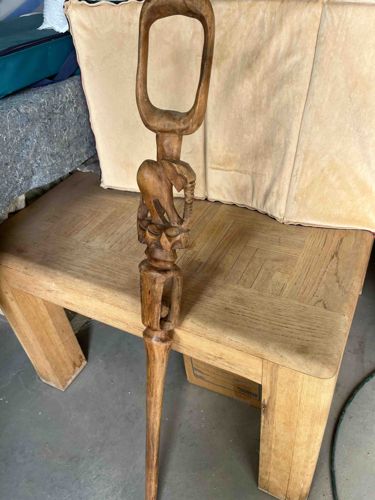
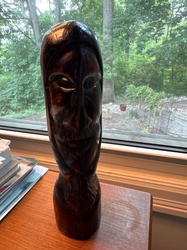
Submitted item photo
Submitted photo · June 27, 2026

User's notes

No additional notes provided.

AI analysis below

AI appraisal

AI analysis & estimate

AI-Generated · Verify before acting

Everything below is generated by AI for informational purposes only. AI can make mistakes — the AI may misidentify items or misattribute them (artist, maker, brand, designer, origin, era). This is not an official valuation and should not be used for insurance, sale, tax, estate, legal, or lending purposes — or any decision requiring a certified appraisal. It is not an authoritative claim about any person, brand, or rights holder — do not share or rely on it as a factual statement about a third party. Always consult qualified professionals before making financial decisions.

Read the full disclaimer

AI Identification

·Not independently authenticated·Verify before acting

Hand-Carved African Elephant Motif Walking Stick

Ethnic Folk Art & Collectibles

AI Estimated Value

·Not an official valuation·Verify before acting

$150 - $250

As of June 27, 2026

AI Item Analysis

·AI can make mistakes·Verify before acting
This is a continuous, single-piece hand-carved walking stick or staff, likely originating from East or West Africa, possibly Kenya or Tanzania. The piece is crafted from a medium-toned hardwood, exhibiting a rich natural grain and a warm honey-brown finish. The handle is uniquely shaped as an open, rounded rectangle, forming a comfortable grip that transitions into a sophisticated central decorative section. This section features a detailed carving of a standing elephant with its trunk lowered, supported by two traditional stylized masks or faces stacked vertically. Below the figurative carvings is an openwork geometric cage containing a loose revolving wooden ball, a characteristic showcase of technical skill in traditional wood carving. The lower shaft tapers to a slender point. The construction appears sturdy, though the wood exhibits some minor drying cracks and surface abrasions consistent with age and use. The craftsmanship suggests a 20th-century origin, likely created as a functional art piece for the tourist trade or local prestige. Small nicks are visible on the sharp edges of the mask carvings, but overall structural integrity remains sound with no evidence of major repair.
AI Appraisal Report

·AI can make mistakes·Verify before acting
This hand-carved hardwood staff exhibits characteristic traits of 20th-century East African craftsmanship, likely from the Kamba or Akamba people of Kenya, known for their proficiency in intricate woodcarvings. Upon visual inspection, the piece demonstrates significant technical skill, particularly evidenced by the 'ball-in-cage' feature which is carved from a single piece of wood without joinery. The elephant motif and stylized masks are typical of the regional aesthetic developed for both local use and the burgeoning mid-to-late 20th-century export market. The condition is fair to good; the minor drying cracks and abrasions noted are typical for hardwood objects transitioning between climates, though they do slightly suppress the value compared to a pristine specimen. While visually striking, the market for such pieces is currently stable but abundant, as many similar items were produced for the souvenir and export trade between 1960 and 1980. Its value is derived more from its decorative folk-art appeal than historical rarity. Please note that this appraisal is based on photographic evidence only. A physical examination is required to confirm the wood species and to ensure that the patina is natural rather than achieved through surface stains. Authentic age can only be verified by inspecting the wear patterns on the base and the interior of the cage. Documentation regarding the specific region of origin or the carver’s identity would be necessary to elevate this piece into a higher 'fine art' category. Without provenance, it remains a high-quality example of African ethnographic folk art.

Get your items appraised

Instant estimates of your treasures with AI-powered appraisals

Browse More Appraisals