AI Appraisal Estimate

AI-generated estimates · not official valuations

From the user

What was submitted

Photo and notes provided by the user — not generated by AI

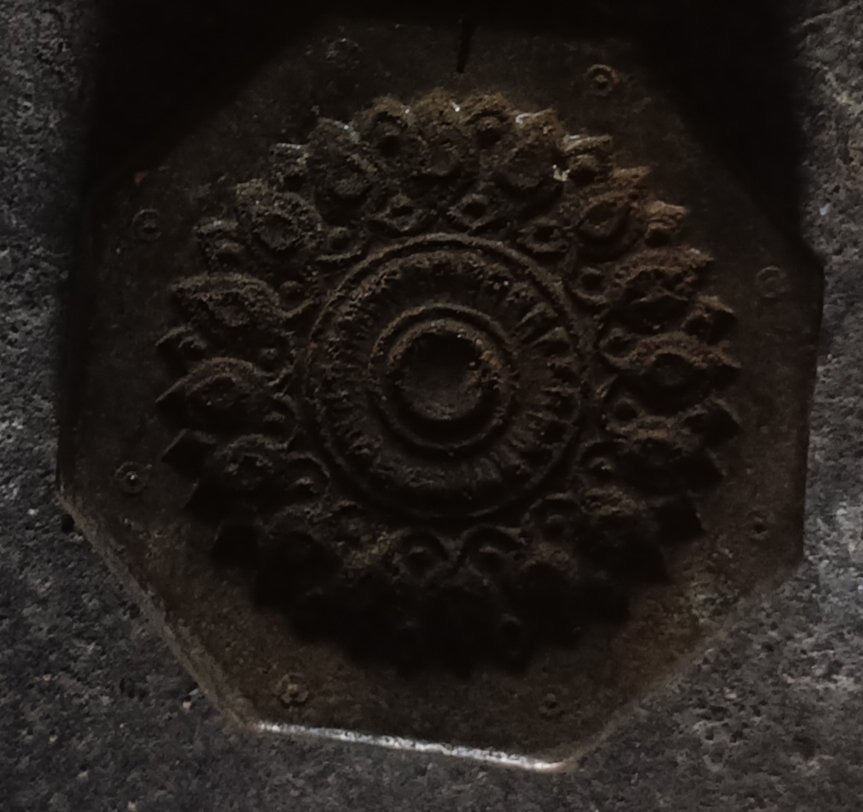
Submitted item photo
Submitted photo · June 30, 2026

User's notes

this is brass made full hand carved jewellery making a medium coin size die tell me it's exact age and price

AI analysis below

AI appraisal

AI analysis & estimate

AI-Generated · Verify before acting

Everything below is generated by AI for informational purposes only. AI can make mistakes — the AI may misidentify items or misattribute them (artist, maker, brand, designer, origin, era). This is not an official valuation and should not be used for insurance, sale, tax, estate, legal, or lending purposes — or any decision requiring a certified appraisal. It is not an authoritative claim about any person, brand, or rights holder — do not share or rely on it as a factual statement about a third party. Always consult qualified professionals before making financial decisions.

Note

This analysis also relies on unverified notes provided by the user, which may be incomplete or inaccurate and could affect the result.

Read the full disclaimer

AI Identification

·Not independently authenticated·Verify before acting

Hand-Carved Brass Intaglio Jewelry Die

Antique Jewelry Making Tools and Industrial Artifacts

AI Estimated Value

·Not an official valuation·Verify before acting

$150 - $250

As of June 30, 2026

AI Item Analysis

·AI can make mistakes·Verify before acting
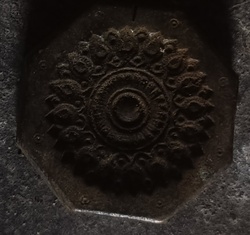
This is a specialized brass industrial or artisanal tool specifically known as a jewelry die or 'chhapa.' The item features a meticulously hand-carved intaglio or 'sunken' pattern designed for the production of circular jewelry elements or coins. It is constructed from a solid piece of high-density brass alloy, displaying an octagonal perimeter border that would have allowed it to be securely fitted into a larger tool base or held firmly during the stamping process. The central motif is an intricate floral mandala or rosette, consisting of concentric registers of teardrop-shaped petals, dot-and-line borders, and a deep central recessed core. The level of detail suggests fine craftsmanship from a master carver, likely originating from South Asia, where such tools are common in traditional goldsmithing. There appears to be a heavy, dark patina across the surface, likely a combination of metal oxidation and accumulated residue from repeated use, such as oil, flux, or metallic dust. This patina adds character and indicates significant age, likely dating to the early-to-mid 20th century. The condition is consistent with an antique working tool, showing softened edges on the outer facets and superficial wear within the grooves, yet the primary design remains crisp enough for functional use. Such pieces are increasingly collected as art objects due to the decline of traditional hand-die making in the face of modern CNC and laser technology.
AI Appraisal Report

·AI can make mistakes·Verify before acting
I have examined the hand-carved brass intaglio jewelry die, often referred to in trade circles as a 'chhapa.' My visual inspection confirms the item is a solid brass alloy tool featuring a hand-cut floral rosette motif. The octagonal geometry and the specific wear patterns—including the 'mushrooming' of edges and deep oxidation—indicate a production date circa 1920–1950. The tool exhibits a high degree of manual skill; the concentricity of the teardrop elements suggests a master carver's hand, placing it above mass-produced industrial stamps. Current market demand for antique smithing tools has shifted from purely functional use to decorative collection and 'industrial chic' art. Comparables for South Asian brass dies of this size and complexity typically realize between $100 and $300 at specialized tool auctions or through ethnographic art dealers. The value is buoyed by the intricate central motif but slightly limited by the lack of a known carver's mark or specific workshop provenance. It is important to note that without a physical metallurgical analysis to confirm the specific zinc-to-copper ratio, I cannot definitively rule out modern high-quality replicas treated with chemical aging. Full authentication would require an in-person examination to check for microscopic 'chatter marks' consistent with period-correct chisels versus modern high-speed rotary tools. Furthermore, a physical inspection would allow for a 'ring test' to determine the density and structural integrity of the alloy, which significantly impacts its viability for continued use in a professional studio.

Get your items appraised

Instant estimates of your treasures with AI-powered appraisals

Browse More Appraisals