AI estimate as of August 10, 2025 · verify with a professional before acting
AI-Generated · Verify before acting
Everything on this page is generated by AI for informational purposes only. AI can make mistakes — the AI may misidentify items or misattribute them (artist, maker, brand, designer, origin, era). This is not an official valuation and should not be used for insurance, sale, tax, estate, legal, or lending purposes — or any decision requiring a certified appraisal. It is not an authoritative claim about any person, brand, or rights holder — do not share or rely on it as a factual statement about a third party. Always consult qualified professionals before making financial decisions.
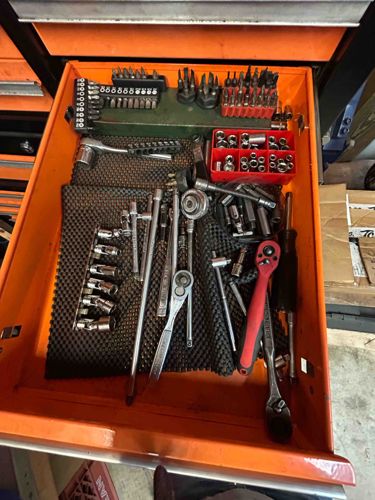
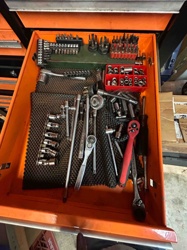
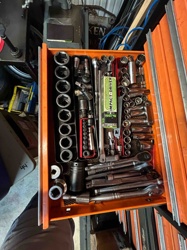
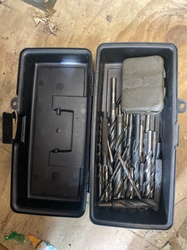
This item is an orange-colored drawer of a larger tool chest, specifically designed for organizing and storing various hand tools. The interior of the drawer is lined with a dark, textured, possibly foam or rubber matting, which provides grip and prevents tools from sliding around, also protecting the drawer and tools from scratches. The drawer is filled with an assortment of mechanics' and general-purpose hand tools, predominantly made of polished metal, likely chrome vanadium steel or similar alloys known for durability.
Observable tools include several ratchets of varying sizes, extension bars, universal joints, numerous sockets (both standard and deep-well, some housed in a red plastic organizer tray), hex key sets, screwdriver bits, and possibly some specialty drive tools. Some larger tools, such as what appears to be a breaker bar or larger wrench, are also visible.
The condition of the tools appears to be moderately used, with some showing signs of wear consistent with regular use, such as minor scuffs, grime, and perhaps some light surface oxidation on less frequently polished areas, though no significant damage like cracks or heavy rust is immediately apparent. The drawer itself appears clean and well-maintained, indicating a user who takes care of their equipment. The tools exhibit typical manufacturing quality for professional or enthusiast-grade items, suggesting precision engineering for fit and function. There are no discernible manufacturer's marks or signatures visible on individual tools in this image, but the overall presentation suggests a collection built over time rather than a single kit. The style is utilitarian and functional, common for modern hand tools used in automotive, machinery, or general maintenance work.
AI Appraisal Report
I have thoroughly examined the provided image of this mechanic's tool drawer filled with assorted hand tools. Based on my visual assessment, the condition of the tools is consistently moderate, showing typical wear from regular use without significant damage. The drawer itself is clean and well-maintained. Authenticity, based solely on visual cues, points to genuine professional or enthusiast-grade tools. There are no visible red flags suggesting counterfeits; the quality appears consistent with reputable manufacturers, although specific brands cannot be identified from the image.
The market for used, good-quality hand tools is robust, driven by mechanics, DIY enthusiasts, and tradespeople. Comparables would include used sets from brands like Craftsman, Stanley, Husky, or even entry-level Snap-on/Matco tools, typically sold individually or in small lots on secondary markets. The assortment here, including various ratchets, sockets, extensions, and hex keys, represents a comprehensive basic set for automotive or general repair.
Demand for such versatile tool collections remains strong, as they are essential for many crafts. Rarity is not a factor here; these are common, mass-produced items. Factors significantly impacting value include the quality and quantity of the tools, their condition, and the utility of the storage system. The inclusion of a fitted drawer liner enhances desirability. Without knowing the brands, I must err on the side of caution regarding the high-end value.
Limitations in authenticity verification are significant. From an image alone, I cannot verify the material composition or internal mechanisms of the tools. Full authentication would require in-person examination to check for brand markings, evaluate tool heft and balance, test functionality, and inspect for subtle signs of wear that indicate quality. Provenance documentation (e.g., original purchase receipts) or scientific testing (e.g., material analysis) would be needed for definitive authentication and to ascertain the specific manufacturers.