AI Appraisal Estimate

AI-generated estimates · not official valuations

From the user

What was submitted

Photo and notes provided by the user — not generated by AI

Submitted item photo
Submitted photo · June 6, 2026

User's notes

No additional notes provided.

AI analysis below

AI appraisal

AI analysis & estimate

AI-Generated · Verify before acting

Everything below is generated by AI for informational purposes only. AI can make mistakes — the AI may misidentify items or misattribute them (artist, maker, brand, designer, origin, era). This is not an official valuation and should not be used for insurance, sale, tax, estate, legal, or lending purposes — or any decision requiring a certified appraisal. It is not an authoritative claim about any person, brand, or rights holder — do not share or rely on it as a factual statement about a third party. Always consult qualified professionals before making financial decisions.

Read the full disclaimer

AI Identification

·Not independently authenticated·Verify before acting

International Philatelic Collection (Assorted World Postage Stamps)

Philately / Collectible Postage Stamps

AI Estimated Value

·Not an official valuation·Verify before acting

$15.00 - $35.00

As of June 6, 2026

AI Item Analysis

·AI can make mistakes·Verify before acting
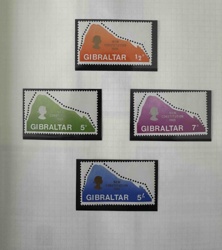
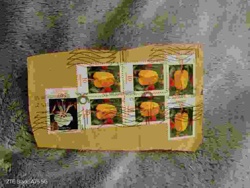
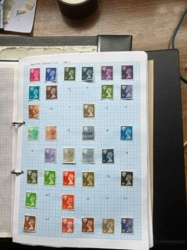
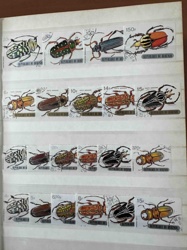
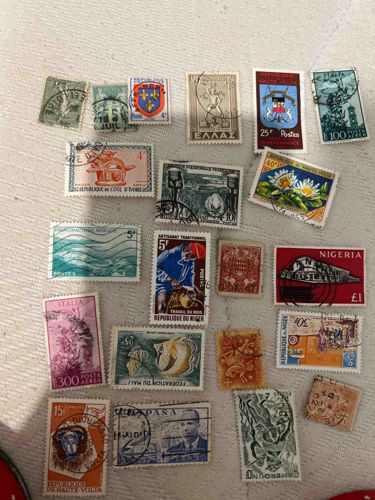
This is a diverse collection consisting of approximately 20 miscellaneous postage stamps from various international jurisdictions, primarily dating from the mid-20th century. The collection features a wide geographic range including stamps from Upper Volta (Haute-Volta), Greece (Ellas), Niger, Mali, Italy, Ivory Coast (Côte d'Ivoire), French Equatorial Africa, and Nigeria. The stamps are primarily printed on paper with perforated edges and various color palettes ranging from monochrome green and sepia to vibrant polychromatic designs. Key imagery includes local handicrafts (woodworking from Niger), flora and fauna (fish from Mali, flowers from Upper Volta), historical figures, and architectural landmarks (Italian airmail). Most items appear to be in 'used' condition, evidenced by prominent circular date stamps (postmarks) and cancellations in black ink. Some examples show signs of wear consistent with age, including slightly yellowed paper, blunted perforations, and minor creasing. Notable individual pieces include a Nigerian £1 stamp featuring a bridge, a colorful aquatic-themed stamp from the Fédération du Mali, and several French colonial-era issues. The printing techniques vary from lithography to photogravure, reflecting the standard manufacturing quality of state-issued postal departments during the 1950s and 1960s. The overall collection represents a thematic study of African and European postal history during a period of significant geopolitical transition.
AI Appraisal Report

·AI can make mistakes·Verify before acting
I have completed a visual assessment of this 20-piece international philatelic collection. The assembly constitutes a typical 'packet' of used world stamps primarily from the mid-20th century, with a focus on West African nations and European issues. The condition of the pieces varies; several exhibit heavy cancellations that obscure the original artwork, and I observed instances of blunted perforations and moderate toning on the Nigerian and French colonial issues. While the Nigerian £1 high-value definitive is a notable inclusion, its 'used' status and visible crease significantly diminish its specialized market value. In the current philatelic market, stamps of this era and type are widely available in bulk quantities. The rarity factor is low, as these were mass-produced for standard postal circulation and subsequently harvested for the collector market. The primary value lies in the topical interest—specifically the ethnographic and botanical themes—rather than investment-grade scarcity. Please note that this appraisal is based on digital images only. A physical inspection is required to verify the presence of original gum (for unused specimens), detect hidden repairs, or identify specific watermarks and paper varieties that can occasionally distinguish a common stamp from a rare variant. Furthermore, checking for 'hinge remnants' or 'thins' on the reverse side is impossible without manual handling. For a definitive authentication, I would recommend a physical examination using a long-wave UV light to check for paper fluorescence and a watermark detector fluid analysis.

Get your items appraised

Instant estimates of your treasures with AI-powered appraisals

Browse More Appraisals