AI identification & appraisal estimate

Round Brilliant Cut Gemstone

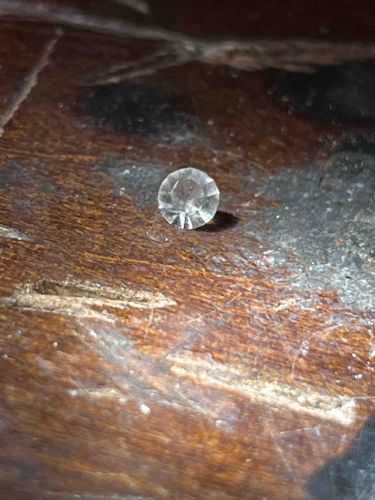
Submitted photo of Round Brilliant Cut Gemstone
Photo submitted by the user — not generated by AI

AI Estimated Value

Not an official valuation

$50 - $300

AI estimate as of October 24, 2025 · verify with a professional before acting

AI-Generated · Verify before acting

Everything on this page is generated by AI for informational purposes only. AI can make mistakes — the AI may misidentify items or misattribute them (artist, maker, brand, designer, origin, era). This is not an official valuation and should not be used for insurance, sale, tax, estate, legal, or lending purposes — or any decision requiring a certified appraisal. It is not an authoritative claim about any person, brand, or rights holder — do not share or rely on it as a factual statement about a third party. Always consult qualified professionals before making financial decisions.

Read the full disclaimer

AI Item Analysis

The item is a small, colorless to near-colorless gemstone, likely a diamond simulant or a genuine diamond, cut in a round brilliant style. Its precise dimensions are not discernible from the image, but it appears to be approximately 3-5 millimeters in diameter. The stone exhibits numerous facets designed to maximize sparkle and brilliance, typical of the brilliant cut, which can be seen reflecting ambient light. The primary visible physical characteristic is its transparency and excellent light return, suggesting a well-polished surface. There are no visible inclusions or internal imperfections that can be discerned from the image, although a more thorough examination under magnification would be required to confirm clarity. The color appears to be within the D-J range on the GIA color scale, indicating it is largely colorless or near-colorless. The craftsmanship of the faceting appears neat, with sharp facet junctions. No maker's marks or signatures are present as this is a loose gemstone. The gemstone is resting on a dark, possibly wooden, textured surface that shows wear, scratches, and some lighter-colored dust or debris, which provides a stark contrast to the bright stone. The surrounding surface also appears to have areas of discoloration and potential moisture damage or staining. The stone itself shows no obvious signs of wear, chips, or abrasions, suggesting it is either newly cut or well-preserved. Without further testing, it is difficult to determine if this is a natural diamond, a lab-grown diamond, or a simulant such as cubic zirconia or moissanite. Its aesthetic implies a contemporary style often used in fine jewelry.

AI Appraisal Report

I have visually examined the provided image of a small, round brilliant cut gemstone. Based on its appearance, it presents as a polished, colorless to near-colorless stone, likely in the 3-5mm diameter range. The faceting appears neat, exhibiting good brilliance and light return, which is characteristic of this popular cut. I observe no visible inclusions or surface abrasions, suggesting either high clarity or excellent preservation. However, my primary limitation in this appraisal is the inability to ascertain the stone's authenticity and origin from an image alone. Without physical inspection and scientific testing, it is impossible to definitively determine if this is a natural diamond, a lab-grown diamond, moissanite, cubic zirconia, or another simulant. Each of these possibilities carries vastly different market values. Market conditions for small, colorless brilliant-cut stones vary widely based on their nature. A natural diamond of this size (approximately 0.10 to 0.25 carats, assuming typical dimensions) in the D-J color and VS-SI clarity range could command $200-$300. A lab-grown diamond of similar characteristics might range from $50-$150. A moissanite or high-quality cubic zirconia of this size would typically be in the $10-$50 range. Given the stone's small size, inherent rarity is not a significant factor unless it proves to be a rare natural diamond with exceptional clarity and color, which is indiscernible here. Key factors significantly impacting value are its identity (natural vs. lab-grown vs. simulant), exact color and clarity grades, and precise carat weight. For full authentication and a definitive appraisal, I would require a physical examination to perform tests such as refractive index measurement, thermal conductivity testing, and microscopic examination for growth patterns or characteristic inclusions. Consultation of provenance documentation would also be beneficial if available.

Keep exploring

More gemstone appraisals

Get your items appraised

Instant AI-powered appraisal estimates from a photo

Browse More Appraisals