AI Appraisal Estimate

AI-generated estimates · not official valuations

From the user

What was submitted

Photo and notes provided by the user — not generated by AI

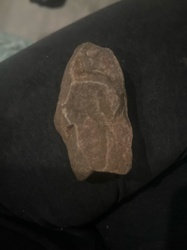
Submitted item photo
Submitted photo · June 4, 2026

User's notes

No additional notes provided.

AI analysis below

AI appraisal

AI analysis & estimate

AI-Generated · Verify before acting

Everything below is generated by AI for informational purposes only. AI can make mistakes — the AI may misidentify items or misattribute them (artist, maker, brand, designer, origin, era). This is not an official valuation and should not be used for insurance, sale, tax, estate, legal, or lending purposes — or any decision requiring a certified appraisal. It is not an authoritative claim about any person, brand, or rights holder — do not share or rely on it as a factual statement about a third party. Always consult qualified professionals before making financial decisions.

Read the full disclaimer

AI Identification

·Not independently authenticated·Verify before acting

Small translucent mineral fragments

Minerals and Natural Specimens

AI Estimated Value

·Not an official valuation·Verify before acting

$5 - $25

As of June 4, 2026

AI Item Analysis

·AI can make mistakes·Verify before acting
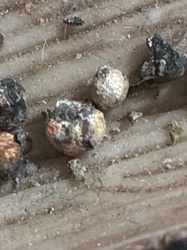
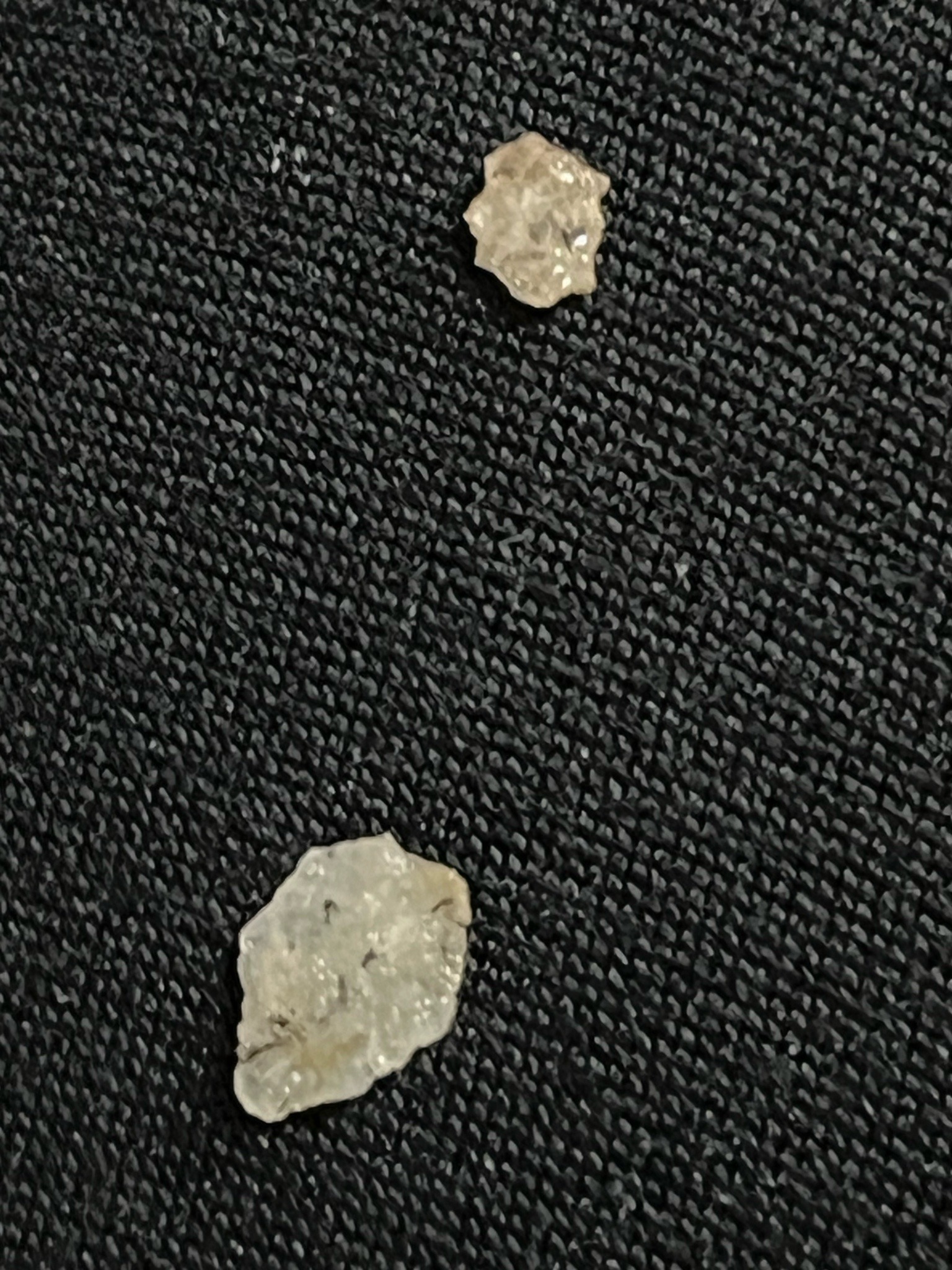
This image displays two small, irregularly shaped mineral fragments resting on a textured black fabric surface. The specimens appear translucent to milky white in color with some visible internal inclusions or surface debris that present as dark specks. The upper fragment has a somewhat jagged, crystalline appearance with several small protrusions, while the lower fragment is larger and flatter with a more rounded but still uneven perimeter. Based on visual characteristics alone, these specimens are stylistically consistent with raw quartz fragments, salt crystals, or perhaps industrial gemstone rough, though a specific mineralogical identification would require physical testing such as hardness, cleavage, or refractive index analysis. No maker’s marks, labels, or indicators of provenance are visible. The items appear to be in an unpolished, raw state with no evidence of intentional facet cutting or jewelry mounting. Due to the lack of identifying marks or comparative scale, the age and exact geological origin remain speculative. The hedging is necessary as many minerals present with similar visual properties under photographic light, making a visual-only identification subject to in-person verification.
AI Appraisal Report

·AI can make mistakes·Verify before acting
Based on my examination of the provided image, I have analyzed two small, translucent mineral fragments. These specimens exhibit physical characteristics—such as a milky-to-clear opacity and irregular fracture patterns—that suggest a hypothesis of raw quartz or common crystalline fragments. From a photograph, I cannot verify the specific mineral identity, as many common minerals like salt or industrial-grade calcite share these visual traits. A physical inspection including a Mohs hardness test and refractive index analysis would be necessary to identify the material with certainty. The fragments appear to be in a raw, unpolished state with no evidence of artisan lapidary work or jewelry setting. The value estimate is based on the assumption that these are common mineral specimens of a small scale. Currently, the market for unidentified, raw mineral chips of this size is largely driven by hobbyist collectors or those interested in metaphysical supplies, where such items are typically sold in bulk or at very low individual price points. Higher values would only be justified if these were identified as high-clarity gemstone rough or rare mineral species, which cannot be determined here. If these are indeed common quartz or calcite, the value remains nominal. Without provenance or a scientific identification, the market reflects their utility as basic decorative or educational specimens. To advance this appraisal, one would need to provide the total weight in grams or carats and seek a gemological report to rule out synthetic or treated materials. If the fragments were found to be a rare or high-demand mineral, the value range could shift significantly upward, whereas if they are common salt or glass, the value would be negligible.

Get your items appraised

Instant estimates of your treasures with AI-powered appraisals

Browse More Appraisals