AI Appraisal Estimate

AI-generated estimates · not official valuations

From the user

What was submitted

Photo and notes provided by the user — not generated by AI

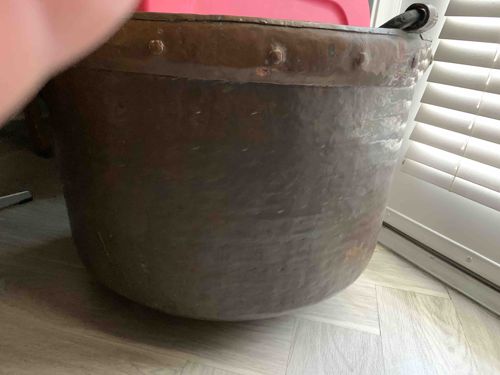
Submitted item photo
Submitted photo · June 6, 2026

User's notes

No additional notes provided.

AI analysis below

AI appraisal

AI analysis & estimate

AI-Generated · Verify before acting

Everything below is generated by AI for informational purposes only. AI can make mistakes — the AI may misidentify items or misattribute them (artist, maker, brand, designer, origin, era). This is not an official valuation and should not be used for insurance, sale, tax, estate, legal, or lending purposes — or any decision requiring a certified appraisal. It is not an authoritative claim about any person, brand, or rights holder — do not share or rely on it as a factual statement about a third party. Always consult qualified professionals before making financial decisions.

Read the full disclaimer

AI Identification

·Not independently authenticated·Verify before acting

Large Antique Copper Kettle

Cookware

AI Estimated Value

·Not an official valuation·Verify before acting

$150-300

As of June 6, 2026

AI Item Analysis

·AI can make mistakes·Verify before acting
This is a large, antique copper kettle or pot. It is roughly cylindrical with a rounded bottom and appears to be substantial in size, although specific dimensions are not available from the image. The material is clearly copper, exhibiting a well-developed patina and some areas of verdigris, suggesting significant age and exposure. The surface shows evidence of hand-hammering, particularly visible on the main body and near the rim, a sign of traditional craftsmanship. The rim is reinforced with a separate band of copper, secured with visible rivets that are irregularly spaced and slightly domed. This riveted construction is a key indicator of its age and manufacturing methods, likely dating to a period when such techniques were common for constructing durable cookware. There is at least one dark, possibly wrought-iron handle attached near the rim, which would have been used for lifting or hanging the heavy pot. The handle appears to be attached through a loop or bracket also secured with rivets. The overall condition shows significant wear and tear consistent with extensive use. There are numerous scratches, scuffs, and areas where the patina is worn away, revealing the brighter copper underneath. No manufacturer's marks, signatures, or stamps are discernible in the provided image. Based on the construction technique, material, and patina, this kettle likely dates to the late 19th or early 20th century. Its handmade quality and aged appearance give it significant character.
AI Appraisal Report

·AI can make mistakes·Verify before acting
Based on my examination of the submitted image, this appears to be a large, antique hand-hammered copper kettle or pot, likely dating from the late 19th to early 20th century. The visual evidence of hand-hammering, the riveted construction of the rim and handle attachments, and the substantial patina with areas of verdigris are consistent with this age and traditional craftsmanship. The dark iron handle is also typical of this period. Its condition shows significant wear, including scratches and wear to the patina, indicative of extensive past use and handling, which is expected for such an item and adds character rather than detracting significantly, provided there are no structural issues like holes or significant damage (which cannot be confirmed from the image). Market conditions for antique copper cookware are generally stable, with demand driven by collectors and individuals seeking authentic, decorative kitchen items. Large, visibly hand-made examples like this tend to command more interest than mass-produced pieces. While not exceptionally rare, the size and apparent age contribute to its appeal. Factors impacting value include its size, visible hand craftsmanship, and overall condition. The most significant limitation to a definitive appraisal from the image alone is the inability to physically inspect for structural integrity, gauge material thickness, and search for any obscured maker's marks or repairs. Full authentication would require in-person examination to confirm construction details, assess for repairs, and potentially investigate provenance if available.

Get your items appraised

Instant estimates of your treasures with AI-powered appraisals

Browse More Appraisals