AI Appraisal Estimate

AI-generated estimates · not official valuations

From the user

What was submitted

Photo and notes provided by the user — not generated by AI

Submitted item photo
Submitted photo · June 8, 2026

User's notes

No additional notes provided.

AI analysis below

AI appraisal

AI analysis & estimate

AI-Generated · Verify before acting

Everything below is generated by AI for informational purposes only. AI can make mistakes — the AI may misidentify items or misattribute them (artist, maker, brand, designer, origin, era). This is not an official valuation and should not be used for insurance, sale, tax, estate, legal, or lending purposes — or any decision requiring a certified appraisal. It is not an authoritative claim about any person, brand, or rights holder — do not share or rely on it as a factual statement about a third party. Always consult qualified professionals before making financial decisions.

Read the full disclaimer

AI Identification

·Not independently authenticated·Verify before acting

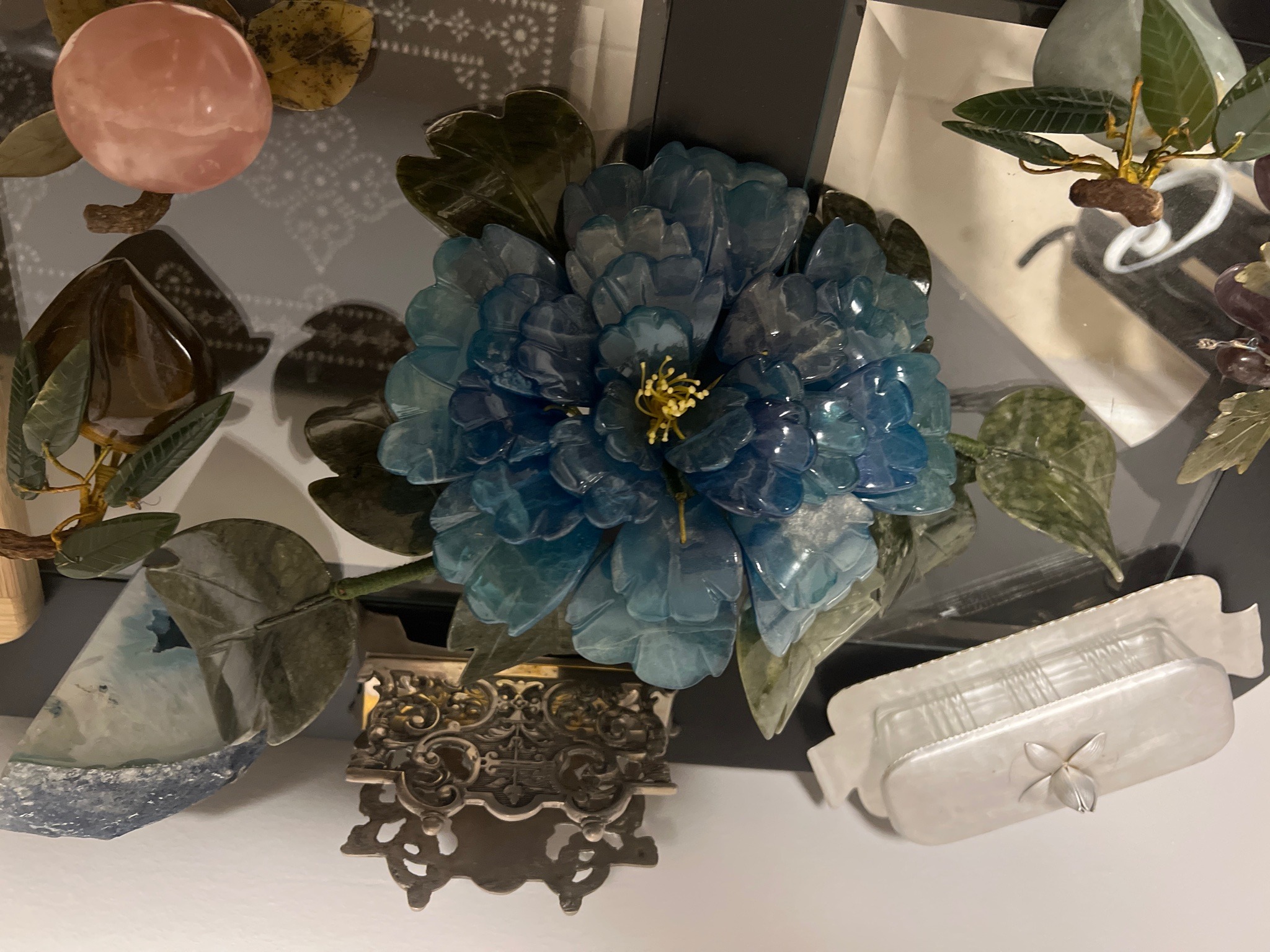
Carved Stone Peony in the Chinese Style (Shiwan or Jade Style)

Decorative Arts / Asian Collectibles

AI Estimated Value

·Not an official valuation·Verify before acting

$250 - $450

As of June 8, 2026

AI Item Analysis

·AI can make mistakes·Verify before acting
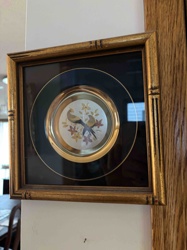
This decorative item features a prominent, multi-petaled peony blossom crafted from a translucent, teal-blue stone, likely glass or a dyed semiprecious stone like agate or fluorite. The petals are individually carved with undulating edges and layered to create a dense, realistic flower head. At the center is a cluster of yellow wire-tipped stamens. The bloom is flanked by various carved foliage and fruits, including dark green spinach-colored leaves and surrounding elements that appear to be carved from rose quartz (the pink sphere) and tiger’s eye or jasper (the brown polished form). The construction utilizes wire-wrapping techniques, with stems covered in green thread or silk, typical of Mid-20th Century Asian decorative arts. While the main flower dominates the composition, visible cracks or inclusions in the stone petals suggest some natural fragility or aged wear. Beneath the floral arrangement sits a silver-toned metal filigree base with intricate Victorian-style scrollwork, which may be a separate holder or part of an eclectic assembly. The overall craftsmanship shows significant manual effort in the shaping of individual gemstone components into a botanical form, likely dating from the mid-to-late 20th century.
AI Appraisal Report

·AI can make mistakes·Verify before acting
I have examined the carved stone peony arrangement via high-quality imagery. The piece reflects the mid-20th-century tradition of Asian export decorative arts, specifically mimicking 'Jade Tree' (Penjing) styles. The central bloom appears to be carved from dyed chalcedony or fluorite, while the incidental fruit and foliage likely comprise rose quartz and spinach jade. The construction—utilizing silk-wrapped wire—is consistent with 1950s–1970s craftsmanship. The silver-toned filigree base adds an eclectic appeal but appears to be a later European-style marriage or a separate pedestal, rather than an original integrated component. This creates a unique 'East-meets-West' aesthetic that appeals to certain boutique collectors. Visible inclusions and minor fracturing in the teal petals suggest material fragility, a common issue with these decorative items. The market for mid-century hardstone florals remains steady but niche, with higher values reserved for pieces in pristine condition or those with rare 'Imperial' green jade components. Limitations: My assessment is based solely on visual characteristics. An in-person inspection is required to determine the purity of the metal base (silver purity versus plated brass) and to verify if the stones are natural or glass-based composites. I would recommend a streak test or thermal conductivity check on the teal petals to confirm the mineral identity. Furthermore, provenance documentation regarding the base's origin would be necessary to establish if the assembly has historical significance beyond its decorative value. Without hands-on verification of the stone's hardness and the base's hallmark, this valuation remains a fair-market estimate for decorative purposes.

Get your items appraised

Instant estimates of your treasures with AI-powered appraisals

Browse More Appraisals