AI estimate as of July 18, 2025 · verify with a professional before acting
AI-Generated · Verify before acting
Everything on this page is generated by AI for informational purposes only. AI can make mistakes — the AI may misidentify items or misattribute them (artist, maker, brand, designer, origin, era). This is not an official valuation and should not be used for insurance, sale, tax, estate, legal, or lending purposes — or any decision requiring a certified appraisal. It is not an authoritative claim about any person, brand, or rights holder — do not share or rely on it as a factual statement about a third party. Always consult qualified professionals before making financial decisions.
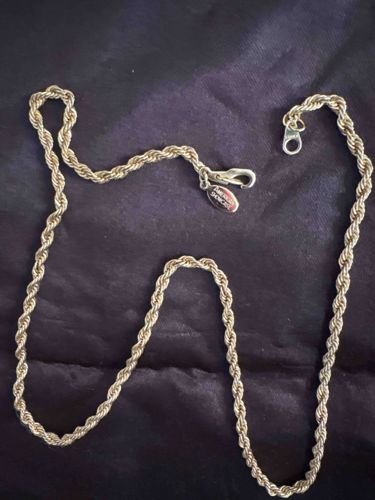
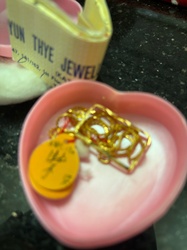
The item is a rope chain, likely intended as a necklace or bracelet, constructed from a metallic material that appears to be silver or silver-toned, possibly sterling silver or a silver alloy, given its lustrous, bright appearance and subtle tarnishing visible in the crevices. The chain features a classic rope design, where multiple thin strands are twisted together to form a spiral pattern, providing a textured and visually dynamic surface. The individual links are tightly woven, suggesting good craftsmanship. It has a lobster clasp closure, a common and secure type of fastener for chains, at one end and a jump ring at the other. Attached near the lobster clasp is a small, oval-shaped tag or charm with a reddish-pink background and white or light-colored text that is difficult to decipher fully but appears to be a brand name or hallmark, possibly "AMERICAN SHOWCASE" or something similar. There are no obvious signs of significant damage such as kinks, breaks, or extensive wear. The overall condition appears to be good, with only minor surface wear consistent with typical use and some gentle patina accumulation in recessed areas, which can be cleaned. The chain's length appears substantial enough for a necklace, but without a scale reference, an exact measurement is speculative. The weight feels moderate for its size, suggesting it may not be hollow. The craftsmanship appears consistent and uniform throughout, indicating a mass-produced but quality item. Given the style and common use of such chains, it likely dates from the late 20th century to the present day.
AI Appraisal Report
I have carefully examined the provided image of the rope chain. Based on its lustrous appearance and subtle tarnishing, I assess it to be silver or silver-toned, likely sterling silver or a similar alloy. The classic rope design is well-executed with tightly woven strands, suggesting good craftsmanship. The lobster clasp is a secure closure, and the attached tag, possibly "AMERICAN SHOWCASE," may indicate the manufacturer. The overall condition appears good, with only minor surface wear and patina consistent with normal use, which can be cleaned. There are no visible signs of significant damage like kinks or breaks.
From a visual examination alone, I cannot definitively confirm the metal purity (e.g., sterling silver content) or whether it is plated. An in-person examination would allow for precise length and weight measurements, which are crucial for valuation. Physical inspection would also enable me to check for hallmarks, assess the texture, and determine if it is hollow or solid. Scientific testing, such as XRF analysis, would be necessary for accurate metal composition verification. Provenance documentation, if available, could further enhance authenticity and value.
Market conditions for silver rope chains are generally stable. These are common, mass-produced items, making them not particularly rare. Given its likely material and common design, the value is primarily based on the metal weight and craftsmanship rather than rarity or historical significance. Factors impacting value significantly would be the actual silver content, the chain's exact length and weight, and confirmation of any brand association. Without definitive material confirmation and exact dimensions, the appraisal relies on visual cues.
Due to the limitations of image-only appraisal, particularly regarding material verification and precise physical attributes, this valuation is provisional. A full, accurate appraisal requires hands-on inspection.