AI Appraisal Estimate

AI-generated estimates · not official valuations

From the user

What was submitted

Photo and notes provided by the user — not generated by AI

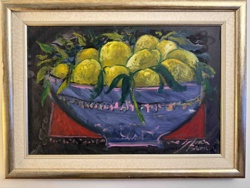
Submitted item photo
Submitted photo · June 25, 2026

User's notes

No additional notes provided.

AI analysis below

AI appraisal

AI analysis & estimate

AI-Generated · Verify before acting

Everything below is generated by AI for informational purposes only. AI can make mistakes — the AI may misidentify items or misattribute them (artist, maker, brand, designer, origin, era). This is not an official valuation and should not be used for insurance, sale, tax, estate, legal, or lending purposes — or any decision requiring a certified appraisal. It is not an authoritative claim about any person, brand, or rights holder — do not share or rely on it as a factual statement about a third party. Always consult qualified professionals before making financial decisions.

Read the full disclaimer

AI Identification

·Not independently authenticated·Verify before acting

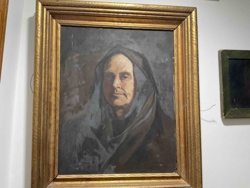
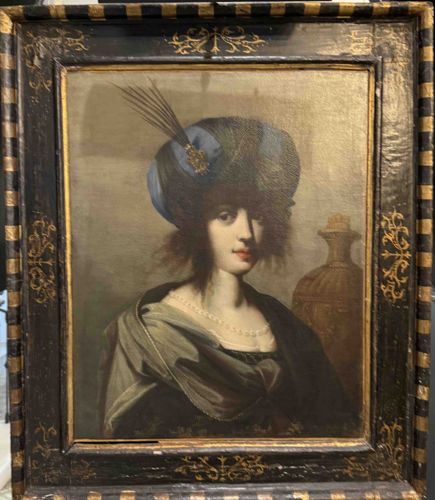
Late 18th to Early 19th Century Portrait of a Turbaned Lady

Fine Art - Oil Paintings

AI Estimated Value

·Not an official valuation·Verify before acting

$4,000 - $6,500

As of June 25, 2026

AI Item Analysis

·AI can make mistakes·Verify before acting
An oil painting on canvas or panel depicting a young woman in an idealized, possibly orientalist costume. The subject wears a voluminous blue and brown turban adorned with an aigrette of fine feathers and a jeweled brooch. She is draped in a dark cloak over a grey-green shawl, accented by a single-strand pearl necklace. In the background, a classical vase rests on a ledge. The style is reminiscent of late Baroque or Neoclassical periods, suggesting a work from circa 1780-1840. The piece is housed in a distinctive, possibly later, black and gold striped frame featuring scrolling foliate gilt motifs. Regarding condition, the canvas appears slightly loose in the frame, particularly at the lower edge. There is visible surface craquelure throughout the paint film, consistent with age. The dark pigments in the background and clothing show signs of minor thinning or possible old overpainting. The frame shows significant wear, including minor losses to the gilded ornamentation and abrasions on the outer edges. No maker's mark or signature is immediately visible on the front surface, which is typical for portraits of this school. The brushwork in the skin tones is soft and blended, while the metallic and fabric textures are handled with more impasto, indicating a practiced hand of the era.
AI Appraisal Report

·AI can make mistakes·Verify before acting
I have conducted a visual examination of the late 18th to early 19th-century portrait of a lady in Orientalist attire. The work displays characteristics of the Neoclassical period, specifically the 'Turquerie' fashion prevalent in European courts. The soft, sfumato-like blending of the flesh tones contrasted with the impasto work on the jeweled aigrette suggests a professionally trained hand, likely within the circle of a major European academy. The surface exhibits a stable craquelure pattern consistent with natural aging of a lead-based oil medium. While the frame shows significant structural wear and losses, the artwork itself remains largely intact despite minor thinning in the bitumen-heavy pigments of the background. The current market for anonymous but high-quality period portraits remains steady, particularly for subjects in exotic costume which appeal to both historical collectors and interior designers. Values for similar unsigned works of this caliber typically range between $4,000 and $6,500 at auction. However, value is significantly impacted by the lack of a visible signature or provenance. This appraisal is based strictly on visual digital evidence. A physical inspection is required to confirm the support material (canvas weave vs. panel) and to utilize UV fluorescence to identify the extent of historical overpainting or restoration. To achieve a definitive attribution or higher valuation, a provenance search or examination of the stretcher bars for tax stamps or gallery labels would be necessary. Without physical documentation, this remains attributed to 'School of the Late 18th Century.'

Get your items appraised

Instant estimates of your treasures with AI-powered appraisals

Browse More Appraisals