AI estimate as of August 26, 2026 · verify with a professional before acting
AI-Generated · Verify before acting
Everything on this page is generated by AI for informational purposes only. AI can make mistakes — the AI may misidentify items or misattribute them (artist, maker, brand, designer, origin, era). This is not an official valuation and should not be used for insurance, sale, tax, estate, legal, or lending purposes — or any decision requiring a certified appraisal. It is not an authoritative claim about any person, brand, or rights holder — do not share or rely on it as a factual statement about a third party. Always consult qualified professionals before making financial decisions.
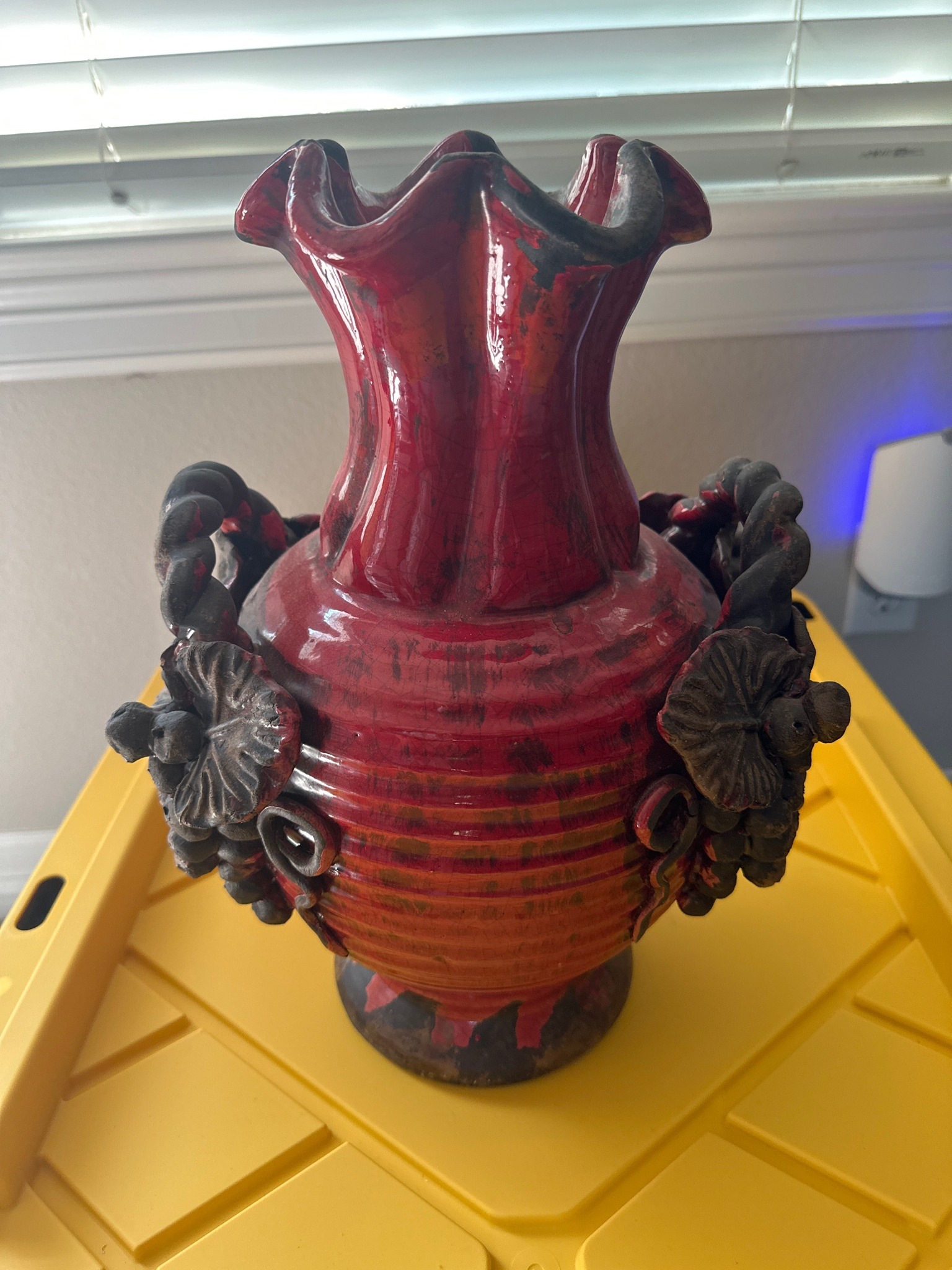
This is a decorative ceramic vase featuring a vibrant, heavily distressed red and orange glaze with darker undertones showing through. The physical construction includes a bulbous body with horizontal ridging, a narrow neck, and an elaborately flared, ruffled rim. Two prominent, sculptural applied handles are attached to the shoulders, intricately molded to resemble twisted grapevines complete with textured leaves and clusters of grapes. The surface exhibits a noticeable craquelure pattern within the glossy glaze, giving it an aged appearance. There are areas where the darker base coat or intentional distressing creates a dark, antiqued patina, particularly along the rim, handles, and lower foot. No maker's marks, stamps, or signatures are clearly visible in the photograph, so the identification rests entirely on the visual characteristics such as the form, applied botanical motifs, and glaze technique, which are consistent with mid-to-late 19th-century Majolica ceramics or later decorative revivals. The craftsmanship suggests a mold-cast earthenware base with hand-finished applied elements. The overall condition appears consistent with a vintage or antique decorative piece showing moderate surface wear, crazing, and localized loss to the topmost glaze layer.
AI Appraisal Report
Based on what I can see in the provided image, this decorative ceramic vase exhibits visual characteristics consistent with mid-to-late 19th-century Majolica-style ceramics or later decorative revivals, featuring a vibrant, heavily distressed red and orange glaze, horizontal ridging, and elaborately sculpted grapevine handles. However, I can't verify from a photo alone the exact age, composition, or place of manufacture, and no maker's marks or signatures are clearly visible. A physical inspection would need to be conducted to evaluate the paste, glaze structure, and any underlying indicators of period manufacture. My valuation range of $250 to $450 assumes the piece is an older, period-appropriate Majolica or revival earthenware piece possessing the stylistic features observed. Demand for decorative Victorian Majolica and related revival ceramics remains steady among niche collectors, though values fluctuate based on condition and perceived age. The overall condition appears consistent with a vintage or antique decorative item, showing moderate surface wear, crazing, and localized glaze loss, which is factored into this estimate. Should physical examination reveal the item to be a modern reproduction, replica, copy, or a later decorator piece 'in the style of' rather than a mid-to-late 19th-century production, the market value would likely decrease significantly, falling into the $50–$150 range. To better establish the nature and potential value of this item, further steps would include an in-person physical examination by a ceramic specialist and potentially scientific testing or expert appraisal.