AI Appraisal Estimate

AI-generated estimates · not official valuations

From the user

What was submitted

Photo and notes provided by the user — not generated by AI

Submitted item photo
Submitted photo · June 18, 2026

User's notes

No additional notes provided.

AI analysis below

AI appraisal

AI analysis & estimate

AI-Generated · Verify before acting

Everything below is generated by AI for informational purposes only. AI can make mistakes — the AI may misidentify items or misattribute them (artist, maker, brand, designer, origin, era). This is not an official valuation and should not be used for insurance, sale, tax, estate, legal, or lending purposes — or any decision requiring a certified appraisal. It is not an authoritative claim about any person, brand, or rights holder — do not share or rely on it as a factual statement about a third party. Always consult qualified professionals before making financial decisions.

Read the full disclaimer

AI Identification

·Not independently authenticated·Verify before acting

Tuscan-Style Framed Lemon Topiary Still Life

Home Decor - Wall Art

AI Estimated Value

·Not an official valuation·Verify before acting

$150 - $250

As of June 18, 2026

AI Item Analysis

·AI can make mistakes·Verify before acting
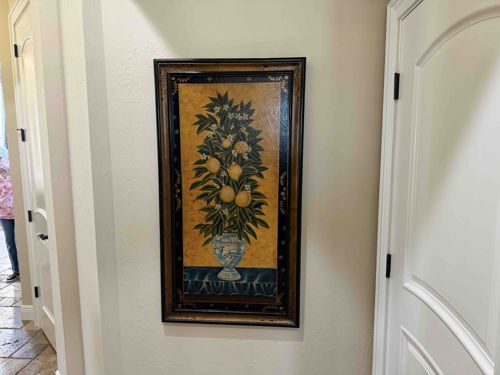
This is a vertical, rectangular wall art piece depicting a stylized lemon tree or topiary emerging from a Chinoiserie-style blue and white ceramic vase. The artwork is executed in a folk-art or decorative Mediterranean style, featuring five large yellow lemons nestled among dark green foliage and small white blossoms. The vase sits upon a draped blue fabric base against a warm, mottled ochre background. The central image is surrounded by a wide black painted border adorned with delicate gold-leaf decorative motifs and laurel-like patterns. The entire composition is encased in a dark-stained wood frame with metallic gold accents. Based on the construction and visual style, this is likely a contemporary high-end decorative piece, possibly from the late 20th to early 21st century, designed to emulate traditional Italian or French country decor. The craftsmanship shows attention to detail in the layered paint textures and the integration of the border motifs. The item appears to be in excellent condition with no visible chips to the frame, fading of the pigments, or damage to the substrate. The lack of visible brushstrokes suggests it may be a high-quality lithograph or print on board with a protective textured varnish, though a hand-painted origin cannot be ruled out without a physical inspection of the surface depth.

AI Appraisal Report

·AI can make mistakes·Verify before acting
Based on my visual examination of this Tuscan-style lemon topiary wall art, I evaluate it as a handsome decorative piece likely produced in the late 20th to early 21st century. The artwork evokes the charm of Italian villa decor, featuring a stylized lemon tree in a classic blue and white Chinoiserie planter. The composition is visually striking, enhanced by the distinct painted black mat border with faux-gold leaf detailing and a substantial dark wood frame. The piece appears to be in excellent condition, with vibrant ochre and green pigments showing no obvious signs of fading or water damage. The frame corners look tight and free of significant chips. However, closer inspection of the surface texture suggests this is likely a high-quality reproduction—specifically a decorative print mounted on board with an applied gel or textured varnish to simulate brushstrokes—rather than an original oil or acrylic painting. This technique is common in high-end home furnishings (e.g., Bombay Company, Uttermost, or boutique decor brands). The market for 'Tuscan Kitchen' motifs has softened slightly since its peak in the early 2000s, but well-framed, substantial pieces like this remain desirable for specific interior styles. To provide a definitive authentication of origin, I would need to physically remove the piece from the frame to check for a publisher's mark, plate signature, or specific copyright dates on the backing. Lacking provenance of a specific renowned artisan, the value is derived primarily from its decorative utility and quality framing rather than fine art investment potential.

Get your items appraised

Instant estimates of your treasures with AI-powered appraisals

Browse More Appraisals