AI Appraisal Estimate

AI-generated estimates · not official valuations

From the user

What was submitted

Photo and notes provided by the user — not generated by AI

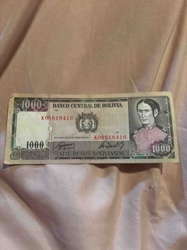
Submitted item photo
Submitted photo · June 20, 2026

User's notes

No additional notes provided.

AI analysis below

AI appraisal

AI analysis & estimate

AI-Generated · Verify before acting

Everything below is generated by AI for informational purposes only. AI can make mistakes — the AI may misidentify items or misattribute them (artist, maker, brand, designer, origin, era). This is not an official valuation and should not be used for insurance, sale, tax, estate, legal, or lending purposes — or any decision requiring a certified appraisal. It is not an authoritative claim about any person, brand, or rights holder — do not share or rely on it as a factual statement about a third party. Always consult qualified professionals before making financial decisions.

Read the full disclaimer

AI Identification

·Not independently authenticated·Verify before acting

Kuwait Quarter Dinar Banknote (1968-1991 Series)

Numismatics / Paper Currency

AI Estimated Value

·Not an official valuation·Verify before acting

$10.00 - $25.00

As of June 20, 2026

AI Item Analysis

·AI can make mistakes·Verify before acting
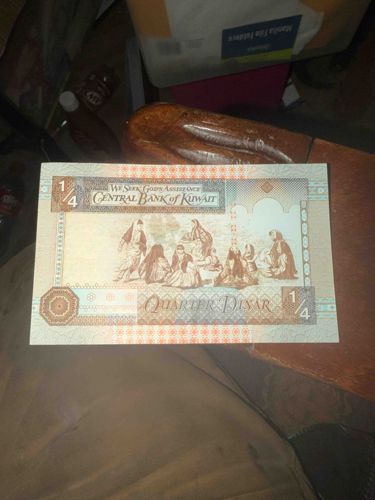
This item is a 1/4 (Quarter) Dinar banknote issued by the Central Bank of Kuwait, likely belonging to the third series issued between 1968 and the Iraqi invasion in 1990. The note is rectangular, primarily composed of high-quality paper with security features characteristic of modern currency. The central illustration on this side features a group of Kuwaiti girls playing a traditional game, rendered in a sepia-toned brown ink. The text 'Central Bank of Kuwait' is prominent at the top center, accompanied by the inscription 'We Seek God's Assistance.' The denomination '1/4' is clearly marked in the corners. Structurally, the note displays intricate geometric bordering and guilloche patterns in shades of blue, orange, and tan, which serve as anti-counterfeiting measures. Regarding its condition, the note appears to be in relatively clean, crisp condition with sharp edges and no obvious heavy creasing or tearing visible from the front view, though minor handling wear is expected of circulated currency. The craftsmanship reflects the formal standards of De La Rue or typical state printing houses of that era, utilizing multi-layered offset and intaglio printing techniques. This specific design aesthetic was phased out in the early 1990s following the liberation of Kuwait, making it a piece of late 20th-century historical currency.
AI Appraisal Report

·AI can make mistakes·Verify before acting
I have examined the visual data for this Kuwaiti Quarter Dinar note from the Third Series (post-1980 introduction). Based on the crisp edges, vibrant ink saturation, and absence of significant 'counting crinkles' or vertical center folds, the note appears to be in 'Choice Uncirculated' to 'Gem Uncirculated' condition. The Third Series is historically significant as it was the currency in circulation during the 1990 Iraqi invasion; notably, notes with specific serial prefixes were invalidated by the Kuwaiti government post-liberation, though this specimen remains a popular collector's item. The market for high-grade Kuwaiti fractional notes is stable but high-volume. Similar specimens frequently trade in the $15 range for standard uncirculated grades, while those authenticated and encapsulated by third-party graders like PMG (Paper Money Guaranty) with a 'Superb Gem Unc 67' or higher rating can command premiums up to $45. My valuation reflects a raw, high-grade specimen. Regarding authenticity, the intaglio printing depth and the complexity of the guilloche patterns are consistent with De La Rue security standards of the era. However, visual inspection alone cannot confirm the presence of the 3D watermark or the metallic thread's reaction to transmitted light. A definitive appraisal would require a physical 'feel' for the paper's cotton-bond texture and a UV light test to verify fluorescent security fibers. For a full authentication, I would recommend checking the serial number against known 'stolen' ranges from the 1990 invasion and verifying the watermark's clarity against a light source.

Get your items appraised

Instant estimates of your treasures with AI-powered appraisals

Browse More Appraisals