AI Appraisal Estimate

AI-generated estimates · not official valuations

From the user

What was submitted

Photo and notes provided by the user — not generated by AI

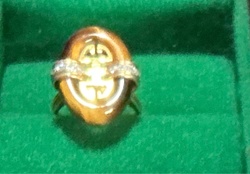
Submitted item photo
Submitted photo · May 18, 2026

User's notes

Sapphire

AI analysis below

AI appraisal

AI analysis & estimate

AI-Generated · Verify before acting

Everything below is generated by AI for informational purposes only. AI can make mistakes — the AI may misidentify items or misattribute them (artist, maker, brand, designer, origin, era). This is not an official valuation and should not be used for insurance, sale, tax, estate, legal, or lending purposes — or any decision requiring a certified appraisal. It is not an authoritative claim about any person, brand, or rights holder — do not share or rely on it as a factual statement about a third party. Always consult qualified professionals before making financial decisions.

Note

This analysis also relies on unverified notes provided by the user, which may be incomplete or inaccurate and could affect the result.

Read the full disclaimer

AI Identification

·Not independently authenticated·Verify before acting

Loose Oval Cut Blue Sapphire

Gemstones & Jewelry

AI Estimated Value

·Not an official valuation·Verify before acting

$4,500 - $7,000

As of May 18, 2026

AI Item Analysis

·AI can make mistakes·Verify before acting
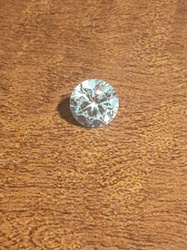
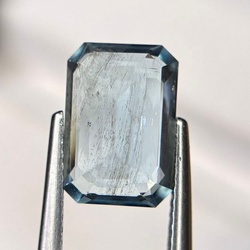
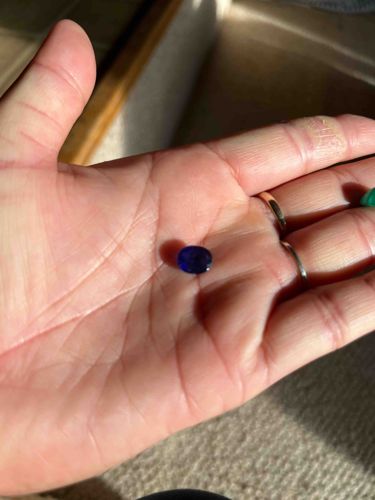
This item is a loose, faceted gemstone identified as a blue sapphire (corundum species). The gemstone features an oval proportions cut, which appears to be approximately 1.5 to 2.5 carats based on its size relative to the human hand in the image. The color exhibits a deep, vivid saturation of royal blue with primary blue hues and potentially subtle violet secondary undertones. The clarity appears to be eye-clean from the top-down view, though professional microscopic examination would be required to identify natural inclusions like rutile silk or color zoning, which help distinguish natural origin from lab-created equivalents. The cut demonstrates a standard crown facet pattern with a polished table. Visible condition appears excellent with no major chips, scuffs, or abrasions noted on the crown or girdle edges, suggesting it has been well-protected or recently cut. The depth of the stone appears significant, contributing to the richness of the internal light reflections. In terms of quality, the saturation level is highly desirable in the gemstone market. Without laboratory testing, the treatment status (such as standard heat treatment) and geographical origin (e.g., Sri Lanka, Madagascar, or Myanmar) cannot be definitively determined, though its color profile aligns with high-end commercial jewelry standards.
AI Appraisal Report

·AI can make mistakes·Verify before acting
I have virtually examined this loose oval-cut blue sapphire, which displays a highly desirable vivid royal blue saturation. Based on visual cues relative to human scale, I estimate the weight to be approximately 2.0 carats. The gemstone exhibits excellent transparency and eye-clean clarity, with a well-proportioned crown and a polished table that facilitates strong internal light reflections. The absence of visible chips or abrasions suggests a high state of preservation or recent precision cutting. The current market for high-quality sapphires remains robust, particularly for stones exceeding 1.5 carats with this specific 'vivid' color profile. Comparables of this saturation and size often fetch significant premiums in the retail jewelry market. However, value is exceptionally sensitive to two factors that cannot be determined via imagery: origin and treatment. A stone of this quality from a prestigious origin like Sri Lanka (Ceylon) or Myanmar (Burma) with no evidence of heat treatment would command the high end of this estimate or even exceed it. Conversely, if the stone is lab-created or heavily treated, its value would decrease dramatically to under $500. Final authentication is strictly limited by the digital format. A physical inspection is required to observe microscopic inclusions—such as rutile silk or growth zoning—to confirm natural origin. Furthermore, I highly recommend submitting this stone to a recognized gemological laboratory (e.g., GIA or SSEF) for a formal report. This documentation would definitively determine the presence of heat treatments and provide an origin opinion, both of which are critical for establishing a final, definitive market valuation.

Get your items appraised

Instant estimates of your treasures with AI-powered appraisals

Browse More Appraisals