AI estimate as of September 17, 2025 · verify with a professional before acting
AI-Generated · Verify before acting
Everything on this page is generated by AI for informational purposes only. AI can make mistakes — the AI may misidentify items or misattribute them (artist, maker, brand, designer, origin, era). This is not an official valuation and should not be used for insurance, sale, tax, estate, legal, or lending purposes — or any decision requiring a certified appraisal. It is not an authoritative claim about any person, brand, or rights holder — do not share or rely on it as a factual statement about a third party. Always consult qualified professionals before making financial decisions.
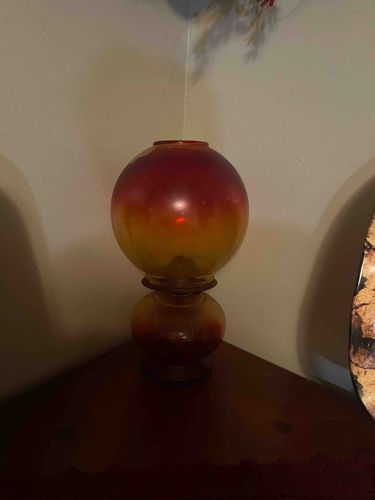
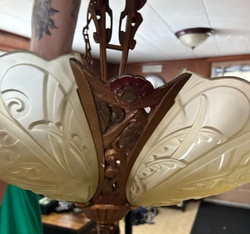
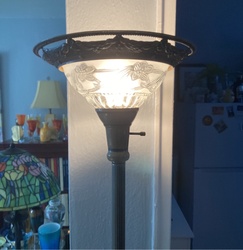
This item appears to be an antique or vintage oil lamp, characterized by its distinctive opalescent glass construction, which transitions in color. The lamp is composed of two main sections: a large, spherical shade sitting atop a smaller, rounded base. Both sections exhibit a vibrant color gradient, starting with a deep, rich cranberry or ruby red at the top and bottom, which smoothly transitions to an amber or yellowish-orange hue towards the middle. This color blend suggests a heat-sensitive opalescent glass, possibly 'cranberry opalescent' or an 'amberina' style, which were popular during the late 19th and early 20th centuries. The spherical shade features a wide, presumably open, neck at the top for venting and a slightly narrower opening at the bottom designed to fit onto the base. The base itself has a classical, somewhat ornate shape, appearing to be composed of two stacked rounded forms with a discernible ridge or collar between them, where the shade would rest. The glass surface appears smooth and glossy, with no immediately visible chips, cracks, or significant abrasions from the provided image. The lamp's construction suggests it once housed a wick and burner mechanism, though these components are not visible in the image. There are no obvious maker's marks or signatures discernible. The overall style points to a Victorian or Edwardian era aesthetic, commonly found in decorative home lighting of that period. The quality of the glass, particularly the consistent color transition and lack of visible defects, indicates good craftsmanship. The piece is currently positioned on a dark wooden surface, possibly a corner table, against a light-colored wall, highlighting its warm glow.
AI Appraisal Report
Based on my visual examination of the provided image, this Opalescent Glass Oil Lamp Shade and Base presents as a fine example of late 19th to early 20th-century decorative lighting. The opalescent glass, transitioning from a deep cranberry/ruby red to an amber/yellowish-orange, is indicative of 'cranberry opalescent' or 'amberina' glass, which was highly sought after during the Victorian and Edwardian eras. The overall condition appears excellent; the glass surface is smooth and glossy, with no visible chips, cracks, or significant abrasions, which speaks to careful handling over its lifetime. The consistent color transition and lack of obvious defects suggest good craftsmanship.
From the image alone, authenticity appears strong for a period piece. However, without a physical inspection, I cannot confirm the absence of subtle repairs, restorations, or manufacturing flaws that might affect value. An in-person examination would also be crucial to identify any faint maker's marks, pontil marks (for blown glass), or specific glass characteristics that could pinpoint a manufacturer like Hobbs Brockunier, Fenton, or New England Glass Co., which would significantly impact value. Provenance documentation, though not visible here, would be ideal for full authentication. Market demand for antique art glass lamps remains stable among collectors, particularly for examples in excellent condition with desirable color variations. Comparables for similar cranberry opalescent or amberina oil lamps (without burners) in good condition typically range from $300 to $600. The lack of the original burner mechanism does slightly reduce its appeal to purists but does not drastically devalue the decorative glass components. The primary factors influencing this appraisal are the attractive aesthetic, apparent excellent condition, and period-appropriate style.