AI Appraisal Estimate

AI-generated estimates · not official valuations

From the user

What was submitted

Photo and notes provided by the user — not generated by AI

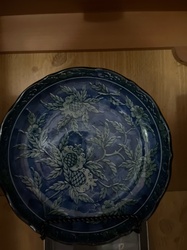
Submitted item photo
Submitted photo · June 18, 2026

User's notes

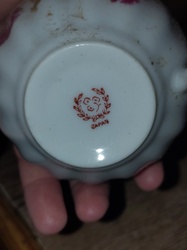
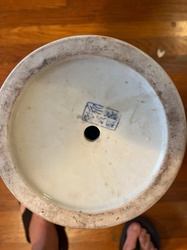
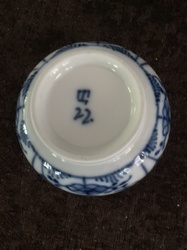
Antique Chinese plate 24 karat gold trim, marking on center of back

AI analysis below

AI appraisal

AI analysis & estimate

AI-Generated · Verify before acting

Everything below is generated by AI for informational purposes only. AI can make mistakes — the AI may misidentify items or misattribute them (artist, maker, brand, designer, origin, era). This is not an official valuation and should not be used for insurance, sale, tax, estate, legal, or lending purposes — or any decision requiring a certified appraisal. It is not an authoritative claim about any person, brand, or rights holder — do not share or rely on it as a factual statement about a third party. Always consult qualified professionals before making financial decisions.

Note

This analysis also relies on unverified notes provided by the user, which may be incomplete or inaccurate and could affect the result.

Read the full disclaimer

AI Identification

·Not independently authenticated·Verify before acting

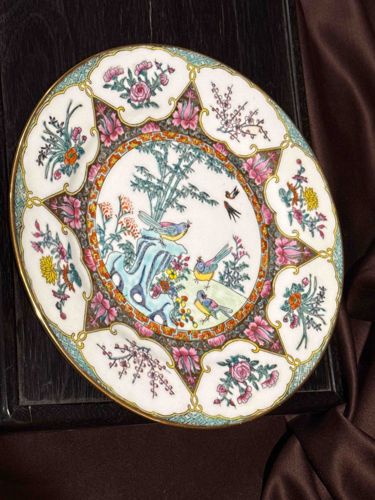
Famille Rose Polychrome Bird and Floral Export Porcelain Plate

Antique Asian Ceramics / Porcelain

AI Estimated Value

·Not an official valuation·Verify before acting

$150 - $350

As of June 18, 2026

AI Item Analysis

·AI can make mistakes·Verify before acting
This is a decorative Chinese export porcelain plate or charger featuring a complex 'Famille Rose' enamel palette. The central medallion depicts a meticulously hand-painted scene of birds (likely songbirds or pheasants) perched on a stylized Scholar's Rock amidst lush foliage and bamboo. Surrounding the central scene is a Greek key or fretwork border in orange and gold tones. The wide rim is divided into six distinct scalloped cartouches, each containing various floral sprays, including peonies, plum blossoms, and chrysanthemums, rendered in vibrant shades of pink, yellow, and green. These cartouches are separated by star-shaped panels with a pink lotus motif over a dark ground. The outermost edge is finished with a thin turquoise diaper pattern band and a 24-karat gold gilded rim. The construction suggests a traditional porcelain body with a clear overglaze. The item appears to be in excellent antique condition with minimal visible wear to the gilding or enamel. The style and level of detail are indicative of late Qing Dynasty craftsmanship (19th Century) or an early 20th-century high-quality export revival piece. The presence of a mark on the reverse (mentioned in context) would further authenticate the specific kiln or era, likely a Qianlong Nian Zhi seal or later maker's stamp.

AI Appraisal Report

·AI can make mistakes·Verify before acting
Based on my visual examination of the images provided, this is a hand-painted Famille Rose porcelain charger, likely dating to the mid-to-late 20th century, specifically the 1960s–80s Chinese export period, often attributed to Macau or Hong Kong decoration studios. While the design mimics late Qing Dynasty (Guangxu period) or Republic era wares, the palette's brightness—particularly the stark turquoise diaper border and the somewhat rigid execution of the 'millefiori' style cartouches—suggests a later vintage reproduction rather than a 19th-century antique. The 24-karat gold trim appears machine-applied rather than hand-gilded, displaying a uniformity typical of later mass-produced export ware. The 'marking on center of back' is likely an apocryphal Qianlong seal mark, commonly stamped on mid-century export porcelain to honor the style rather than deceive. The condition appears excellent, with no visible chips, cracks, or significant restoration, which helps its decorative value. The market for these revival pieces is steady but does not command the high prices of authentic 18th or 19th-century Imperial or high-export porcelain. They are valued primarily as decorative objects (interior design) rather than serious investment ceramics. **Authenticity Limitations:** To definitively rule out a late 19th-century origin, I would need to physically handle the plate to assess the weight and translucency of the porcelain body and examine the foot rim for signs of kiln grit or wear consistent with age. A loupe inspection of the enamels would reveal if they are overglaze distinct from the body (antique) or flatter screen-printed elements (modern). Without this, my valuation leans conservatively toward a vintage mid-century attribution.

Get your items appraised

Instant estimates of your treasures with AI-powered appraisals

Browse More Appraisals