AI estimate as of September 14, 2025 · verify with a professional before acting
AI-Generated · Verify before acting
Everything on this page is generated by AI for informational purposes only. AI can make mistakes — the AI may misidentify items or misattribute them (artist, maker, brand, designer, origin, era). This is not an official valuation and should not be used for insurance, sale, tax, estate, legal, or lending purposes — or any decision requiring a certified appraisal. It is not an authoritative claim about any person, brand, or rights holder — do not share or rely on it as a factual statement about a third party. Always consult qualified professionals before making financial decisions.
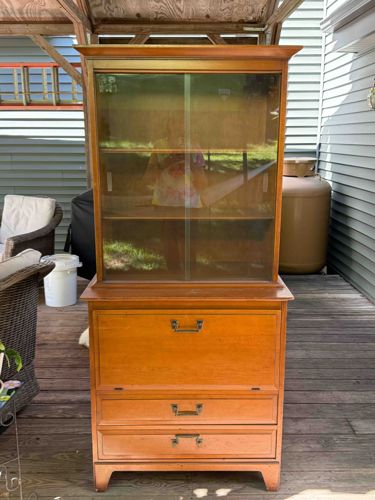
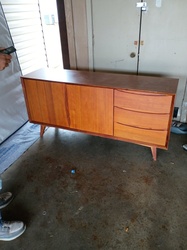
This is a two-piece secretary desk with a top display hutch, likely constructed from a light-colored wood such as maple, oak, or a similar hardwood, finished with a warm, golden-brown stain. The overall structure is rectangular and appears sturdy. The top hutch features two sliding glass doors, each framed in wood, which reveal what seem to be two internal shelves. The glass appears clear but reflects its surroundings, suggesting standard clear glass rather than frosted or textured. There is a simple, slightly projecting cornice at the very top of the hutch, adding a classic touch. Below the hutch, the base unit functions as a secretary desk. It includes a drop-front compartment, indicated by the handle on the upper-most large drawer-like panel, which typically opens to reveal a writing surface and small organizational cubbies. Below this, there are two additional drawers, each fitted with matching brass-toned bail pull handles mounted on ornate plates. The base of the unit features a continuous plinth-style foot, providing stability. The overall condition shows some signs of wear consistent with age and use, particularly some faint scuffs or discoloration on the finish visible in places. There are no obvious signs of major damage or repair, but a more thorough inspection would be needed to confirm. The style suggests a mid-20th century traditional or transitional design, possibly from the 1950s to 1970s, characterized by its functional form and relatively clean lines. The craftsmanship appears to be of good quality for its presumed age and type of furniture.
AI Appraisal Report
Upon visual examination of this two-piece secretary desk with a display hutch, I've assessed its condition and potential value. The item appears to be constructed from a light-colored hardwood, likely maple or oak, finished with a warm, golden-brown stain. The overall structure seems sturdy. The top hutch features two sliding glass doors, revealing internal shelving, and a simple cornice. The base unit includes a drop-front secretary compartment with a handle, suggesting a writing surface and cubbies within, and two drawers below with brass-toned bail pulls. A continuous plinth-style foot provides stability.
The condition shows signs of wear consistent with age and use, including faint scuffs or discoloration on the finish. There are no obvious major damages visible from the image, but a thorough in-person inspection would be crucial to confirm this. The style places it in the mid-20th century, likely 1950s-1970s, which aligns with its functional design and relatively clean lines. Craftsmanship appears good for its presumed age and type.
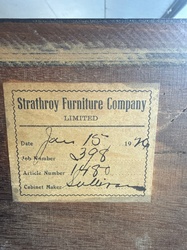
In terms of market conditions, demand for such functional vintage furniture, particularly secretary desks with display hutches, is moderate. These pieces offer utility and a classic aesthetic. However, they are not particularly rare, and the market for mass-produced mid-century traditional furniture isn't as robust as that for iconic designer pieces. Factors impacting value include the visible wear, the absence of any notable brand or designer, and the commonality of the design. Without provenance, significant historical value is unlikely. My appraisal is limited by the visual nature of this examination; I cannot ascertain the wood species definitively, inspect internal mechanisms, or thoroughly assess structural integrity without physical access. Verification of authenticity would involve in-person inspection for construction techniques, wood grain, and hardware analysis. Given these considerations, I estimate the appraisal value to be between $300 and $500, reflecting its functional value and vintage appeal in today's market.