AI estimate as of July 5, 2025 · verify with a professional before acting
AI-Generated · Verify before acting
Everything on this page is generated by AI for informational purposes only. AI can make mistakes — the AI may misidentify items or misattribute them (artist, maker, brand, designer, origin, era). This is not an official valuation and should not be used for insurance, sale, tax, estate, legal, or lending purposes — or any decision requiring a certified appraisal. It is not an authoritative claim about any person, brand, or rights holder — do not share or rely on it as a factual statement about a third party. Always consult qualified professionals before making financial decisions.
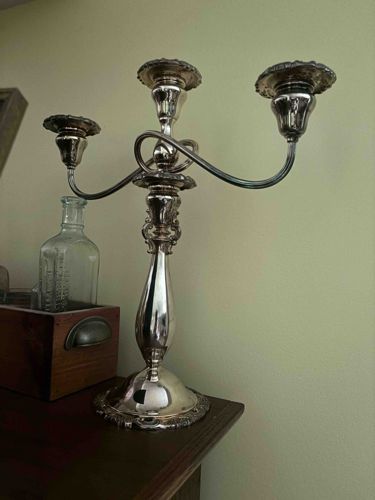
This is a silver-toned candelabrum, designed to hold three candles. It appears to be made of a polished metal, likely silver plate, given its reflective surface and the areas of darker tarnishing visible, particularly around the embossed details and the scalloped edges of the candle cups. The candelabrum features a central, elaborate stem with ornate scrollwork and foliage motifs, indicative of a Rococo Revival or Edwardian style, suggesting an estimated age from the late 19th to early 20th century. The central stem broadens at the base, resting on a circular foot with complementary decorative edging. Two elegantly curved arms extend from the central stem, terminating in candle cups identical to the one atop the central pillar. These cups have a fluted or sculpted form leading up to a scalloped, almost ruffled rim, which is where some of the more prominent signs of tarnish and possibly accumulated wax residue are evident. The overall construction appears solid and well-crafted, though specific manufacturing marks are not discernible from the image. The surface gleams in areas, indicating it has been polished, but remnants of patination and potential surface scratches from use or cleaning are visible upon closer inspection, especially within the intricate details. The craftsmanship points to a manufactured item, possibly from a reputable silver manufacturer known for producing decorative tableware.
AI Appraisal Report
Upon my virtual examination of this three-light candelabrum, I observe a well-crafted piece, likely silver-plated given the visible tarnish patterns and reflective surface. The design, with its ornate scrollwork and foliage motifs, strongly suggests a Rococo Revival or Edwardian aesthetic, placing its likely age between the late 19th and early 20th centuries. The overall condition appears consistent with its age and use. There are clear signs of tarnish, particularly in recessed areas and around the intricate details and scalloped edges of the candle cups, which is expected for silver or silver-plated items of this vintage. While some polishing has occurred, remnants of patination and potential surface scratches from cleaning or use are discernible, which for an item of this type, often adds to its character rather than detracts significantly from value.
Authenticity, based solely on visual inspection of images, is presumed to be a genuine period piece rather than a modern reproduction due to the style, visible wear, and tarnish patterns. However, without physical examination, I cannot definitively confirm the metal composition (e.g., solid silver vs. plate), which is a major value determinant. In-person examination would be required to look for hallmarks or maker's marks, assess the true weight and feel, and conduct scratch tests if necessary. Provenance documentation could also provide crucial historical context and verifiable ownership.
Market conditions for decorative silver-plated items of this age are generally stable, with a consistent demand from collectors of antique home decor and those seeking period-specific accent pieces. While items of solid sterling silver would command significantly higher prices, well-preserved and aesthetically pleasing plated pieces still hold value. Rarity is moderate; similar candelabra designs from this era are not uncommon, but the specific sculptural details and overall craftsmanship of this piece make it more desirable than mass-produced alternatives. Factors significantly impacting value include the actual material (plate vs. solid silver), the presence and legibility of a renowned manufacturer's mark, and confirmation of any historical significance through provenance. Without these, the value remains in the decorative antique category.