AI Appraisal Estimate

AI-generated estimates · not official valuations

From the user

What was submitted

Photo and notes provided by the user — not generated by AI

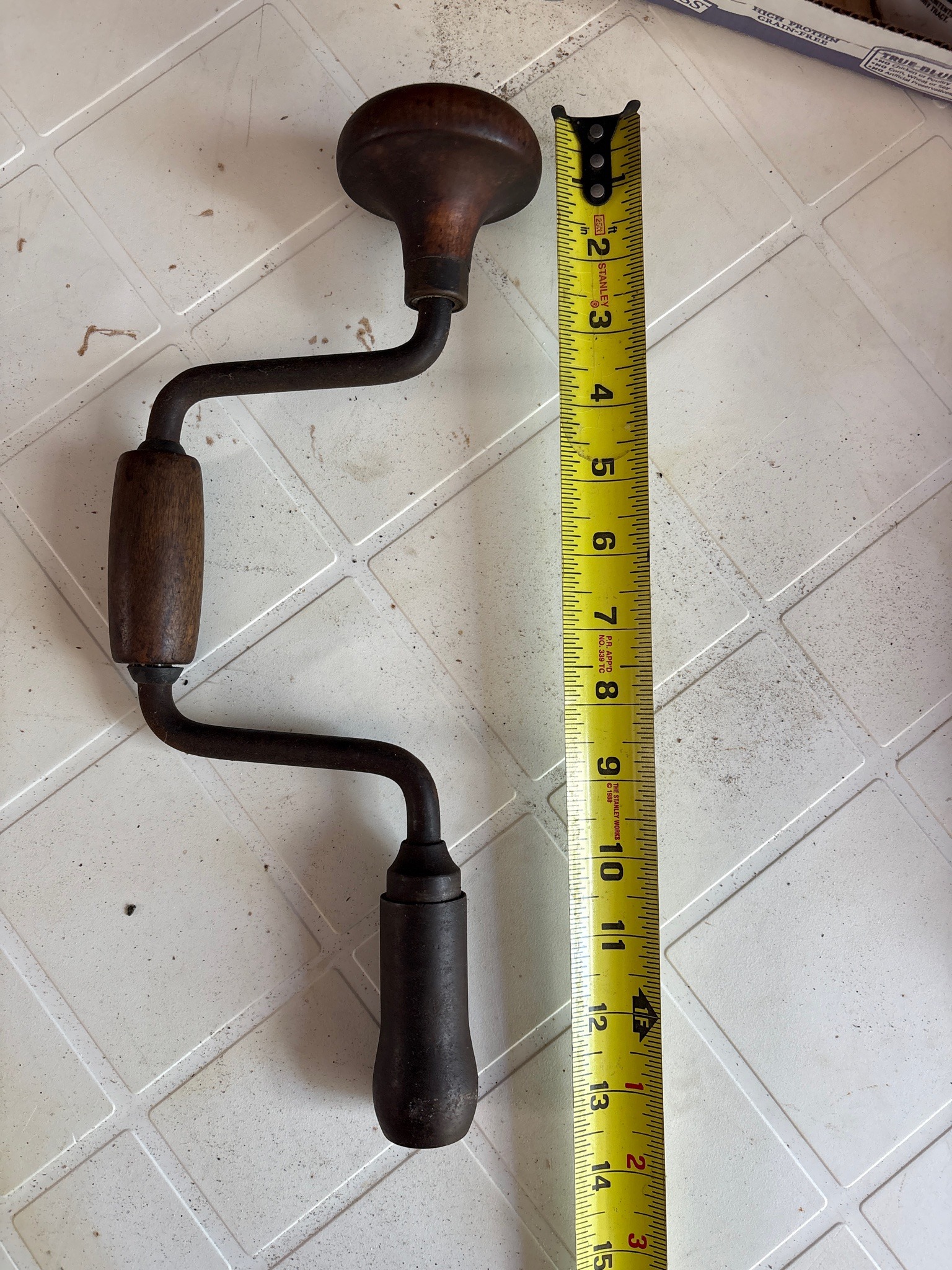
Submitted item photo
Submitted photo · June 30, 2026

User's notes

Vintage hand drill

AI analysis below

AI appraisal

AI analysis & estimate

AI-Generated · Verify before acting

Everything below is generated by AI for informational purposes only. AI can make mistakes — the AI may misidentify items or misattribute them (artist, maker, brand, designer, origin, era). This is not an official valuation and should not be used for insurance, sale, tax, estate, legal, or lending purposes — or any decision requiring a certified appraisal. It is not an authoritative claim about any person, brand, or rights holder — do not share or rely on it as a factual statement about a third party. Always consult qualified professionals before making financial decisions.

Note

This analysis also relies on unverified notes provided by the user, which may be incomplete or inaccurate and could affect the result.

Read the full disclaimer

AI Identification

·Not independently authenticated·Verify before acting

Vintage-style sweep brace hand drill

Antique Tools

AI Estimated Value

·Not an official valuation·Verify before acting

$40 - $85

As of June 30, 2026

AI Item Analysis

·AI can make mistakes·Verify before acting
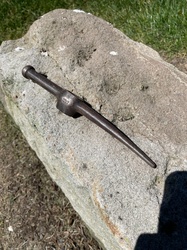
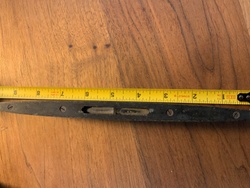
This item appears to be a vintage-style manual sweep brace hand drill, a tool traditionally used for boring holes in wood. The object is approximately 14 inches in length according to the adjacent measuring tape. It features a characteristic U-shaped metal crank frame with a dark, tarnished patina consistent with aged steel or iron. Functional components include a rounded wooden head or pommel at the top, a wooden grip at the center of the sweep, and a tapered wooden handle at the base which likely houses the chuck mechanism. The wood appears to be a dark hardwood with visible grain and a worn finish, showing signs of significant age and historical use. No maker's marks, brand logos, or model numbers are visible in the provided image to permit a more specific attribution. The user-supplied context describes this as a 'Vintage hand drill,' which is consistent with the visual evidence of the tool's construction and wear patterns. The lack of a ratchet mechanism suggests an older or simpler design, potentially consistent with late 19th or early 20th-century craftsmanship, though this is a stylistic observation rather than a verified date. The metal components show surface oxidation and deep darkening, while the wooden elements show smoothing and minor abrasions consistent with manual labor.

AI Appraisal Report

·AI can make mistakes·Verify before acting
Based on my visual examination of the provided image, I have analyzed this manual sweep brace hand drill. It possesses characteristics hypothesized to be consistent with late 19th or early 20th-century craftsmanship, such as the dark, oxidized metal patina and the use of hardwood for the pommel and grip. I can observe a significant level of wear and surface abrasions, which suggests a history of manual use; however, I cannot verify the specific age or metal composition without a physical inspection. Because no maker's marks or brand logos are visible, I am treating the origin as unattributed. Documentation from the user identifies this as a 'vintage hand drill,' which aligns with the visual evidence. The value of $40-$85 is based on the assumption that this is a functional, period-correct tool from the turn of the century. Hand drills of this generic type, lacking a ratchet mechanism or famous maker's mark (such as Stanley or Miller Falls), are commonly traded among collectors of primitive tools. The value is highly dependent on the integrity of the chuck mechanism and the stability of the wooden components, neither of which can be fully assessed from a photo. If this item were later identified as a modern reproduction or if it were found to have a cracked frame, the value would likely drop below $20. To confirm a more specific valuation or origin, an in-person examination would be required to search for faint stamps on the sweep or chuck, and to evaluate the wood species and internal mechanical condition.

Related Tags

Explore similar items and categories

Get your items appraised

Instant estimates of your treasures with AI-powered appraisals

Browse More Appraisals