AI Appraisal Estimate

AI-generated estimates · not official valuations

From the user

What was submitted

Photo and notes provided by the user — not generated by AI

Submitted item photo
Submitted photo · June 15, 2026

User's notes

No additional notes provided.

AI analysis below

AI appraisal

AI analysis & estimate

AI-Generated · Verify before acting

Everything below is generated by AI for informational purposes only. AI can make mistakes — the AI may misidentify items or misattribute them (artist, maker, brand, designer, origin, era). This is not an official valuation and should not be used for insurance, sale, tax, estate, legal, or lending purposes — or any decision requiring a certified appraisal. It is not an authoritative claim about any person, brand, or rights holder — do not share or rely on it as a factual statement about a third party. Always consult qualified professionals before making financial decisions.

Read the full disclaimer

AI Identification

·Not independently authenticated·Verify before acting

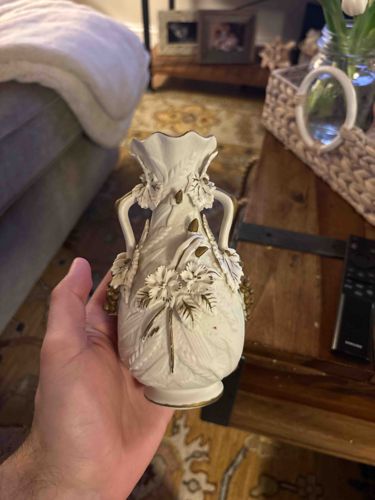
Vintage Capodimonte Style Hand-Painted Porcelain Urn Vase

Decorative Arts / Vintage Ceramics

AI Estimated Value

·Not an official valuation·Verify before acting

$45.00 - $75.00

As of June 15, 2026

AI Item Analysis

·AI can make mistakes·Verify before acting
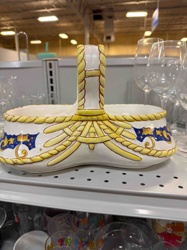
This is a small, hand-painted decorative porcelain vase or urn, likely of Italian or European origin, consistent with the Capodimonte style. It stands approximately 6 to 7 inches tall and features an amphora-like shape with dual curved handles and a fluted, ruffled rim. The vase is constructed from bisque or matte-finished white porcelain, heavily adorned with high-relief (applied) floral and grapevine motifs. These applied elements include clusters of small white flowers and leaves highlighted with gold-toned or brassy metallic paint on the edges. The body of the vase is further detailed with an embossed, textured leaf pattern that creates a sense of movement across its surface. Notable features include the delicate 'spilled gold' or gilded highlights on the petal tips, vine stems, and handles which suggest a mid-20th-century manufacturing period. Regarding condition, there are visible signs of aged yellowing and dust accumulation within the crevices of the relief work. Small chips may be present on the fragile leaf tips, which is common for this type of cold-cast or applied porcelain. The craftsmanship is typical of high-volume decorative art pottery from the 1950s to 1970s, designed to mimic 18th-century Baroque aesthetics. While no maker's mark is visible in the photograph, the style and metallic application are characteristic of manufacturers like Arnart or various Tuscan ceramic studios.

AI Appraisal Report

·AI can make mistakes·Verify before acting
I have conducted a visual examination of the vintage Capodimonte-style porcelain urn. Based on the stylistic elements, this piece appears to be a mid-20th-century (circa 1950s-1970s) decorative ceramic, likely manufactured for the export market by a studio such as Arnart or a similar Italian workshop mimicking the Neapolitan style. The heavy relief applied-floral motifs and the specific application of metallic gold paint are indicative of decorative housewares rather than 18th-century collector’s porcelain. The condition shows significant dust accumulation and age-related yellowing, particularly in the relief crevices. Given the fragility of the 'cold-cast' style foliage, there appear to be minor losses to petal tips, which significantly detracts from the value in the current 'shabby chic' or vintage secondary markets. The market for this specific genre of mid-century Italianate ceramics is currently saturated, with high supply and moderate demand. Comparables for unsigned pieces of this size typically fluctuate between the $30 and $80 range at auction or via online vintage marketplaces. The lack of a visible blue 'N' crown mark or a specific maker’s signature limits its appeal to decorative buyers rather than serious porcelain collectors. Please note that this appraisal is based on photographic evidence only. A physical inspection is required to check for structural cracks, professional restorations, or faint hallmarks on the underside. Scientific clay analysis or provenance documentation (such as original purchase receipts from known Italian export houses) would be necessary to elevate the piece beyond a 'decorative' classification to a 'fine art' category.

Get your items appraised

Instant estimates of your treasures with AI-powered appraisals

Browse More Appraisals