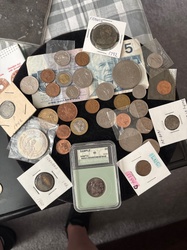
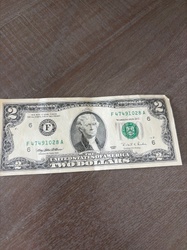
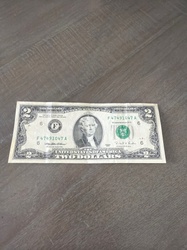
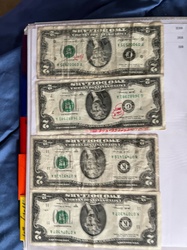
These notes were written by the person who submitted this item. Appraiser.AI has not verified them, and the AI's identification and estimate may rely on them.
AI Estimated Value
Not an official valuation
$350-500
AI estimate as of November 3, 2025 · verify with a professional before acting
AI-Generated · Verify before acting
Everything on this page is generated by AI for informational purposes only. AI can make mistakes — the AI may misidentify items or misattribute them (artist, maker, brand, designer, origin, era). This is not an official valuation and should not be used for insurance, sale, tax, estate, legal, or lending purposes — or any decision requiring a certified appraisal. It is not an authoritative claim about any person, brand, or rights holder — do not share or rely on it as a factual statement about a third party. Always consult qualified professionals before making financial decisions.
This analysis also relies on unverified notes provided by the user, which may be incomplete or inaccurate and could affect the result.
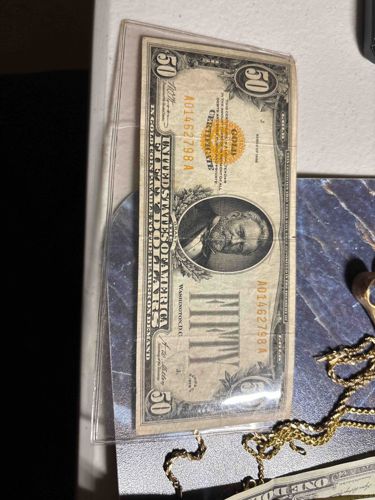
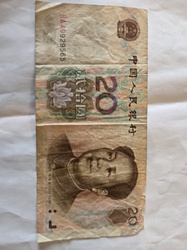
This item is a 1928 Series United States Gold Certificate with a denomination of fifty dollars. The obverse prominently features a portrait of Ulysses S. Grant in the center-left oval. The central design includes the phrase "UNITED STATES OF AMERICA" and "IN GOLD COIN PAYABLE TO THE BEARER ON DEMAND". The key identifier for this type of currency is the golden-colored seal on the right side of the bill, which reads "GOLD CERTIFICATE". The serial number, "A01462798A", is printed twice, once in the upper right and once in the lower left quadrant of the bill, in a distinctive yellow-orange ink matching the seal. The denomination '50' is visible in numerical form in all four corners, with 'FIFTY' spelled out vertically to the right of Grant's portrait. The bill's color is a standard greenish-gray with visible signs of aging and wear, including creasing and some discoloration consistent with its age. It appears to be housed within a clear plastic protective sleeve, which, while beneficial for preservation, also introduces some glare in the image. There are no obvious tears or major repairs, but the overall condition suggests it has been circulated. The edges appear relatively intact. This note represents a specific period in U.S. monetary history when currency was directly backed by and redeemable for gold coins.
AI Appraisal Report
I have examined the provided image of this 1928 Series $50 Gold Certificate. Based on the visual evidence, the note appears to be authentic, consistent with known examples of this series. The distinct golden seal, Ulysses S. Grant's portrait, and the 'IN GOLD COIN PAYABLE TO THE BEARER ON DEMAND' phrase are all correct for this type. The serial number, A01462798A, also matches the expected format.
In terms of condition, I would classify this note as Fine to Very Fine based on the image. There are clear signs of circulation, including multiple vertical and horizontal folds, some discoloration, and general softening of the paper. While the edges appear intact, the corners show light rounding, which is typical for circulated notes of this age. The note is housed in a protective sleeve, which, while good for preservation, does introduce some glare, making a precise assessment of minor imperfections challenging. There are no obvious tears or repairs visible, which is a positive factor. The yellow-orange serial numbers and seal retain good color density.
Market conditions for 1928 Gold Certificates remain strong due to their historical significance and the appeal to collectors of obsolete currency. Fifty-dollar denominations are less common than lower denominations, contributing to their desirability. Rarity is moderate; while not exceedingly rare, they are certainly not common. The specific serial number does not appear to be a 'fancy' serial number that would command a premium.
Factors impacting value include the visible wear and creasing. A note in uncirculated condition would fetch significantly more. However, its overall solid appearance and lack of major damage support a value in the stated range. Limitations in authentication from an image alone include the inability to feel the paper, check for watermarks or security threads (though less critical for this series), or detect subtle repairs or alterations that might not be visible under photographic conditions. For full authentication and a more precise grading, an in-person examination by a certified numismatist is recommended, along with possible UV light inspection or microscopic analysis of the paper and ink.