AI estimate as of July 16, 2025 · verify with a professional before acting
AI-Generated · Verify before acting
Everything on this page is generated by AI for informational purposes only. AI can make mistakes — the AI may misidentify items or misattribute them (artist, maker, brand, designer, origin, era). This is not an official valuation and should not be used for insurance, sale, tax, estate, legal, or lending purposes — or any decision requiring a certified appraisal. It is not an authoritative claim about any person, brand, or rights holder — do not share or rely on it as a factual statement about a third party. Always consult qualified professionals before making financial decisions.
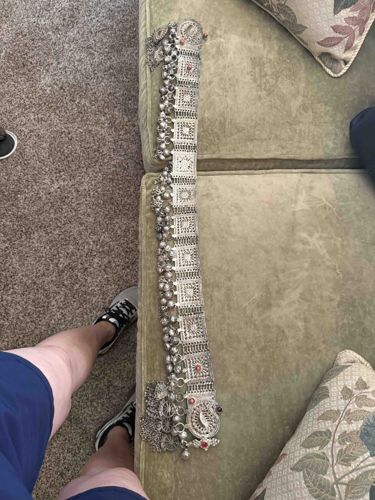
This appears to be an antique or tribal ethnic silver belt, likely originating from a region known for intricate silver craftsmanship, such as Central Asia, North Africa, or parts of India. The belt is constructed from numerous rectangular, possibly square, silver panels that are linked together, forming a flexible band. Each panel features detailed filigree or repoussé work, creating a geometric pattern, possibly a star or floral motif within a square framework. Along the lower edge of the belt, there are dangling elements, primarily small, spherical bells and other decorative silver charms, which would create a jingling sound with movement. The metal exhibits a darkened patina, indicative of age and oxidation, suggesting it is sterling silver or a high-grade silver alloy. Some panels also show small, possibly coral or garnet, cabochon-set stones, adding a pop of red color to the otherwise monochromatic silver. The ends of the belt feature more elaborate, possibly animal-head (like a bird or serpent, discernable on one end) or stylized motifs, with additional dangling elements and red stones. The construction appears entirely handcrafted, showcasing a high level of skill and intricate design work. There are no obvious signs of major damage or repairs, but the natural darkening and minor scuffs due to age and wear are present. The overall length suggests it would wrap around a waist or hip. The quality of craftsmanship is high, reflecting traditional tribal techniques.
AI Appraisal Report
This ethnic silver filigree belt with bells presents as a finely crafted piece, likely hailing from Central Asia or North Africa given the detailed filigree and repoussé work, combined with the use of bells and red cabochons. The darkened patina strongly suggests a high-grade silver, possibly sterling, and indicates considerable age. The design, featuring linked rectangular panels with intricate patterns and dangling bells, is characteristic of traditional tribal adornment. I observe no overt signs of damage or repair beyond natural wear consistent with age, such as minor scuffs and oxidation. The craftsmanship appears entirely handcrafted, pointing to its authenticity as a tribal antique rather than a modern reproduction. The red cabochons, likely coral or garnet, enhance its aesthetic appeal and suggest a higher market value than a piece without stone embellishments.
In terms of market conditions, similar well-preserved antique ethnic silver belts with substantial weight and intricate detailing can command significant prices. Demand for authentic tribal jewelry remains strong among collectors and enthusiasts of ethnic art. The high level of craftsmanship and the presumed age contribute to its rarity. Factors positively impacting value include the intricate filigree, the presence of bells, the red stone accents, and the likely substantial silver weight.
It is crucial to state the limitations of an image-based appraisal. While the visual evidence strongly supports authenticity and age, definitive verification of metal purity (e.g., sterling vs. lower grade silver alloy), exact age, and origin requires in-person examination. A precise metallurgical analysis would confirm silver content, and an expert in tribal jewelry would provide more detailed provenance information. Nevertheless, based on visual assessment, this is a high-quality artifact.