AI Appraisal Estimate

AI-generated estimates · not official valuations

From the user

What was submitted

Photo and notes provided by the user — not generated by AI

Submitted item photo
Submitted photo · June 8, 2026

User's notes

General Electric

AI analysis below

AI appraisal

AI analysis & estimate

AI-Generated · Verify before acting

Everything below is generated by AI for informational purposes only. AI can make mistakes — the AI may misidentify items or misattribute them (artist, maker, brand, designer, origin, era). This is not an official valuation and should not be used for insurance, sale, tax, estate, legal, or lending purposes — or any decision requiring a certified appraisal. It is not an authoritative claim about any person, brand, or rights holder — do not share or rely on it as a factual statement about a third party. Always consult qualified professionals before making financial decisions.

Note

This analysis also relies on unverified notes provided by the user, which may be incomplete or inaccurate and could affect the result.

Read the full disclaimer

AI Identification

·Not independently authenticated·Verify before acting

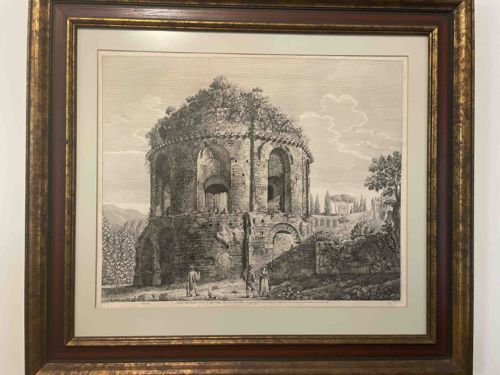
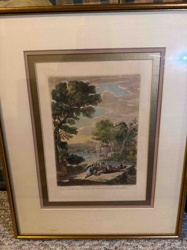
Antique Copperplate Etching of Roman Ruins in the Style of Giovanni Battista Piranesi

Fine Art Prints and Engravings

AI Estimated Value

·Not an official valuation·Verify before acting

$1,200 - $1,800

As of June 8, 2026

AI Item Analysis

·AI can make mistakes·Verify before acting
This item is a large-scale, monochrome copperplate etching or engraving depicting a classical Roman architectural ruin, specifically showcasing a weathered rotunda or mausoleum structure reminiscent of the 'Vedute di Roma' series. The artwork is characterized by high-contrast cross-hatching and fine linework, illustrating the decay of stone with overgrown flora atop the structure. Tiny figures populate the foreground to provide a sense of monumental scale. The print is housed in a sophisticated multi-component frame consisting of a wide gold-leafed outer molding with a distressed patina, a central mahogany-colored wood fillet, and an inner gold-toned sight edge. The work is professionally matted with a cream-colored acid-free mat. While the 'General Electric' context is provided, it likely refers to a corporate collection provenance rather than manufacture. The condition appears stable with no visible foxing or water damage on the paper, though there are minor abrasions and age-related wear to the frame's gilded surfaces. The piece displays the Neoclassical aesthetic of the late 18th to mid-19th century, reflecting the Grand Tour tradition of documenting Italian antiquities through detailed printmaking.
AI Appraisal Report

·AI can make mistakes·Verify before acting
I have conducted a visual examination of this large-scale copperplate etching. The work displays the masterful chiaroscuro and atmospheric perspective characteristic of the Roman Vedute tradition. The fine cross-hatching and the inclusion of staffage figures to establish scale are consistent with 18th or 19th-century techniques. The condition of the paper substrate appears excellent, showing no signs of foxing, acidity transfer, or significant light bleaching, which suggests a well-maintained environment. The 'General Electric' provenance adds a layer of corporate prestige, indicating the piece was likely curated as part of a high-quality historical collection. The market for Grand Tour-inspired prints remains stable, with high demand for works in the style of Piranesi due to their architectural gravitas. While authentic Piranesi 'Vedute' can reach significantly higher figures, high-quality contemporary or immediate post-period etchings typically occupy this mid-range bracket. The sophisticated archival matting and gold-leafed frame add approximately $400-$600 in intrinsic value to the presentation. Limitations: My assessment is based solely on high-resolution images. Definitive attribution requires in-person inspection to verify watermarks (e.g., the 'Fleur-de-Lys in a Circle' or 'Bracciano' marks), plate mark depression, and ink saturation. To confirm if this is a lifetime impression, a first-edition Roman edition, or a later Calco-grafia Camerale strike, I would need to examine the paper thickness and specific plate states. Provenance documentation from the General Electric corporate archive would further solidify its valuation. Without identifying the specific engraver or edition via a watermark, this value represents a fair market estimate for a high-quality period specimen of the Neoclassical school.

Get your items appraised

Instant estimates of your treasures with AI-powered appraisals

Browse More Appraisals