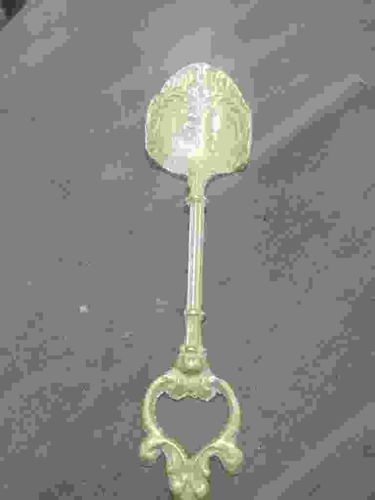
Art Nouveau Style Ornamental Spoon
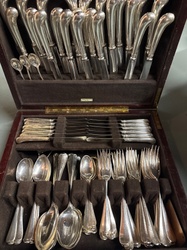
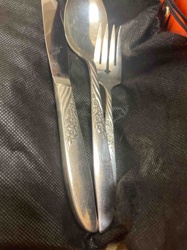
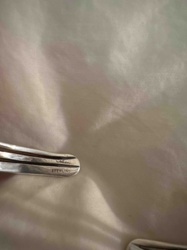
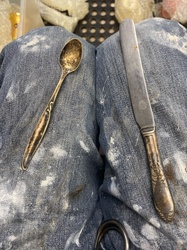
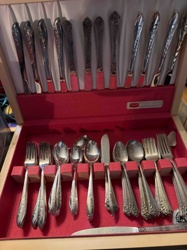
This item is an ornate, decorative spoon likely intended for serving sugar or small confections. It is constructed from a metallic material, appearing to be silver-plated or a base metal alloy, with a pale golden or silver-toned finish. The overall design is characteristic of the Art Nouveau or Neo-Rococo revivals, featuring flowing organic lines and symmetrical scrollwork. The spoon consists of three primary segments: a wide, shallow bowl, a slender cylindrical stem with beaded decorative bands, and a large, openwork handle with elaborate rocaille scrolls. The bowl appears to have embossed or engraved floral motifs, adding to its decorative appeal. In terms of condition, the piece shows visible signs of oxidation and surface wear, consistent with an item of significant age. There is a noticeable patina and some minor pitting or surface abrasions. No distinct maker's marks are visible at this resolution, but the level of casting detail suggests a late 19th-century to early 20th-century production. The craftsmanship displays classic design elements meant to provide a luxurious aesthetic for formal dining or tea service.
AI-Generated Appraisal Disclaimer
Estimated Value
$65.00-$95.00
Basic Information
Category
Antique Silverware and Flatware
Appraised On
February 28, 2026
Estimated Value
$65.00-$95.00
Item Description
This item is an ornate, decorative spoon likely intended for serving sugar or small confections. It is constructed from a metallic material, appearing to be silver-plated or a base metal alloy, with a pale golden or silver-toned finish. The overall design is characteristic of the Art Nouveau or Neo-Rococo revivals, featuring flowing organic lines and symmetrical scrollwork. The spoon consists of three primary segments: a wide, shallow bowl, a slender cylindrical stem with beaded decorative bands, and a large, openwork handle with elaborate rocaille scrolls. The bowl appears to have embossed or engraved floral motifs, adding to its decorative appeal. In terms of condition, the piece shows visible signs of oxidation and surface wear, consistent with an item of significant age. There is a noticeable patina and some minor pitting or surface abrasions. No distinct maker's marks are visible at this resolution, but the level of casting detail suggests a late 19th-century to early 20th-century production. The craftsmanship displays classic design elements meant to provide a luxurious aesthetic for formal dining or tea service.
Related Tags
Get Your Items Appraised
Instant estimates of your treasures with AI-powered instant appraisals