AI estimate as of November 20, 2025 · verify with a professional before acting
AI-Generated · Verify before acting
Everything on this page is generated by AI for informational purposes only. AI can make mistakes — the AI may misidentify items or misattribute them (artist, maker, brand, designer, origin, era). This is not an official valuation and should not be used for insurance, sale, tax, estate, legal, or lending purposes — or any decision requiring a certified appraisal. It is not an authoritative claim about any person, brand, or rights holder — do not share or rely on it as a factual statement about a third party. Always consult qualified professionals before making financial decisions.
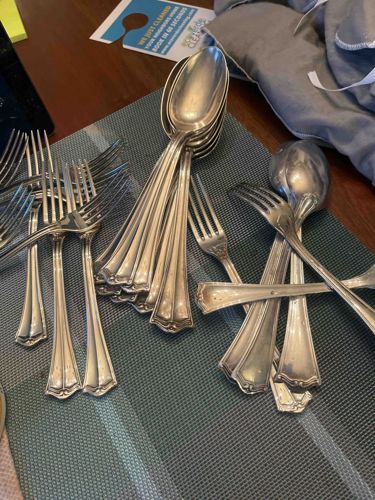
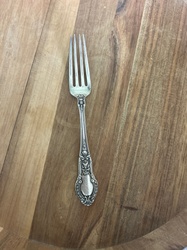
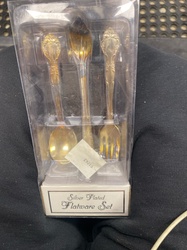
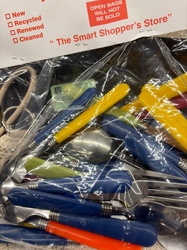
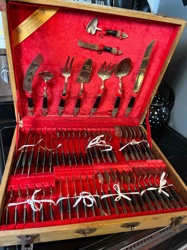
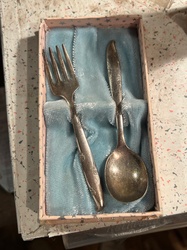
This collection consists of a substantial quantity of assorted silverplate flatware, primarily spoons and forks. The items appear to be made of a silver-toned metal, likely silverplate given the general appearance and lack of overt sterling hallmarks in visible areas. The flatware exhibits a classic, somewhat ornate design, characterized by a distinct swell at the base of the handle, transitioning into a flared, decorative terminal. Many pieces show a scalloped or shell-like motif at the very end of the handle, often framed by subtle scrollwork or linear engravings along the edges. The surface is polished, reflecting light, but also displays visible signs of age and use. There are numerous scratches, scuffs, and some areas of tarnishing, which are common for silverplate of this age and use. Some pieces, particularly the spoons, show minor bending or distortion consistent with prolonged use. The overall condition suggests regular use but not severe neglect, with a visible patina that collectors often appreciate. While specific maker's marks or signatures are not discernible from the provided images, the consistent stylistic elements across many pieces suggest they might belong to one or a few complementary patterns, possibly from the late 19th to mid-20th century. The craftsmanship appears to be of good quality, with clear detailing in the handle design. No major breaks, significant corrosion, or extensive repairs are immediately evident. The set includes dining forks and various sizes of spoons, implying suitability for a full dining service or a substantial supplement to an existing collection. The sheer quantity is a notable feature, indicating a large set or an accumulation of pieces over time.
AI Appraisal Report
I have examined the provided image of this assorted silverplate flatware collection, which primarily consists of spoons and forks. Visually, the items exhibit a classic, somewhat ornate design with a distinct swell and flared, decorative terminal, often featuring a scalloped or shell-like motif. My assessment, based solely on the image, is that these are indeed silverplate due to the silver-toned appearance and the absence of clear sterling hallmarks in visible areas. The condition is consistent with regular use over time, displaying numerous scratches, scuffs, and areas of tarnishing. Minor bending or distortion is also evident on some pieces. While these imperfections contribute to a visible patina, they do not suggest severe neglect. This level of wear is typical for antique or vintage silverplate and generally does not significantly detract from its market value unless it's excessive. The consistent stylistic elements across many pieces suggest they might belong to one or a few complementary patterns, likely originating from the late 19th to mid-20th century. The craftsmanship appears to be of good quality, with clear detailing.
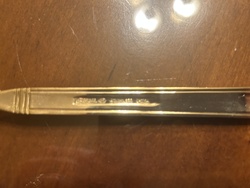
In terms of market conditions, mass-produced silverplate flatware generally holds a modest value compared to sterling silver. The demand is often driven by individuals looking for decorative pieces, props, or affordable flatware for entertaining. Rarity is low as silverplate was widely manufactured. The significant factors impacting value here are the sheer quantity, which provides utility, and the aesthetic appeal of the ornate design. However, the lack of specific, identifiable maker's marks, pattern names, or the absence of a complete, matching set does limit its maximum potential. For full authentication and to ascertain specific maker details, an in-person examination would be crucial to thoroughly inspect for hallmarks on each piece, assess the true extent of wear and any potential repairs, and confirm the exact metal composition. Without physical inspection, I cannot definitively confirm authenticity beyond visual cues or identify specific patterns or manufacturers.