AI estimate as of September 1, 2025 · verify with a professional before acting
AI-Generated · Verify before acting
Everything on this page is generated by AI for informational purposes only. AI can make mistakes — the AI may misidentify items or misattribute them (artist, maker, brand, designer, origin, era). This is not an official valuation and should not be used for insurance, sale, tax, estate, legal, or lending purposes — or any decision requiring a certified appraisal. It is not an authoritative claim about any person, brand, or rights holder — do not share or rely on it as a factual statement about a third party. Always consult qualified professionals before making financial decisions.
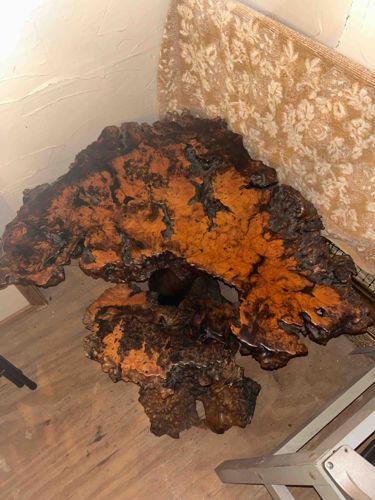
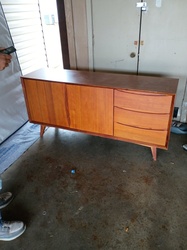
This appears to be a live-edge burl wood coffee table or a large decorative slab of wood intended for such a purpose. The primary material is clearly a large, irregular piece of burl wood, likely from a tree species known for producing significant burls, such as redwood, walnut, or oak, given the rich, warm reddish-brown and black tones visible. The top surface is highly polished with a clear, glossy finish, enhancing the natural grain patterns, which are intricate and swirling characteristic of burl wood. There are prominent areas of deep reddish-orange coloration contrasting with darker, almost black, sections, indicating the varied density and mineral deposits within the burl. The edges are natural and organic, following the original irregular shape of the burl, giving it a 'live-edge' aesthetic. The underside and sides visible show the rough, knotty texture typical of burl formations, with several deep crevices and hollows. No obvious signs of repairs or significant damage are visible on the polished surface, which reflects light uniformly. The overall condition appears good, with the finish preserving the wood. There are no discernible maker's marks or signatures visible from the image. The style suggests a rustic, natural, or organic modern aesthetic, likely dating from the mid-20th century to contemporary, given the popularity of live-edge furniture. The craftsmanship indicates a significant effort in cutting, shaping, and finishing to bring out the natural beauty of the wood, representing a high-quality, likely unique piece due to the inherent individuality of burl wood.
AI Appraisal Report
Based on my visual examination of the provided image, this Live-Edge Burl Wood Slab/Coffee Table Top presents as a high-quality, singular piece. The condition appears to be excellent; the polished surface shows no discernible damage, chips, or significant wear, and the glossy finish uniformly reflects light, indicating meticulous craftsmanship. The authenticity of the material – a large, irregular burl wood slab – is evident from its characteristic grain patterns, organic live-edges, and natural inclusions. The vibrant reddish-brown and black tones are consistent with prized burl woods like redwood or walnut. While the image suggests authenticity based on visual characteristics, I must note the inherent limitation of image-only appraisal; a physical inspection would allow for tactile assessment of the finish, detection of any subtle repairs, and closer examination of the underside and edges for stability issues or hidden defects. Provenance documentation, though not provided, would significantly enhance authentication.
Market conditions for live-edge furniture, especially those crafted from rare burl wood, remain strong. There is a consistent demand for unique, natural, and artisanal pieces that serve as functional art. Comparable pieces of this size and inherent beauty, particularly those with such a striking irregular form and high-gloss finish, fetch premium prices from collectors and design enthusiasts. The rarity of a burl of this magnitude and visual appeal significantly contributes to its value. Factors impacting value include its considerable size, the dramatic and intricate graining, the high-quality finish, and its versatility as either a coffee table top or a substantial decorative slab. The absence of maker's marks, while common for such organic pieces, means its history relies more heavily on visual attributes. Scientific testing, such as wood species identification, could further corroborate its provenance and material authenticity, impacting its final market value.