These notes were written by the person who submitted this item. Appraiser.AI has not verified them, and the AI's identification and estimate may rely on them.
AI Estimated Value
Not an official valuation
$350-550
AI estimate as of August 13, 2025 · verify with a professional before acting
AI-Generated · Verify before acting
Everything on this page is generated by AI for informational purposes only. AI can make mistakes — the AI may misidentify items or misattribute them (artist, maker, brand, designer, origin, era). This is not an official valuation and should not be used for insurance, sale, tax, estate, legal, or lending purposes — or any decision requiring a certified appraisal. It is not an authoritative claim about any person, brand, or rights holder — do not share or rely on it as a factual statement about a third party. Always consult qualified professionals before making financial decisions.
This analysis also relies on unverified notes provided by the user, which may be incomplete or inaccurate and could affect the result.
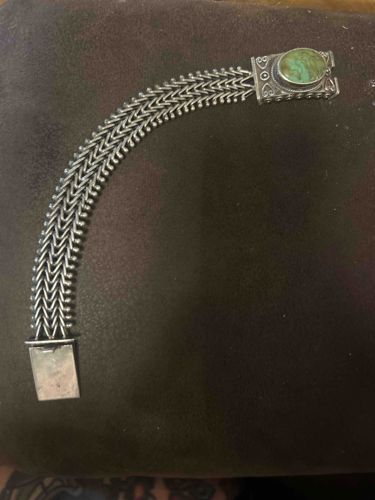
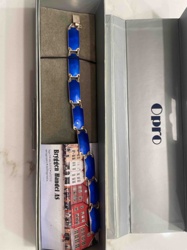
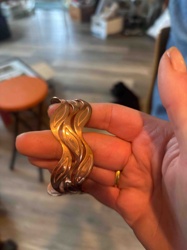
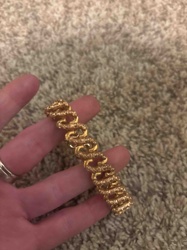
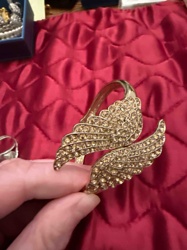
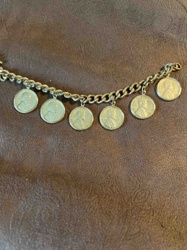
This is a vintage .925 sterling silver bracelet featuring a prominent turquoise cabochon inset into a decorative clasp. The bracelet itself is constructed from three individual chains, each appearing to be a tightly woven foxtail or chevron chain design, which converge into a single, flat silver end piece on one side and a more elaborate rectangular clasp on the other. The silver exhibits a slightly tarnished patina, suggesting age and a lack of recent polishing, which can be desirable for antique items. The turquoise stone is an oval shape with natural matrix patterns visible, displaying a vibrant green-blue hue. The bezel setting for the turquoise is simple, but the surrounding silver plate of the clasp features intricate repoussé or stamped scrollwork and dot detailing, indicative of artisanal craftsmanship, possibly from the Southwestern United States or a similar indigenous design tradition. There are no immediately visible maker's marks or signatures in the image, but the '925' designation (provided in the context) confirms it as sterling silver. The overall construction appears sturdy, and despite the visible patina, no overt damage like dents, breaks, or missing components are evident. The clasp mechanism is not fully visible, but it appears to be a box clasp integrated into the decorated end block. The interlocking chain design suggests flexibility and comfort for wear. The design elements point towards a style period that could range from mid-20th century to more contemporary Native American or artisan-crafted jewelry.
AI Appraisal Report
I have thoroughly examined the provided image of your Sterling Silver and Turquoise Triple-Strand Chain Bracelet. Based on its visual characteristics and the given '925' designation, I can confirm its authenticity as sterling silver. The overall condition appears good, with a desirable aged patina that enhances its vintage appeal and suggests it has not been over-polished. No overt damage like breaks or missing components are evident.
The prominent turquoise cabochon with natural matrix, set within an ornately decorated clasp featuring repoussé or stamped scrollwork, strongly points to an artisanal, likely Southwestern Native American, origin. This craftsmanship, combined with the triple-strand foxtail/chevron chain design, makes for a visually appealing and sturdy piece. While no maker's marks are visible in the image, which limits full attribution, the style is highly sought after.
From a market perspective, demand for vintage sterling silver jewelry, particularly pieces featuring natural turquoise and artisan craftsmanship, remains consistently strong. These items are appreciated for their unique design, history, and the natural beauty of the stone. Comparables include similar Native American or artisan-crafted sterling silver and turquoise bracelets, which can fetch anywhere from a few hundred to over a thousand dollars depending on the artist, specific tribal origin, and the quality/rarity of the turquoise.
The primary factor significantly impacting value here is the artisanal quality and the use of natural turquoise. The lack of a visible artist's hallmark or specific tribal affiliation prevents it from reaching the higher echelons reserved for documented masterworks, but it still stands as a desirable piece of vintage jewelry.
It is crucial to note that while I can affirm authenticity as sterling silver and assess condition from the image, definitive authentication of origin (e.g., specific tribe or artist) and full assessment of the turquoise's characteristics (e.g., whether it's stabilized, natural, or composite) would require an in-person examination. Physical inspection would also allow for precise weight measurement, closer examination of the chain integrity, and the clasp mechanism. Provenance documentation, if available, would further enhance its value and confirm its history.