AI estimate as of October 12, 2025 · verify with a professional before acting
AI-Generated · Verify before acting
Everything on this page is generated by AI for informational purposes only. AI can make mistakes — the AI may misidentify items or misattribute them (artist, maker, brand, designer, origin, era). This is not an official valuation and should not be used for insurance, sale, tax, estate, legal, or lending purposes — or any decision requiring a certified appraisal. It is not an authoritative claim about any person, brand, or rights holder — do not share or rely on it as a factual statement about a third party. Always consult qualified professionals before making financial decisions.
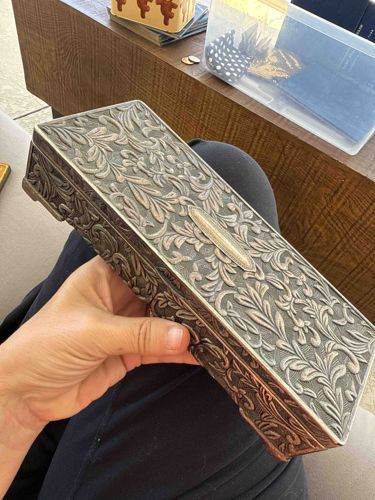
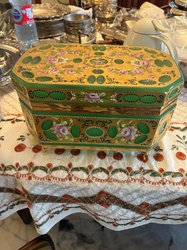
This appears to be an antiqued metal trinket or jewelry box, likely made from a base metal such as pewter, Britannia metal, or a silver-plated alloy, given its greyish tone and the way light reflects off its surface. The box is rectangular and elongated in shape, suggesting it might have been used for storing small items, perhaps pens, jewelry, or correspondence. Its entire exterior surface, including the lid and all visible sides, is adorned with intricate, deeply embossed floral and foliate scrollwork. The design features a continuous pattern of intertwining leaves and blossoms, creating a rich, textured surface that contrasts with the smoother, possibly raised central element on the lid. This central element is a narrow, elongated, slightly raised strip, which may serve as a handle for opening or simply be an aesthetic addition to the design. The craftsmanship suggests a cast or repoussé manufacturing method, indicating a decent level of detail and quality. The recessed areas of the floral pattern show a darker patina, enhancing the relief and giving the box an aged appearance. There are no obvious signs of significant damage like dents or major scratches visible in the image, but the overall patina suggests age and handling. This style is characteristic of late 19th to early 20th-century decorative arts, often falling into the Art Nouveau or Victorian aesthetic, though without specific maker's marks, pinpointing an exact period is challenging. The construction seems sturdy, with clear edges and a well-defined form, indicating quality manufacturing. The visible condition appears good, with an attractive natural aging.
AI Appraisal Report
Upon visual examination of the provided image, this decorative antiqued metal trinket box presents as a charming example of late 19th or early 20th-century design, likely influenced by the Art Nouveau or Victorian aesthetics. The box is constructed from a base metal, possibly pewter or a silver-plated alloy, and features ornate, all-over floral and foliate scrollwork in relief. The condition appears to be good for its apparent age, with a consistent and attractive patina in the recessed areas that enhances the embossed details. There are no significant dents, scratches, or signs of breakage visible.
The market for such decorative boxes is active but generally modest unless attributed to a renowned maker like Tiffany Studios or WMF. Without maker's marks, which are not visible, the box is considered a decorative piece of good quality craftsmanship rather than a high-value collectible. Comparable unmarked, mass-produced floral trinket boxes from this era typically sell in the $35 to $65 range at auction and in online marketplaces. The primary factor influencing its value is its decorative appeal rather than rarity or specific provenance.
It is crucial to note the limitations of an appraisal based solely on images. Full authentication would require an in-person examination to search for hidden maker's marks, assess the true nature and condition of the metal and any plating, and confirm its weight and construction details. Without physical inspection or provenance documentation, definitively confirming its age, origin, and specific material is not possible.